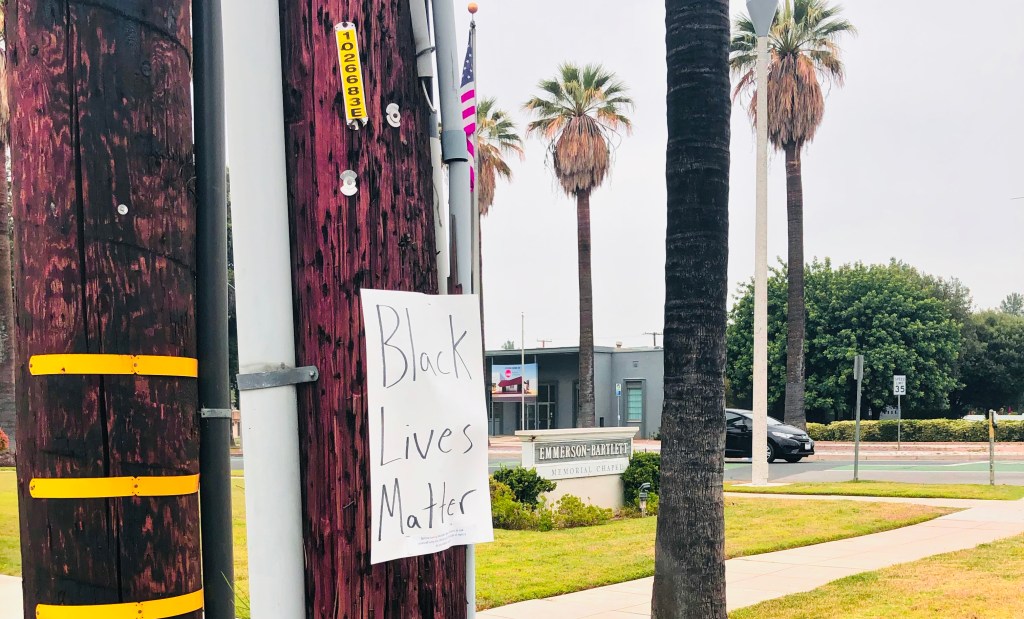
I’ve been thinking a lot about how in the past—literally like a month ago, which by-the-by feels like a gazillion lifetimes—I’ve only paid a cursory amount of attention to what it means to be an anti-racist. I’d read very little about my role in race relations. I’d put on my docMartins and stepped out onto the streets for the many injustices visited upon us since this election (pussy hats, kids in cages, students being shot, the climate being destroyed—which to be fair, has been in play for well before this dismal human took office, but this administration certainly has hurt the earth further by rolling back policies put in place during Obama’s time) but I didn’t do a hell of a lot in the way of Black lives mattering or understanding my role in how to understand them besides reel from the injustice I saw in the press.
And why now, as many Black people are rightfully asking, are so many White folks taking to the streets and hopefully (please, people) the ballot boxes for national and local races?
Mark Anthony Neal, professor of African and African American Studies at Duke University, was interviewed on the Newshour and gave voice to something I’d been thinking about, “There’s almost like like this alignment of stars, … that we could have never imagined. So many Americans were feeling in traumatic states because of the COVID dynamic, in which they were raising general questions in their own lives, regardless of race, about whether or not they had full citizenship in this country. Because so many folks were at home dealing with COVID and the pandemic, it meant that they spent much more time watching television. So, literally, everyone got to see George Floyd’s killing in ways that they might not have been able to check in on before. And because of COVID, when we think about all of those young folks who are out there in the streets, who normally would be in school or pursuing internships or working, suddenly now had available time in which they could act upon their passions and political passions, it’s just a unique moment where all these things come together, ….”

Yes, We were all inside, in our living spaces, in our heads, in our hearts. Since 2020 clicked over, we’ve all seen so much death at the hands of Covid—this virus made visible only by images of makeshift tents containing bodybags, ambulances, or funerals that no one can attend. And whether you’ve seen those images in person, in print, onscreen, we know death lives there, but we are shielded from seeing the bodies. And then to see a man living, not being wheeled into a hospital to die out of our line of vision, but to watch his life be taken very visibly under the knee of a person quite aware of his murderous powers. To watch that man follow through on the execution in front of our eyes, with a hand in his pocket, no less, became for me and many I know, a jolt to action unlike any other. Yes, we’ve been here before. We’ve seen this. Black lives have been asking us to see it and take it seriously for … ever. (Hyperbolic, maybe. But hundreds and hundreds and hundreds and then some, years.)
So why now? If not now, when? I can relate to what James Hollis, a Jungian scholar, teacher, and author said on This Jungian Life Finding Resilience. “If I stop and ask myself, Why am I here? What am I meant to embody? Particularly in the second half of life—what wants to enter the world through me? That’s a different question than what does the ego want or what does the world want and how do I meet those expectations? But what wants to enter the world through me? And that is where each person in each way has a contribution of their own personhood to bring into this world. No thing that I do out there can be more important than the relationship to my own soul. My relations with another person can’t be any more evolved than my relationship to myself. because wherever I’m stuck or wherever I’m caught in archaic agendas, that’s going to be dumped onto this relationship. Maybe it will be dumped onto the other person to carry.”
So as I take that thought to heart as a middle-aged white woman, I also continue to want to know what the generation(s) coming along think.
So I’ve been asking around, and this week, I’m so lucky to be sharing the thoughts of Charlotte, the daughter of a dear friend of mine. As a young adult who is continuing to explore what it means to be human, and is dedicating her life to that study in a way the rest of the world can only thank her for, below are her reflections and bold movements on what it means to be alive in this time. And I thank her profoundly for sharing!
“I’m the kind of person who strongly believes in the power of the individual. I’ve spent most of my life studying spiritual and religious perspectives, and I have found these to be profound and life changing. I respect and honor the power of the government, science, and activism, but my personal interest lies in the human spirit and its ability to change. How do we change, and what exactly is it?
“I think most people my generation will agree that something has to change right now. I suspect that’s the universal message of the youth: “Please, just change.” Unfortunately human beings are so often stuck in our ways: we have a knack towards comfort and ease, and we are easily pulled into seductive proposals involving money and power. This is what seems to infuriate my generation the most—we feel as if there is a basic lack of human kindness right now, especially within our government and the money-holders of society.
“So, for me, the answer is this: change will come from the reemergence of radical human kindness and understanding. In order to get to this place, each individual must work as hard as possible to live more consciously of how they treat others, and even more importantly, themselves. I understand that life is uncomfortable and scary. It is difficult for us to open ourselves to each other, to be vulnerable, to trust, when we have been broken so many times. It is even harder to admit to our flaws and shortcomings, the very things that cause relentless shame and fear to abide deep within. Because of the modern-world’s universal refusal of the very thing that makes us human, vulnerability, we push down our feelings, we don’t talk to one another, and we allow hatred to bubble deep within us. This hatred is not just directed toward others, but ourselves as well. Because of our fear of facing ourselves, of allowing ourselves to be seen, we become compliant, quiet, passive. We pass our days in a fog, under a charm, using a variety of different tools to shut ourselves down and turn our brains off. I believe that this universal human quality is the very thing that has caused so much pain and suffering, on every level imaginable, in our country and in the world today. And I believe that if each individual chose to live to the very extent of their humanness, our world would be a radically different place.
“I wish the world would know that policy change and protests are not the only answer, and if we continue to walk the path of external change, our world will look very similar when my generation is old. To truly look within, to change your own, personal, beautiful life, will cause the very change we seek. How does one do that? To me, it’s simple, but most definitely not easy: First, it’s having open and honest conversations with yourself, your family and friends, and your community. About racism, sexism, bigotry, economic disparity, personal responsibility, environmental destruction, social and cultural upheaval. But, not as a social-political subject bantered in an intellectual, keep-your-distance way. Rather, to speak about these subjects in a personal, empathetic, honest manner. How does racism or sexism appear in my thoughts, emotions, and actions? How am I responsible for what is happening to the environment? To people in poverty? How am I going to change these things, taking responsibility and action in both an internal and external way? These conversations should be happening daily, even amongst strangers. They should be a norm.
“Second, it’s you pushing yourself to be kind to others, even in uncomfortable situations. Kindness can be scary. It’s an act of vulnerability, and you are always at risk of being embarrassed, refused or put down. Or, at least, that’s what our minds say. When we ignore the annoying voice of caution and fear in our heads, we overcome a limiting belief that tells us that we are not worthy of giving or receiving. When we decide to put ourselves on the line and help someone, or volunteer with a non-profit, or say something kind, or stand up for a stranger, we are changing the very course of our world in that single instant. We are changing our hearts, making them bigger and more empathetic. And most importantly, when we act with kindness, we are showing others that it is not that frightening, and, in fact, it feels wonderful, freeing, and beautiful. Your act of kindness encourages others to be their best selves.
“Third, and last, but not least-—it’s learning to love yourself. I don’t care if that feels cheesy and irrelevant to what’s happening in the world right now, because it is probably the most relevant thing you will ever come across. Ask any social worker, therapist, psychologist, religious leader or chaplain—hatred, compliance, silence, fear, violence, bullying, all of these things stem from a very deep wound inside of us. The wound that says we are not worthy of love or attention, that we are failures, ugly, worthless, unimportant, stupid, boring, annoying—I could go on and on. All of us have this—there’s not a person on earth who hasn’t dealt with self-hatred and shame at some point in their life. If we chose to live our lives in love with ourselves, and taught our children about loving themselves, and had conversations at dinner parties about our struggles with loving ourselves, this world would be filled with people who loved themselves and in turn loved others. Unfortunately the very things that we hate about ourselves, the very things that we say to ourselves are exactly what we project onto others. It becomes the energy we bring into the world. The more people who decided to go their lives without addressing their sorrows, insecurities and pain are more likely to act out in aggression, to stay silent at critical moments, and to be the very people who cause pain and suffering on others. We live in a vicious cycle, but a cycle that can easily be broken if each person decided to begin the long and difficult process of loving themselves.
“As a member of the younger generation, it is my mission, my purpose, to encourage people to start living differently. I wish the national conversation included the power of the individual as one of the most important facets of change. If we combine this internal work with policy change, protesting, donating, and advocacy, I believe that the concerted efforts of many different people, advocating for many different things, we will be able to change this world. When we work together and respect each other’s gifts just as we respect our own, change will happen.”

I would like to honor Charlotte’s words by continuing to look inside to discover how to carry these thoughts while being open to the learning still left to do. Books: author Ibram X Kendi (“Stamped” but also “Anti-Racist Baby”), Pema Chodron (“When Things Fall Apart” an all-time wonder). Podcast: Scene on Radio, Season 2, Seeing White
And I will follow up with Charlotte on some suggestions for reading, watching, listening and include in a future blog.
What is moving you right now?
 Does This Make Me Look
What is moving me right now is the power of Charlotte’s words and of your persistence and compassion as you find and give voice to your own.
LikeLiked by 1 person
What’s moving me right now is Dennis’ comment above💗but I also love the idea of “radical human kindness.” I’ve been strung out by my own emotions (anger, sadness, etc.) but recently had the opportunity to connect to my heart with all that’s happening. That changed something in me so that I feel less burdened or tired or fed up but more enlivened. Onward my beautiful friend. xo
LikeLiked by 1 person
Right? Re “radical human kindness”! (Go, Charlotte!) because sometimes it does feel radical and almost punk rock defiant to choose kindness in the face of so much. the ability to shout for change and be moved to anger while still being able to recognize stillness and move toward a white-hot-peaceful persistence to see the thing that made me angry in the first place as, yes, something that needs attention, but also a steady flame rather than an explosion. So amazing that your opportunity to connect to your heart is also an opportunity to feel less burdened.
LikeLike