
I used to take a Bikram (also known as hot-as-hell-gonna-sweat-my-bodyweight-out) yoga class where the instructor was great with the inspiring sayings. I’m not sure if it was because my brain pan felt like a puddle of sloshing jello in the 105 degree, 40 percent humidity or just that the mostly Rumi quotes she favored were really inspiring, but I was always happy listening to what she had to say. Again, this may have had a lot to do with the fact that her voice was a distraction from whatever pose I was meant to be holding with lamppost-rigid legs or gumby-bend back. But regardless, one thing she said that has always stuck with me is “If you can, you must.” (A couple of digressions here: 1. the thought of 25 bodies in a room doing hot yoga literally feels like something from the way-back time that will never be again. 2. I must acknowledge my discomfort with using a quote from Bikram Choudhury, who has been the focus of civil suits alleging sexual assault and discrimination against racial and sexual minorities. This brings up the question of whether separating a person from their words is possible. On balance, I would say no. Yet here I am, so I will use his words as a jumping off point to get to the meaning underneath.)
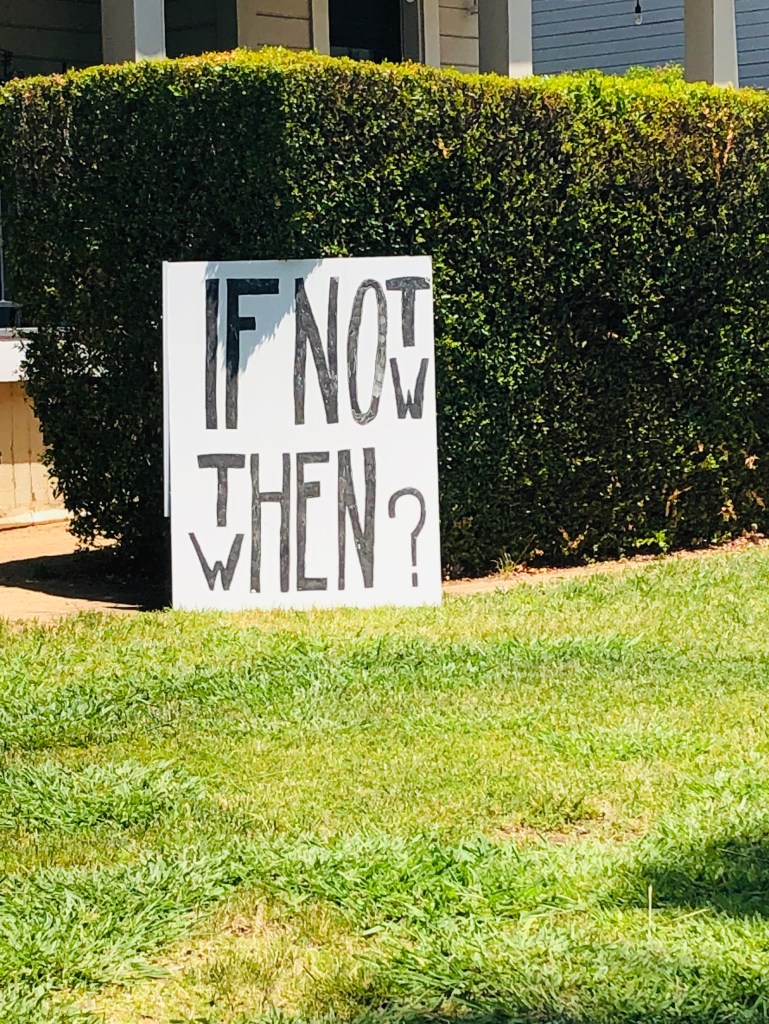
The reason “if you can, you must” stayed with me beyond trying to do a standing tree pose with one leg extended (yeah, I couldn’t, so I mustn’t knowing for certain that I would fall down) was due to the simplicity of the message as I carried it outside the hot room. If I could hold the door for someone, then I must because why wouldn’t I? If I could give up my seat on the subway to someone who clearly needed it more than I, then I had to. Of course there were tons of moments when I could and didn’t because I wasn’t paying any attention. Today those words have ballooned to take in larger meanings for me. If I can wear my mask, then I must. Damn straight I CAN wear the mask. I have a face after all. I know how to cover it with the piece of cloth called the mask and I MUST do that for the health of society during our C-19 times. And I hold the opinion that everyone who enters into the world outside of their safe zone also can wear a mask and must. (For people out there for whom a mask is an impossibility for reasons of physiology or what-not, I respect that and hope you’re finding your own way to protect society and yourself.) This F-bomb laden clip from actor/comedian Michael Rapaport is entertaining in the laugh to keep from crying (or shouting) realm.
The other area that I currently apply the can/must rule is in the area of social justice. Because currently I am not partaking in boots-on-the-ground marches for Black Lives Matter, and frankly really missing the energy that those gatherings bring, I’ve felt rather scattered about how to help. Signing petitions, yes. Sending money, yes. But along with reading—nonfiction, fiction—and listening in order to expand my historical knowledge (the stuff that I don’t remember being taught because it definitely wasn’t in my curriculum) and understanding how I’ve been ignorant about my role in racial injustice in America, I wanted to actually do something that would be long term. I came across Showing Up for Racial Justice (SURJ), which has a handy map where you can type in your zipcode and find an organization close by. Doing that, I came upon White People for Black Lives (WP4BL), which is the activist wing of the LA-based organization AWARE-LA (the Alliance of White Anti-Racists Everywhere, Los Angeles). Their history is strong: AWARE has been around for over 15 years, and WP4BL was founded in 2014 after Darren Wilson was not indicted for killing Michael Brown, which was also the time Black Lives Matter rose to national prominence. Last week I attended a (zoom) orientation where I was inspired, excited, and also made well-aware of my proclivity to get worked up about something, then to watch it fade away (I’m looking at you, Move On.org and the hundreds of petitions that are mounting in my mailbox. Also, you, online fitness classes…we had a short love affair.) But back to White People for Black Lives and how my commitment is being held: First of all, I can appreciate their tenets for existing, and I quote “It’s a space for white people to figure out what it means to be an anti-racist white person and challenge racism in all areas of our lives. We cannot expect Black, Indigenous, and People of Color (BIPOC) to have all of the answers for us on how to transform ourselves and other white people. As white people we are well equipped to understand what it means to be white.* It’s a place where white people can begin to build a new culture of white anti-racism, and learn the skills needed to transform the larger white community. * WP4BL is a supplement to, not a replacement for, multi-racial organizing. It’s important that white people give space in their lives to learning from and bearing witness to BIPOC’s experiences of racism. * A white space serves as a resource to BIPOC who want to work with white people but don’t want to have to spend all their energy dealing with the racism of white people.”
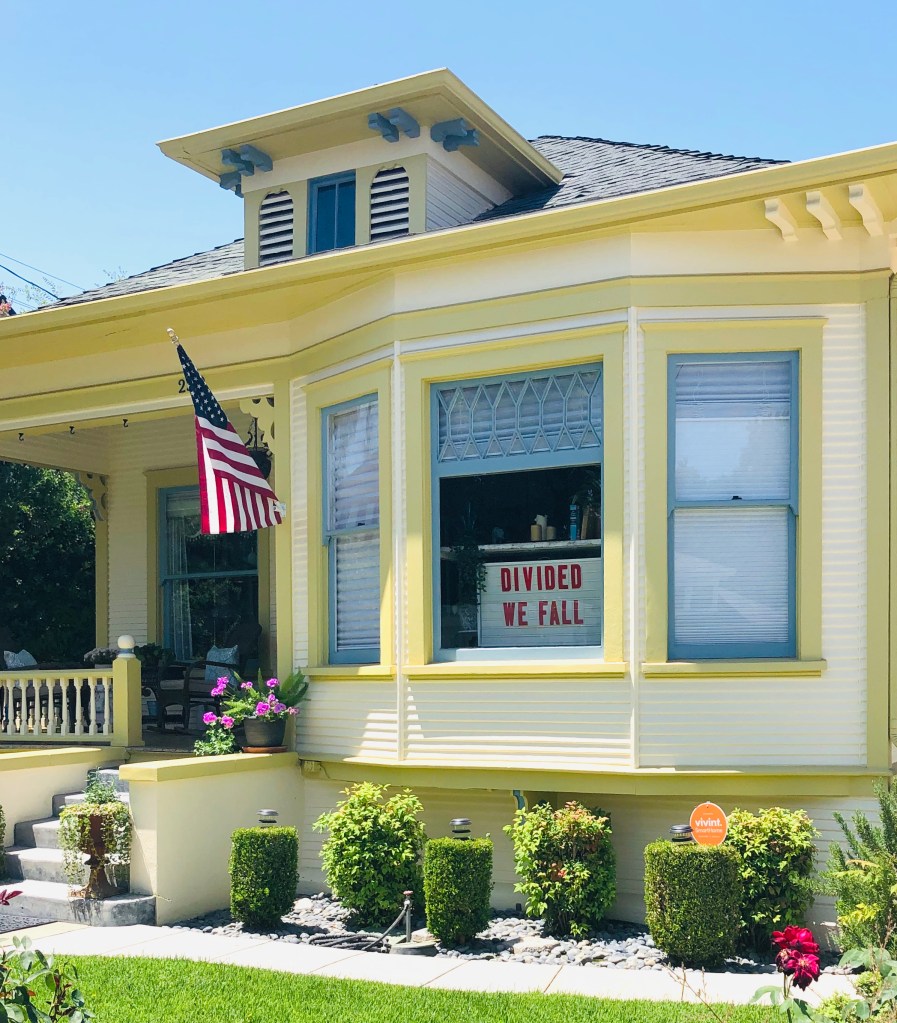
For so long I had the tickle in my brain that there was work to do to be a better, kinder human while understanding that I can’t just withdraw and pretend the endless endless senseless bloody inhumane killing of Black people (and all other Indigenous, people of color and trans folx) at the hands of police, at the hands of other white people, at the hands of the larger system that kills them slowly through unequal treatment by way of healthcare and incarceration was something that just happened occasionally. No, the pattern became too obvious and, luckily, that phrase If you can, you must, kept me moving forward. While this country has never been as divided as it is now because of the manipulation and hate bombs the man in the White House is throwing down, it’s not just him. It’s been on since the founding of this country. I agree with those who’ve said they became complacent after the election (and re-election) of Barack Obama because it signified, Look, ma, we’ve elected a Black man as president, we’re beyond systemic racism. I was 100% one of those people. But, well, no, that was a lot to ask and the world kept turning and Black, Latinx, trans, and Indigenous people kept dying. In particular, Black boys, girls, men, women were still targets for the systemic racism built into our country that started with slavery and after a too-brief corrective called Reconstruction (1863 to 1877) flowed directly into Jim Crow laws, which kept on suppressing until 1964. And despite laws changing, the game is still rigged and tilted and suppressing with too much ease. Look no further than incarceration rates in the US to find the numbers. The amount of deaths from Covid are disproportionately people of color. It goes on and on.
Having been an unabashed left-leaning-Liberal sort as soon as I started to pay attention to that sort of thing—NYC circa 1980s and my first US Out of Nicaragua march in Washington—I’ve slipped down a few rabbit holes of just accepting the information fed to me before I found that it’s on me to read and talk and figure out what rings true. Right now, there’s no way that I can not make noise if I want to see the world on track to being a kinder, more equitable place. I can. So I must.

Fourth of July felt very complicated this year, although around the neighborhood I found places where flags flew together. The stars and stripes flapped next to Black Lives Matter and I realized that these two can exist side by side only if the work of Black lives mattering in this country is actually achieved in a real and ongoing way. Which brings me to another reason I’m all-in for WP4BL: there is a conversation about what your stake in this movement is. It can’t be, “I just want to help you.” No, that smacks of so much patronization that you should look deeper or move on. It’s more about how aiming toward a world where we can actually be invested and proud of all having an equal slice of whatever this American apple pie thing is (cobbler, crumble, and like that) makes us all whole and proud. I realize there’s a long way to go, but I can, and I must try and move forward toward it. Personally, my stake is that as a white woman, while I’ve experienced flat-out sexism in my workplaces and in the world at large, I never called it out loudly (or quietly). I stayed in step with all the mechanisms that were meant to keep me in my place. I was too scared of what I’d lose if I made noise. Now, for the sake of all the women on the rise, especially BIPOC and trans women, I want to call out the injustices not to make up for lost time, not to think I can correct what I didn’t call out before, not even to assuage my sense of history, but because going forward it can be different. And I will be a happier person for that.
Pema Chödrön, one of my favorite Buddhist monks (honestly, I don’t know that many) says in her book “When Things Fall Apart“: To think that we can finally get it all together is unrealistic. To seek for some lasting security is futile. To undo our very ancient and very stuck habitual patterns of mind requires that we begin to turn around some of our most basic assumptions. Believing in a solid, separate self, continuing to seek pleasure and avoid pain, thinking that someone “out there” is to blame for our pain—one has to get totally fed up with these ways of thinking. One has to give up hope that this way of thinking will bring us satisfaction. Suffering begins to dissolve when we can question the belief or the hope that there’s anywhere to hide.
There is nowhere to hide. Everywhere we go, there we are. I can and I must and inside of that is joy and hope and the realization that it’s not easy, but very very necessary.
 Does This Make Me Look
loooooooove you! And Michael Rapapport always makes me laugh. (I definitely did not pass science class and am listening to the experts!). Thanks for your honesty and reminders of resources to consider. I’ve been overwhelmed by it all and SURJ is a great place to start. xoxoxo
LikeLike