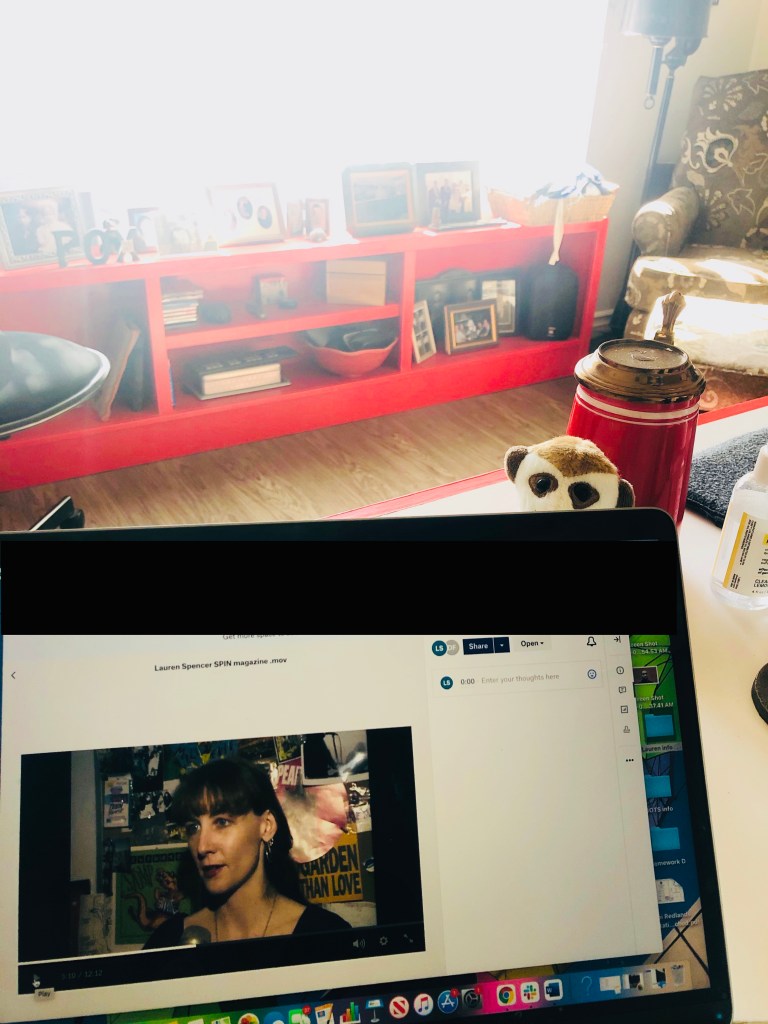
Awhile ago, after finding a trove of little-me home movies in my dad’s shed, I sent them to a place for digitizing. I also dropped in a betacam cassette that I’d been carting around from my SPIN days, which, although it said ABC interview on the label, I couldn’t remember anything about. The little-me digital files came back a couple of months ago with a note that the place was unable to grab anything off the Beta. Dennis, though, found another place and off it went again. This week it (can watch it here if you’re so inclined) arrived in digital form and hitting play, I was dialed me right back into a period of my life that was both a beginning, a middle, and an end in some fundamental ways. Doing some sleuthing—not too difficult as there was a calendar on the wall behind me—I placed the interview at February, probably 1992. That would put me at the age of 30. The topic under discussion was the “Seattle Sound,” for which I had a ton of thoughts. The first time I watched the clip, I was agitated, cringed, became uncomfortable. Not so much for the words—although my opinions on Madonna shows “You will enjoy them,” which is absurd because, my friends, I’ve never ever even once been to a Madonna show, and Hammer, because I apparently had an opinion on Hammer and his effect on the youth and music, which hearing those thoughts now mortify me shaded as they sound with a racial tinge—but the thing that made me both stare and look away was the view of myself at that point in life. How my face moved, my presentation, how I listened. I saw confidence, which is so interesting because while I did have some and had knowledge about the words coming out of my mouth, I also remember the squirmy misgivings on the state of my emotional world, bill collector’s on my phone machine, questions about what might come next…just the regular young person stuff. The other thing that struck me in the watching was remembering how the outfit, my go-to interview dress, infused my confidence.
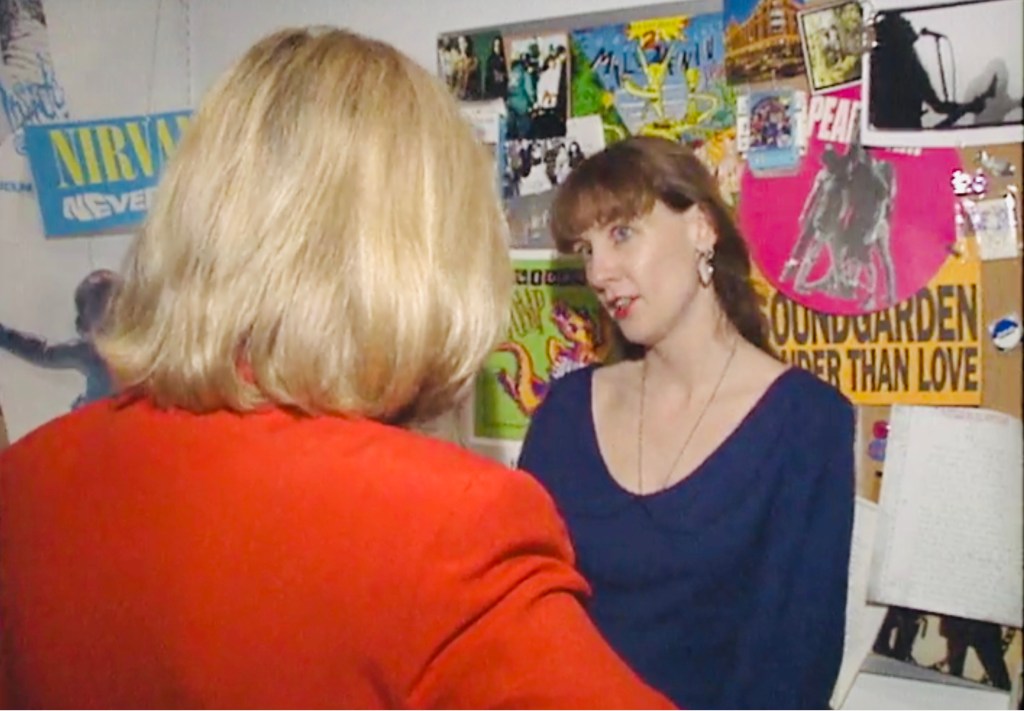
It was royal blue, scooped neckline, bell sleeves, the hem fell a few inches below my straight-armed fingertips, slightly form fitting, but not Mariah-Carey style, if you know what I mean. I thought it brought out my eyes. It didn’t do weird things like ride up or fall down. It worked for me and gave me that bite of confidence for when I was having to be seen in a more professional way. Gotten at Fiorucci, the coolest—to my mind—clothes emporium of 80s/90s New York.You’ll see from the photo above that the ABC interviewer was wearing what worked for her as well: red blazer, blonde-bob. She was around my age in years, but her work uniform distinguished her career choice. There’s no doubt whatsoever that my relationship with clothes was a driving force in how I moved through my work world. I had a short, wide-elastic waist, skater skirt (similar to this) bought at Unique Boutique on lower Broadway that when I wore it with leggings and my motorcycle boots, often with an extra-long sleeved t-shirt or flannel, sleeves unbuttoned (it was the 90s, after all), I felt truly bad-ass. This was my interview-bands outfit. Then there were the high-waisted striped jeans (similar to these) that I wore when I was editing other writers, because I was working with mostly guys, so this look aligned me with a tougher vibe—no gender distraction. I had a weird blue&white striped on top, solid blue on bottom pullover dress I found at a thrift store that I wore to shows. These were my go-tos in regular, heavy rotation. I had a NYC-size closet and no budget (see “bill collectors” above) and these outfits influenced how I stepped into the world. How I was seen and how I saw, or rather, felt my power.
I’m watching a Netflix show called Worn Stories and it’s much more poignant than I expected it to be. Focused on who the person inhabiting a specific piece of clothing is inside of the memory, the choice of it, the adventure (or non) around it. It brings to my mind not only the power of clothes when they’re on your back, or torso, or feet, but also the life they’ve lived along with you—and in some cases before you. I’ve been a thrifter my whole clothing-consumer life and more and more I wonder about the stories held in every Goodwill, Salvation Army, second-hand store I walk into. Where have these clothes been? Parties, funerals, interviews, proposals. Sometimes I make up a story: the elbows are a bit worn on the sweater. Did they lean forward regularly in class to catch every word? Stuff like that is fascinating and well worth my flaneur-style wandering through the store wondering if A) would this work for me? and B) what’s the story, morning-glory? (Pretty rarely do I ask “do I need this?” because almost always the answer would be “no.”) I’ve mentioned in a blog post before how my friend, Denise, plays the game of wondering why the person gave the thing up, and I love that. Then one step back is how they wore it (or why) to begin with.
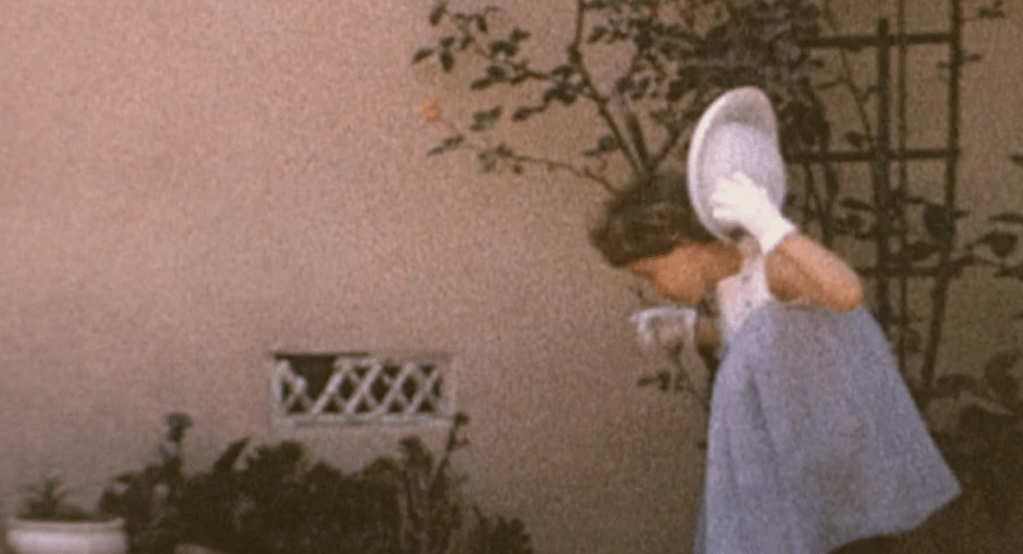
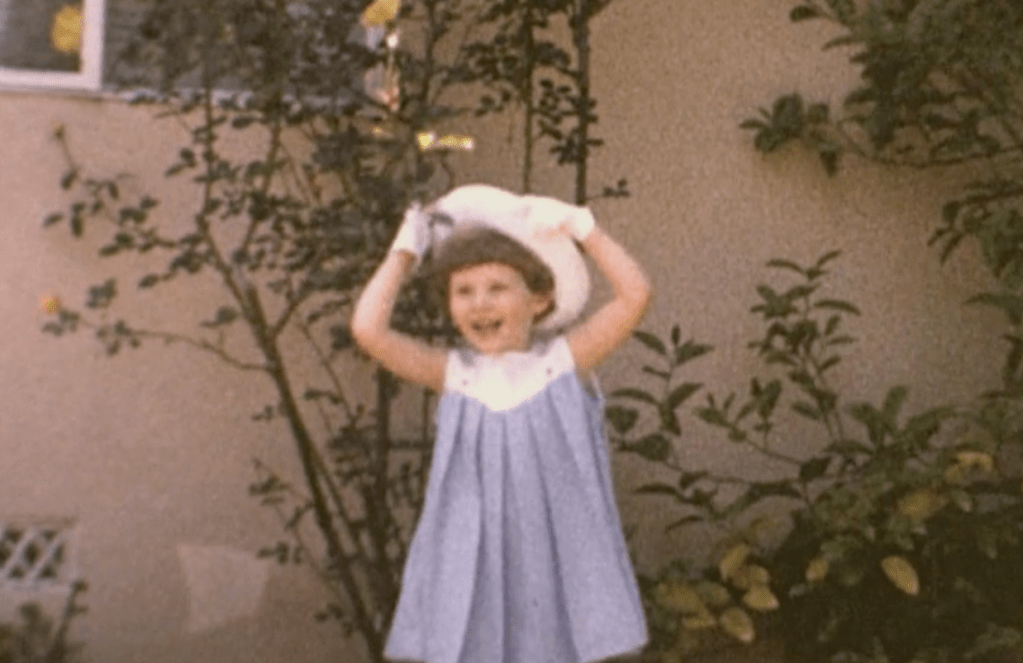
Easter bonnet heist 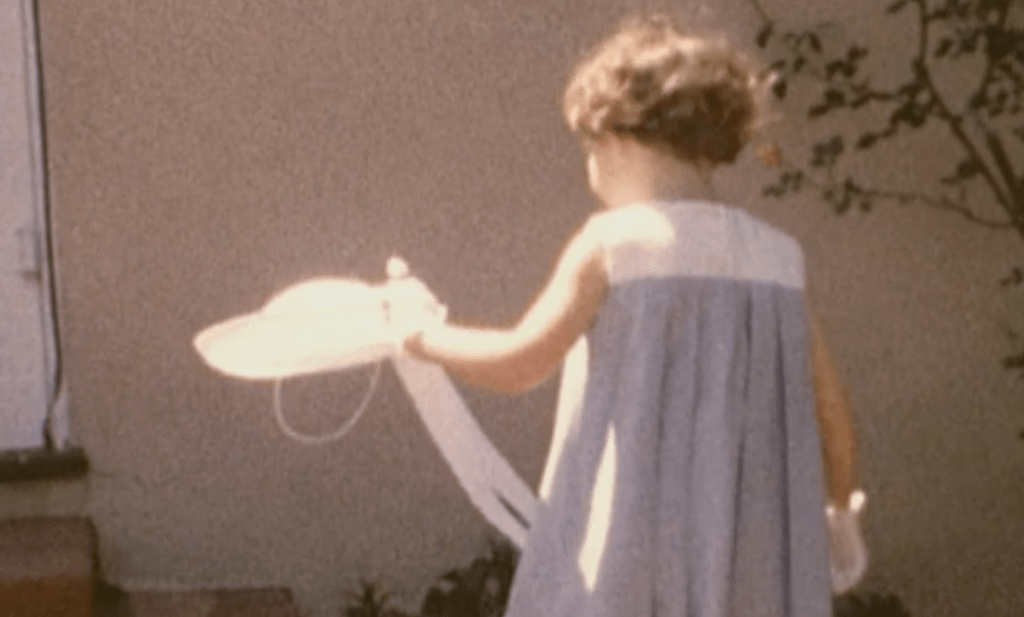
The mini-me home movies had me marveling at the cute little onesies and dress, top, short, capri combos I was dressed in from ages 1 to 7-ish. How I wore them. The easter hat scene where while hunting for eggs the topper got caught on a tree and I was both surprised and just over it. Took the thing off and gave it to my mom. But when it was time for me to dress myself, the statements I remember making were all to do with the rock t-shirt: Elton John, Led Zeppelin, Alice Cooper, all ordered from the back pages of CREEM magazine. Then onto the mimicking of the bands themselves. The frippery of a white frilly shirt, dubbed New Romantic, when I went to see Adam and the Ants at The Whisky a Go Go on the Sunset Strip and I got called out for my, er, poseur-ness. I think that was the shift into deciding I’d figure out a style for myself. What I hadn’t altogether figured on was the emotional power those decisions would bring. Clothes make the (wo)man? (Wo)man makes the moment. Around and around we go.
 Does This Make Me Look