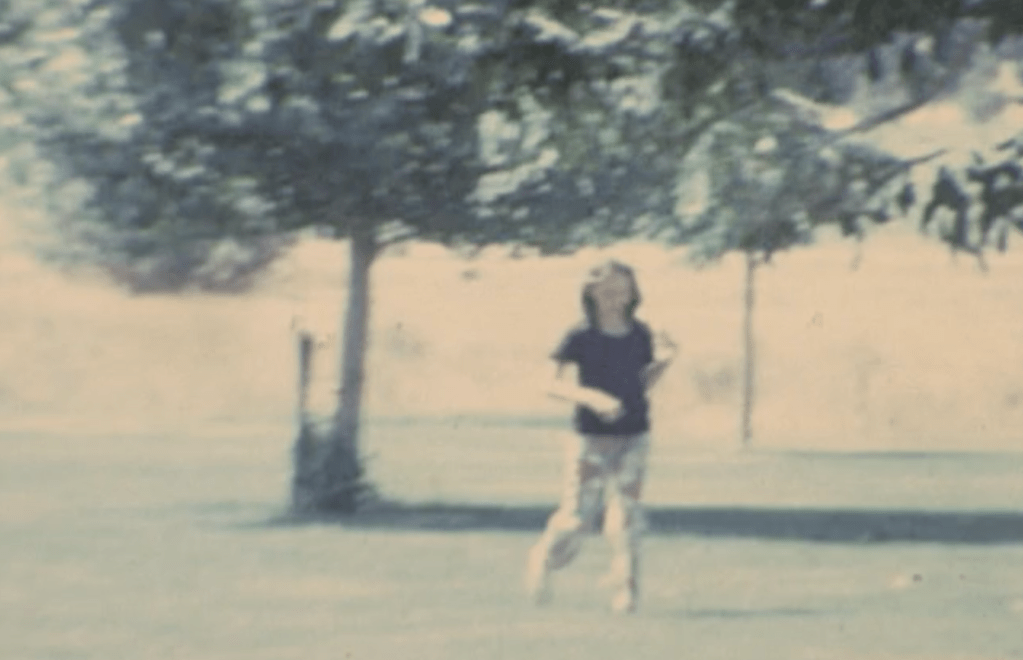
Yesterday I did an interview with a guy about what it was like to work at SPIN in 1991. It wasn’t lost on me that the last few weeks have been a series of revisits to the past while also processing feelings around entering into this new now (focused more on how the world feels different regarding the inner landscape rather than just what it feels like roaming around outside with the bottom half of my face visible). While it’s easy to go back inasmuch as memories are rascals and rarely represent the real-deal, it was fascinating to talk to him about some connections to thirty years ago and then, an even further reach, fifty years ago and a possible thread that runs between them culturally. While I’ll leave that thread for future pondering, having just finished watching the documentary 1971: The Year That Music Changed Everything, I felt pretty ripe for the conversation. First off, this docu-series is great. The archival footage amazing, rare, jarring, entertaining…could go on, but highly recommend. I was nine&ten in 1971. I was awkward (witness photo above of me negotiating the end of my skipping days, yet the beginning of what I’d do with my limbs instead. Moving my arms and legs in a way that might suggest confidence. This, I remember, was a challenge.). This was a time of first love, music-wise. Led Zeppelin and Elton John were my mains. I didn’t understand at the time EJs sexuality outright, but had transferred my crush to Bernie Taupin given he wove all the amazing stories (“Tiny Dancer” still slays me). Watching the doc and talking to the guy yesterday, I realized how much my budding libido informed my musical choices. These weird sensations were being delivered in music that dove deeper physically than I’d ever understood before. Given the choice, I was more Rolling Stones than Beatles because there was something…a bass line, a blues progression, a drum beat…that resonated down down down. It was scary. It was thrilling.

Fast forward to 1991 there I was living in the world of musical angst, sturm, drang, surge and slow that moved me emotionally and physically. It wasn’t so much that I’d learned how to handle the sensations/feelings/emotions better than I had at years 10 to 20-something, but more that I was now getting paid to investigate those moments. Soundgarden, Nirvana, Pearl Jam gave me access to rolling around inside the emotions while having to (try to) keep a subjective distance. That worked for awhile until 1994 when my heart broke. I’m pretty sure I recognized that it happened—I mean the collective world mourned Kurt Cobain’s death ergo the removal from the world of his songwriting and self—but it seemed weirdly absurd to ascribe that kind of deep emotion to my career. I had a job to do, damn it. But yet something broke overall. For me, it was deeper than just his suicide. Music stopped existing as a place of magic and became what paid my bills, which then, over time, became just painful. Did I really mourn it? Doubtful. I more or less just went away from it. Shut the door on it.
I had some amazing conversations with friends last week about changes both in our way-back and recent past. About how I disappeared for awhile post-music days. Hid out. Wanted the old to go away while I carved out a new. At the time, I thought using a relationship/marriage as a safe room would insulate me from having to investigate my reasons for running. It didn’t. Everywhere you go, there you are. Talk of of letting people go, not in any sort of post-pandemic, if-they-don’t-serve-you-see-ya way that all the media is talking about, but more how difficult it is to let go of a close relationship without chewing it over and relitigating, swearing I’ll get it right this time. Nope, that hasn’t worked for me so far either. Maybe instead, truly wish the person well and release them back into their natural habitat. Then there’s grief. The time spent actually recognizing that human-size hole and sitting in it for a bit.
Even though I feast on fiction mostly, I’ve pulled in this side dish: a slim, powerful book, Notes on Grief by Chimamanda Ngozi Adichie. Also I’ve also found my way back to music in a way I would never have figured (isn’t that always…). A podcast called Aria Code. Its focus is opera. What? Yes, all those languages I don’t understand, yet, here’s what does translate: emotion and storytelling. Right! That’s what I love. That’s what I’ve missed. That’s why my heart broke and I couldn’t figure out how to find my way back. This series takes one aria at a time, invites a few people in (a singer, a historian or some-such person to talk about the story overall), then grounds the song in the here and now. Example: An episode from a past season on Mozart’s The Marriage of Figaro: Count On a Reckoning explores men abusing their power. The show features a singer whose performed the role, a historian, and a journalist who has explored powerful men’s tantrums (looking at you Brett K.) as a way to gain and keep power. The place I’ve come to while listening is that the story carries me on the back of the chords, the rises, the falls, the melody. I can do this. But only if I’m willing to understand the pain will come. It won’t kill me. Also there will be wonder.

No surprise then that with Dennis, who is steeped in opera, his always-loved music, has been offering bits&slices of opera for the past 10-year-plus of our relationship. It’s not like I really got it though. Appreciating it through him has been only partially successful. I’ve gone to a few operas by his side, most recently Der Rosenkavalier, which, I think, is a super-celebration of aging women BTW, at the Met in NYC for his birthday in 2019. I did much dozing in the third(!!!) hour—okay, some in the second hour too. I would wake up to high notes and cool costumes, then my eyes would close again. Mind you, it also had been my last day at Hearst and we were days away from moving to the west coast, so a lot going on. But anyhoo, still I didn’t really understand the music. The story. The connection. So color me surprised when now, with 2020 resembling nothing so much as a crazy take on The Arabian Nights, stories of survival to keep us all alive, I find my way back to music slowly through a form where the story is told most often in a language I don’t understand. But the emotion I do. The fact that something is unfolding filled with all the drama of life, I get. The connection. Pain rolled into joy rolled into the unknown. And imagination. (Side note before I sign off, speaking of imagination: The Children’s Bible: A Novel by Lydia Millet is absurdly good. Dark humor. A kind of Lord of the Flies updated. Revolving around a group of teens [& a couple of littles] who are dragged along with parents on a group vacation. An apocalyptic climate event happens and the masterful way the author exposes not just the failings of the parents in their care-taking of the planet, but also of their own kids, is brilliant and funny and sad and hopeful.)
 Does This Make Me Look