
Been there. Done that. Laminates from my days as a music journo that let me into nooks and crannies at shows, at jobs, at showcases.
This last week, I listened to a Daily episode where FBI transcripts were read from one of the 1/6/21 insurrectionists. Besides it boiling my blood and making me walk so much faster up one of the steeper hills in our local Prospect Park, it got me thinking about the whole “media made me do it” defense that seems to be all the rage of late. Akin to the Twinkie defense (this oh-so-entertaining podcast nails it), it’s a classic look-over-here tactic that delivers a handy one-size scapegoat, thereby removing responsibility for folks to read deeper, find nuance, then make individual decisions. I’m also guilty of slotting myself into the bias of a news source that upholds my worldview. Nor am I an apologist for a chunk of current news media and how parsing out the crap-ass from the well done is a struggle. But I’m still willing to look and read and believe that good journalism is out there because know it is. I’ve read it and seen it and continue to trace it. So while capital-M-edia is seen by many, many too-many in America as the enemy because that’s the line being spun—something that wasn’t birthed on 45s watch, altho taking a page from narcissism 101 along with authoritarian and communist governments the world over, he is a master at taking his manipulation spade and digging into division and distrust, then pointing at The Media—the tarring and feathering’s been around for decades.*

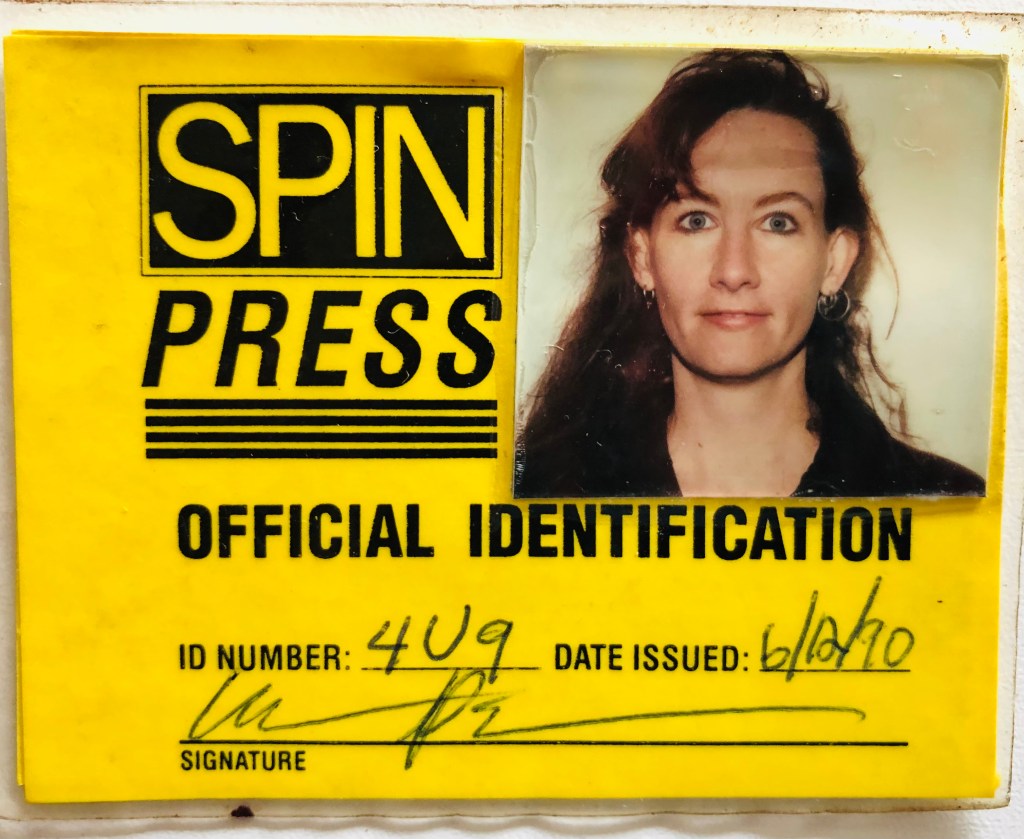
Thinking back on my days as a music journalist does have me marveling at how things have changed regarding access and acceptance. Intention and motivation. What that looks like now is in stark contrast to the way creative types and journalists used to fly in and out of each other’s airspace during the nineties (and before). I hear tell of how now the process of interviewing folks hanging from any rung of the I’m-(almost)-famous ladder is challenging at best with pre-vetting of questions and hovering publicity agents and impossible at worst given a set of parameters that only allow for the most facile of interviews. My time was so different as to almost feel like some scene out of an adventure movie where I rolled under the gate right as it was slamming down. It’s hard to imagine that today’s story plucked from the Memory Box could happen right here, right now.
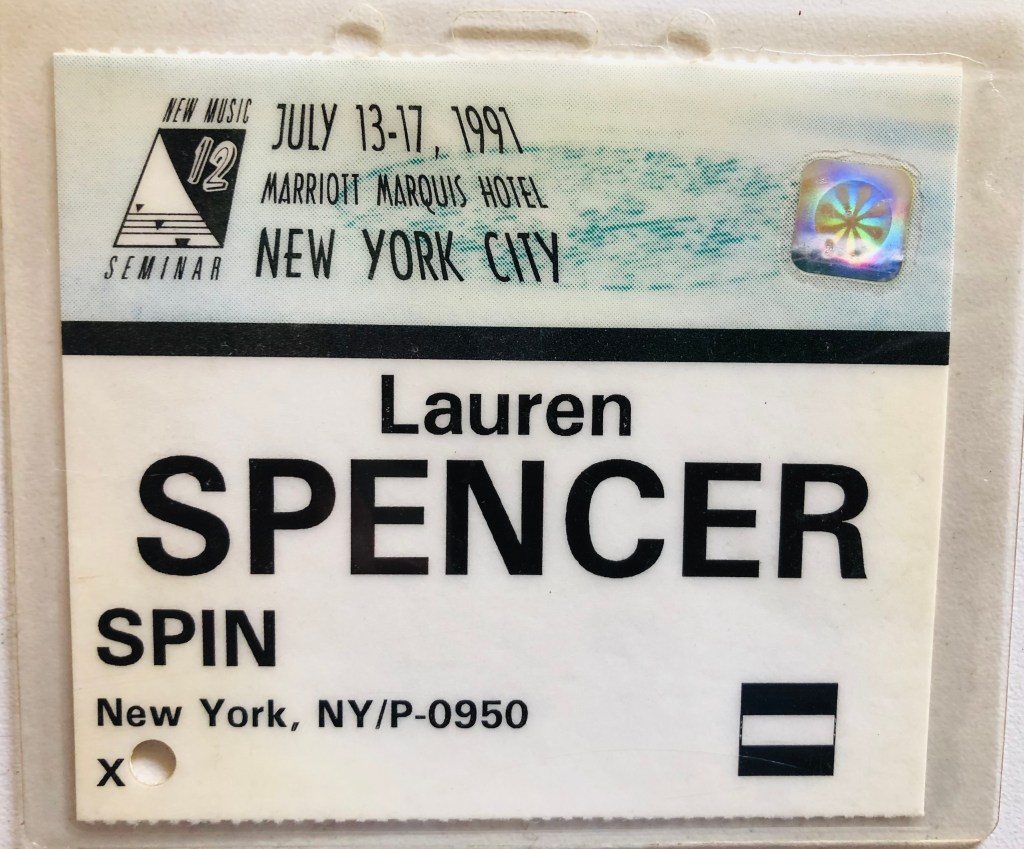
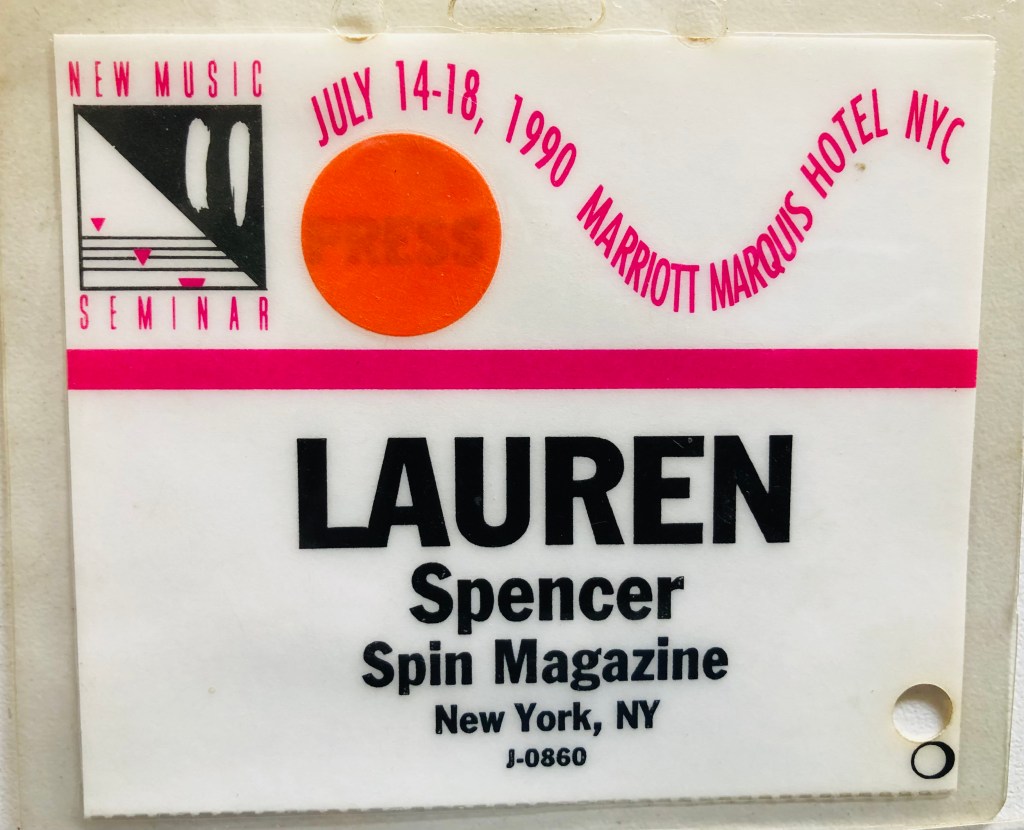
Every July in New York City for as long as I was in the music biz the New Music Seminar was a thing. The city would fill with bands and artists whose record companies had jockeyed hard to get them a spot at venues around town where for five nights all kinds of noisy music stuff would happen while during the day “experts” would blab on about the blah-blah-blah of the future blah-blah-blah. Twas fun (for real). My birthday always fell smack dab in the middle of this melee of music and I didn’t ever mind that since record biz honchos would foot the bill at fancy restaurants every night. Sometimes my SPIN cohorts and I would triple-up: cocktails at one place, main course at the next, dessert somewhere else. Because record company publicists were my most regular day-job contacts, a few of them became friends. Blurred lines and such. One such person worked at Epic Records and they had a new band, Pearl Jam, who were playing during that summer of 1991. I’d already been to the UK to interview them while they were mixing Ten, their first album (that story involving an English manor house, sheep, and getting kicked out of Harrod’s department store to come), so I knew them a bit. As we ate Indian food during seminar week at a local restaurant, the topic of baseball came up. Eddie Vedder (lead singer, etc.) had noticed that the San Diego Padres were playing the NY Mets at Shea Stadium the next day and wanted to go given he’d developed a liking for the Padres during his time living and surfing in San Diego. Stone Gossard and Jeff Ament (guitar and bass respectively) were more hardcore basketball fans, Mike McCready and Dave Abbruzzese (guitar, drums) had no feelings about baseball either way and had other plans. I liked baseball and while I was more a Yankees than Mets fan, a trip to Shea sounded like fun. It wasn’t meant to be part of any SPIN article, but rather two people going to a baseball game before one of those people played a show with his rock band at the Marquee that night.
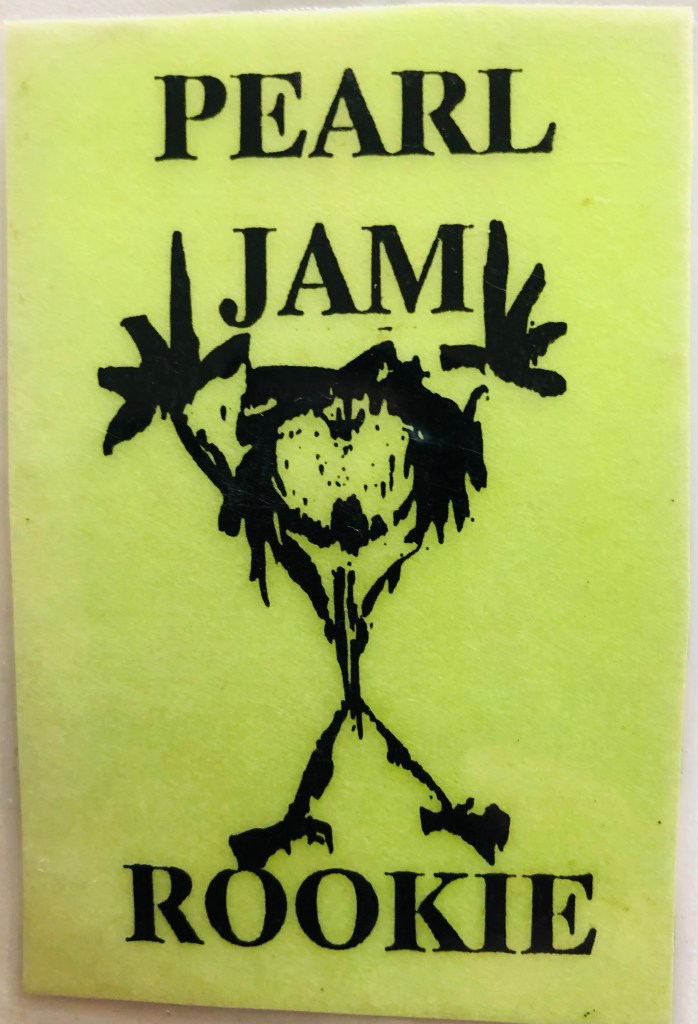

I met him the next day at the subway station near the band’s hotel and we rode the train to Queens. At one point, after he’d pulled a face at a baby sitting in a stroller across the way and her mom said, “Aww, you two would have such cute children” or something equally mortifying and thrilling as those things go, he turned to me and said, “I’m not sure how Beth [his longtime girlfriend] will feel about that” and I laughed to stomp down the sudden rise of weirdness that flashed through me. I loved hanging out with musicians. I also loved writing. But the two were not always joined. And perception could be a problem. If I wasn’t there as a representative of the press, then what was my end game? As a woman, especially at that time but even still, the problem was often an assumption made. Was I angling for a groupie, a hanger-on, or some kind of succubus role? Was it possible to just be a friend, no strings? And if so, how would that affect my ability to write clear-eyed stories about said friend without personal stuff getting in the way? To be honest, I never figured out or fully answered those questions. If I wasn’t on the receiving end of that type of judgment, or at least assuming that’s what someone was thinking, I did a fine job of posing the question to myself, then becoming pissed that my male cohorts were pals with famous people yet weren’t subject to any they-must-be-sleeping-with-the-band hypothesis.
So those thoughts flashed fast through me as the 7 train pulled up to our stop and Eddie and I walked toward the stadium. Going to our gate, a guy who looked familiar waved. Eddie nodded. The guy said Hi, then kept on going. Turned out, he was one of the reps from Epic Records. I remember thinking, what a coincidence, then it dawned: Who goes to a baseball game alone? during a workday? He had to have been there to check on us. To make sure I wasn’t going to kidnap the label’s hot commodity and stop him from getting to that night’s show on time. Like some sort of rock’n’roll secret service. Pearl Jam’s debut album wasn’t out yet (not til August) but there was buzz. To the best of my memory, we both forgot the weirdness of being the ones watched and instead watched the game. Ate some stuff. At one point we were talking about our families and I asked how his relationship with his stepdad was going, especially since finding out he wasn’t his real dad and all. Eddie looked at me surprised. “How did you know that?” “Um, the lyrics for ‘Alive’ say so?” He looked a bit shaken and I remember thinking, This guy may be in real trouble once people start deciphering his lyrics. But then we went back to the game. The Mets won. We got back on the train and he headed for the club for soundcheck. No sign of the Epic rep, although we weren’t really looking for him. And the show that night was amazing. All in all, a delightful day from beginning to end.
And that’s the thing, I was really lucky to have had a lot of journalistic latitude in getting to know amazing people in bands, in solo careers, behind the scenes, on all levels. I didn’t have to sign NDAs. I didn’t have to send in my questions for approval. Hell, most the time I didn’t have a very clear-cut set of questions to begin with. It was meant to be in the moment, ferfuxsake. Rock’n’roll and all that. I formed friendships and got to know incredible people, even if just for one day. I did get a glimpse of what can happen when lines are crossed because the subject of a piece is angry about what was written. When writer Lynn Hirschberg wrote an article in Vanity Fair about Courtney Love in 1992, it got ugly and I had a very uncomfortable center-row seat, which I’ll write about in an upcoming column. But until then, suffice that the time spent with artists was joy sprinkled with confusion, naivete, and many other things that I’m starting to name as I pull more out of this particular box of time.
- (from Columbia Journalism Review article) …“the media” as a general term for what we now call “the mainstream media” …[made its] full entrance into the American vocabulary … strategically promoted by the Nixon White House. To refer to journalists as “the press” ceded them an emotional upper hand, an aura of rectitude and First Amendment privilege. That advantage—unacceptable to Nixon, whose aides sensed that reporters held a bias against him—could be removed by calling journalists “the media.” William Safire, who was a speechwriter for Nixon, describes in his memoir, Before the Fall (1975), how the administration pushed the term “the media.” In the White House, he recalls, “The press became ‘the media’ because the word had a manipulative, Madison Avenue, all-encompassing connotation, and the press hated it.” Nixon judged journalists to be his opponents, Safire remembers, and declared to his staff that “the press is the enemy” a dozen times in Safire’s presence.
 Does This Make Me Look