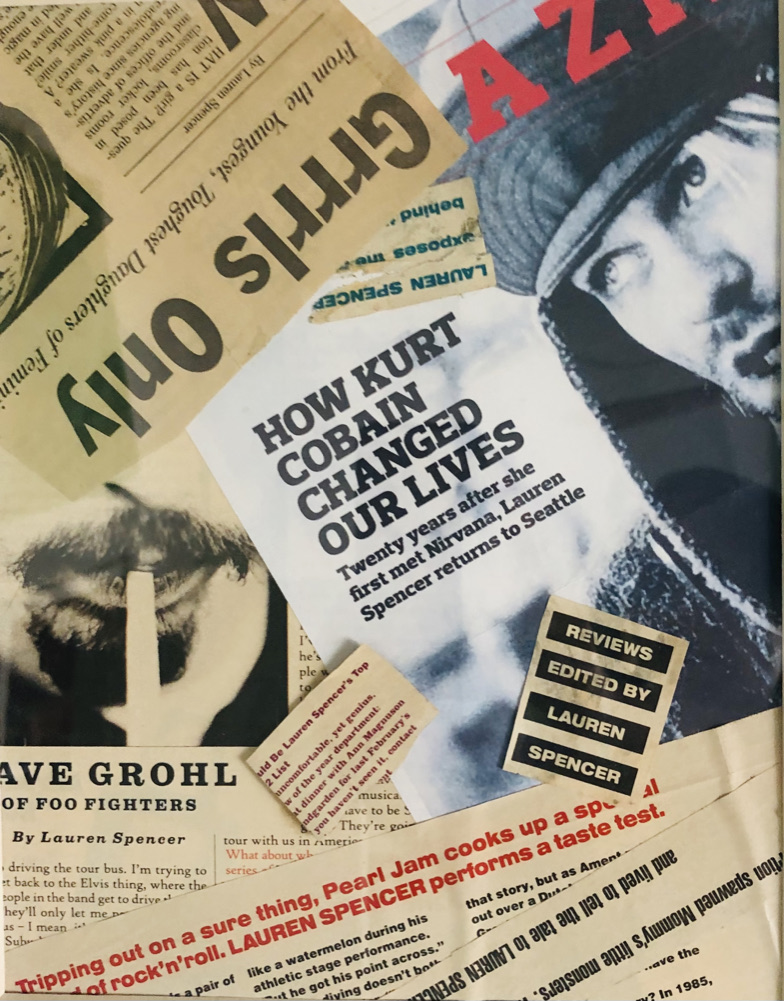
Last week I scratched at the surface of what lay below my proclivity for career Yes’s. The quiet whisper of pleasing that would often turn into an inner roar of WThaHell? Why’d I think I could do this? Yet … I don’t want to disappoint by saying no. If I fail, I’ll just relocate somewhere else.
I had been thinking about where all those Yes’s led me. I was rarely putting anyone in danger except occasionally myself. I wasn’t pretending to be a schoolbus driver, then learning on the job. It was entertainment and while there were certainly stakes, they were relatively low in the larger scheme of things. My Yes-I’ll-Do-It became a spicy stew of doubt and confidence swirled with flop sweat. Truthfully, I usually did fine, sometimes less than, sometimes more than. But an interesting thing happened on the way to telling my own tale: I created an origin story that positioned me as having just fallen into it all. Of being a random participant in all kinds of adventures. Just happened to be standing here and look what happened? This Rolling Stone job? Well, hrm, didn’t see that coming. Becoming a writer/editor at SPIN? Well, I’ll be damned. I just wandered in. Producer on a TV show, well y’all left the door open, so I slipped through.
These shuck-sy stories are mostly bullshit. Of course I worked, plotted, planned, studied, and the like to get onboard the music journalism train. I wanted first-class travel in the world I loved. To be delivered while also getting blissfully lost in words and chords, lyrics and notes. What did I need to do to take that ride? And for sure I wasn’t immediately qualified for a couple of my career highs, but yet I was always willing to bluff until I could mostly hold my own. So why did I spin tales that made the event huge and the person (or rather, me) small ? When I’m honest, the stakes of success seemed too scary a responsibility. What if it was a one-off? Beginner’s luck and all. A kind of what’re-y’all-looking-at? mentality and I can’t keep up the quality. Don’t get me wrong, I liked (still do) the attention on the upside but staying in the glare of it made me uncomfortable. Light too bright, trip and fall, unbearable embarrassment…I’ll stay over here, thanks. But there’s another layer underneath. The one that murmurs “Don’t brag. Not seemly. Unattractive.” Gaaah. That damn spot.
I’m going gendered on your ass here: After 60 years on the planet, the message that women talking themselves up is side-eye cocky or outright abhorred while men are considered confident and assured is not a new one. During my career, I swam in that sea for…always. Even as I write this, my inner chatter is juddering with “oh, no, stop. don’t go celebrating yourself where everyone can hear you.” False humility is just annoying. I started with a good dose of that decades ago when I’d tell my story of how I started working at Rolling Stone. It went a little like this: “I was the intern who wouldn’t leave,” then there’d be some ha-ha-has where everyone would be put at ease because I wasn’t saying I was special and people could feel like I was just one of them. It could happen to anybody. I didn’t tell about how a month before my internship ended, I stopped by the desk of Jann’s assistant almost daily to say Hi and let her know I wanted a real paying job at the magazine. There was no human resources at the time. She was my golden ticket and I’d already gone out of my way to help her when she needed it. I knew I was laying the table for my future so that when, for instance, I covered for her during vacation and Jann came out of his office with cocaine all over the end of his nose accompanied by Michael Douglas and they were headed to the elevators for lunch, I didn’t tell anyone, even though I was dying to call all my friends. I was also unsuccessful at miming the wiping of my own nose while staring at Jann thinking he would understand what I was doing and therefore wipe his own. When she got back, I did tell her though. She thanked me for not making a big thing out of it, even though everyone knew. Everyone saw him. Very badly kept secret. But yet, these little things added up so that when a job as assistant to the executive editor came about, I got it. And not just because I could keep what happened in the office in the office but also I also knew who sat where, how to use the copy machine, and which editors preferred cream no-sugar for the daily deli coffee run. AND, I could do the job.
When I was promoted to the Rolling Stone copy department, I actually didn’t really know how to do the job, but it was entry-level and I knew I would learn, even if I was constantly afraid I’d fuck it up. And I did mess up. And I did learn. The boot camp meets rock’n’roll vibe was exactly where I wanted to be: Surrounded by all my people, working into the wee hours every two weeks to send the magazine to press. The magazine would cater a meal on those nights, where there would be alcohol along with a range of drugs available from the Capri Lounge which was a small dark space where the magazine pages were photographed for printing. (Here’s a slice’o’time article on how magazines were made pre-computer and one on the Capri Lounge.)
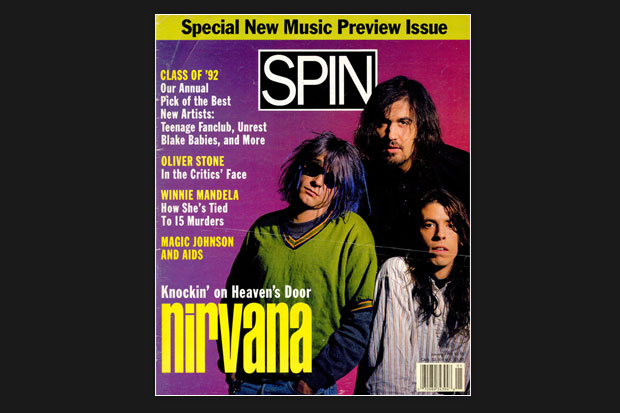
Then I was hired at SPIN for another job I wasn’t really qualified for, but again, I’m a stubborn bitch and although terrified 24/7 that I’d blow it, I was also determined given this was my dream job, even if I had nightmares on the regular while doing it. In August of 1991, I got a cassette tape from DGC records of an album set for September release by Nirvana. Called Nevermind, it was their first major-label release. I’d heard their first, Bleach, but this blew me right out of the pool in a way I’d never been blown before. Subsequently I pitched them as a feature story. I was given the green light for something to be included in our January 1992 New Music issue, which was put together in October/November (magazines always work two or so months ahead). This was before anyone really knew how the band or the release would do. There was something in the air that suggested this thing would be big and it wasn’t just me who felt it, but ultimately, when it was decided that Nirvana would be on the cover—the first US cover story for the band—I knew I’d had something to do with making that so. And I had a chance to crow, but in a lot of cases I “Aw, shucks”‘d my way through the attention.
So owning it is what we’re talking about here, because today I even questioned my own belief around the story of writing the first cover article on Nirvana. So I researched it and came across not only proof that yes, inner-doubter, it’s true I did do that, but also an article that erased me altogether. And that has my pulse quickened and my heart hammering. For two reasons, really: One, when I left the music industry, I truly walked away. A little like one of those explosion walks in movies (Penelope Cruz in Desperado although without Antonio Banderas) where I just stepped away from the fire and kept on going. Didn’t take anything with me. Just wanted out. In doing that, I believed I’d forfeited any claim over my successes. Now that’s a crazy amount of bullshit right there. Second, in so doing that, I rubbed myself out. Stopped telling my stories and let them roll away alone or, in the case of this article about the Nirvana SPIN cover choice, recognize them as mistold/misremembered (see the section in piece under “Baltin: What was your thought process as you were listening to the record?” I have more to say on that in the audio bit below).
So here I am coming out the other side of the fire. Been decades, I’m a little ashed-on, dusty, but I’m writing my stories. In fact, today I’d meant to tell the one about being a producer at the short-lived Jane Pratt television show but instead my writing self had different ideas, so I let it roll. This is what came out. I’ll visit Jane Pratt next week (probably? maybe?) but until then I’m putting away the matches.
 Does This Make Me Look