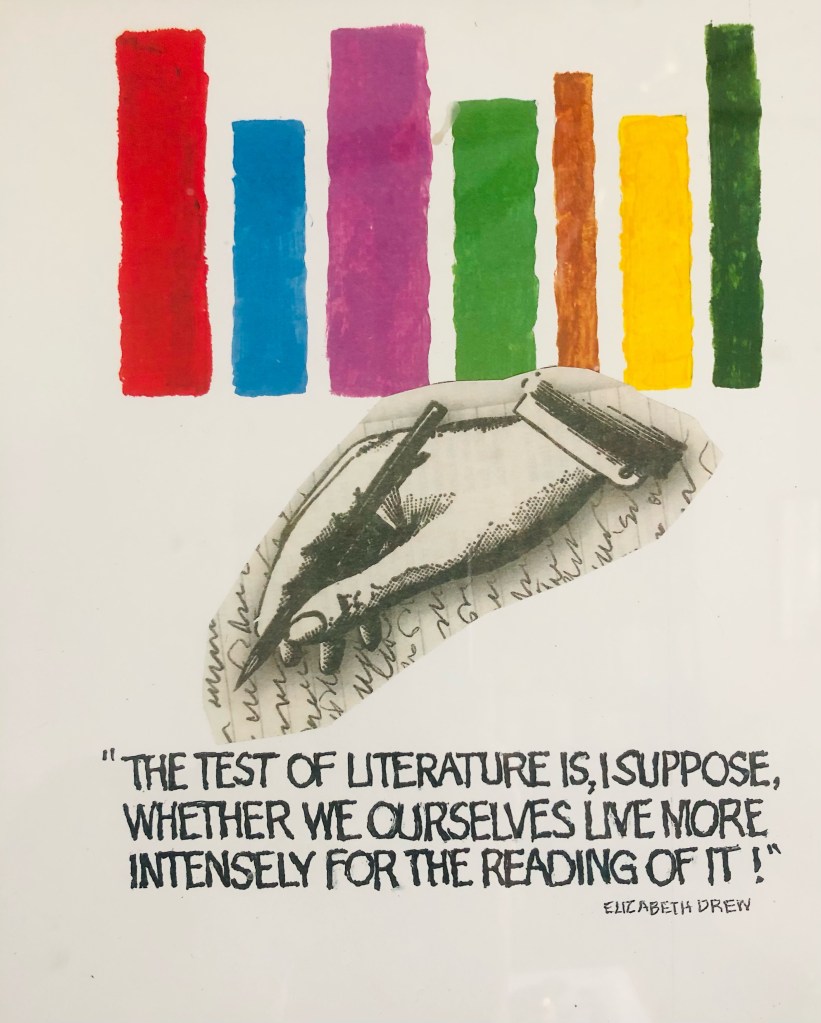
It all started on the floor of our living room, Christmas Day, 10-ish years old, Little Women splayed out in front of me. And I was gone. Completely taken in. And that’s when books came to be immersive. Escape hatches into other worlds. It wasn’t that my world was bad at the time, just that I’d never visited any other. Sure, there had been fantasmic worlds built from stories that had been read to me by my parents and teachers, plus imaginary friends who helped me create imaginary places. I also had real-live friends and we’d romp it up around created worlds. But something about visiting places completely different from where I lived in time periods I’d never know was mind-blowing on a very visceral level.
And so it began. Books as companions and then lenses through which to see the world. And I wonder, are the places we inhabit influenced by the book we’re reading at the time or the book infused with the place we happen to be? This site suggested by a friend is a cool experiment on that subject. Jami Attenberg’s memoir I Came All This Way to Meet You has this bit about traveling with books: “The books we carry with us … become a part of that journey, as much as a special meal we eat, a piece of art we see in a museum, a viewpoint we climb to ….”
I’ve got my markers that plant a pointy, story-sized stick in the ground of a memory around certain novels (and it’s always a novel as I’m a fiction lover with side dishes of non): Paul Bowles, The Sheltering Sky, out on the fire escape of my first Lower East Side apartment; Anna Karenina while standing in line at the passport office on Fifth Avenue so I could take my first trip as a music journalist to England for Rolling Stone; A Moveable Feast in Paris, then trying to visit every cafe and bar that Hemingway and Fitzgerald did—not drinking as much though, so probably missed a lot of the experience, though I wouldn’t have remembered if I had been drunk that much; Colette on that trip too. I wondered if I’d feel more of the city if I wrapped myself in those writer’s words and in a way I did, but in another way, I was probably insufferable about it. It was probably good I was traveling solo.
Then there are the covers of books and the messages they’re meant to convey. I took Presumed Innocent with me when I first got called for jury duty in NYC. I was legit reading the book at the time but thought maybe it would also get me out of serving. It didn’t do a damn thing. Of course not. No one even noticed and I got chosen for a trial that involved a crime that had happened at a playground one-half block away from where I lived (with the Paul Bowles–reading fire escape). One of my fellow jurors freaked the fu*k out of me by suggesting the defendant may recognize me on the streets if we didn’t convict him. In retrospect, that comment didn’t make a lot of sense, but at the time I’d moved onto Bonfire of the Vanities, hardcover, massive, possibly good for protection if needed.
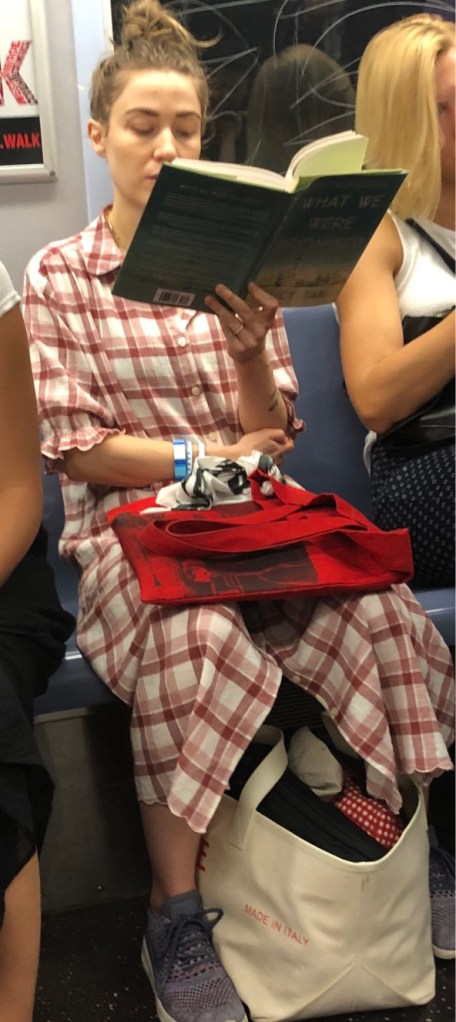

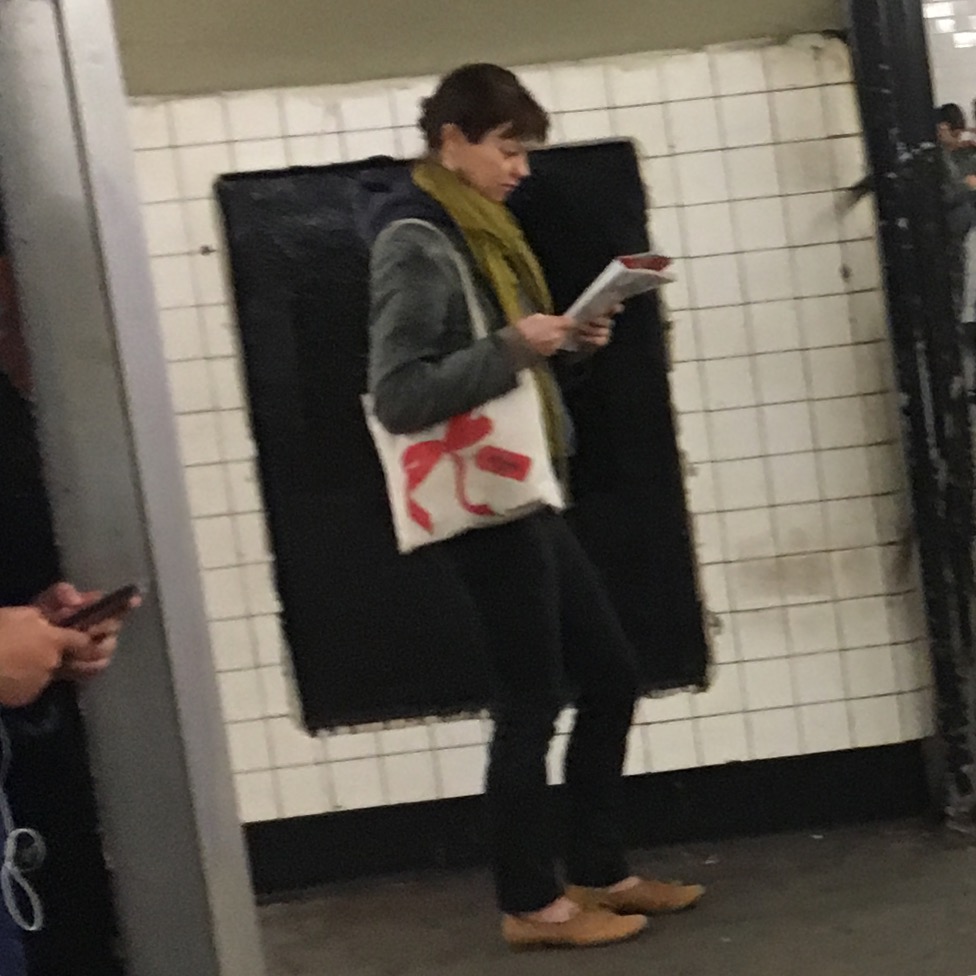

On the subway, there was a lot of judging people by the covers of their books—at least by me. (Hotdudesreading Instagram.) There was an article, which I can’t find right now, about someone taking the F train from end to end, which means Jamaica, Queens, through Manhatten, into Brooklyn and last stop Coney Island. A stop in almost every version of a New Yorker’s existence. It was pretty funny how on-point certain neighborhoods were with their book choices (as I remember it): Newspapers in early-morning Queens, mid-town New Yorkers, textbooks near NYU, East Village poetry, children’s books entering Brooklyn, Eastern European novels by the end of the line.
And I’ve been one-hundred-percent on board with picking up a book for its cover, then reading the flap to see if it’ll fly and if so, the first page to seal the deal. With humans, flap copy and first pages aren’t readily available. You have to hang in there for a minute to decide whether it’s worth your time or not. But without a doubt, judging from the covers we all wear on the outside give a quick good read on what’s inside. Obviously, this can backfire.
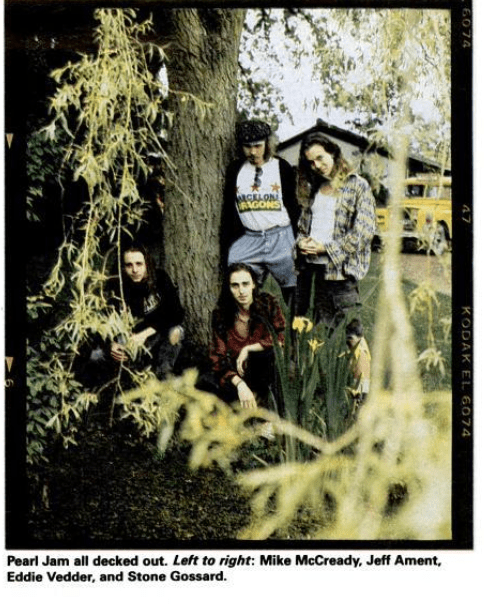
During my first interview with Pearl Jam in London, they were mixing their major-label debut Ten at a massive old house outside the city. The record company’s publicist thought it would be funny to take them for tea at Harrod’s department store, that stiff-lipped bastion of all things British with a capital B and rolled off your tongue with just the right Queens (UK) accent. Point was: One of these things is not like the other. We would meet said publicist in the tea room on the fourth floor. There would be crumpets. And tea. And little triangles (or squares) of sandwiches with cucumbers. And absolutely no crusts, unless you consider the upper kind in service to social status. The band and I approached the revolving door: four of them (no drummer was with them at the time), me bringing up the rear. And in they went, and out they came like pez’s released from each door-cubby. And there we all were standing again on the sidewalk. Some confusion, but really not too much considering the pretty standard-dressed security guard (white shirt, black trousers, a tie) revolved out to explain there was a dress code at the store and these lads didn’t live up to it. Eddie offered to buy an appropriate outfit. Still no-go. That’s when we realized the band had already been judged unworthy of entry and no amount of purchasing power would change that. As we walked away, leaving the publicist to wait and wait and wonder (pre-cellphone days and they wouldn’t let me in either), one of the guys said, “We wouldn’t be able to afford to buy anything from there anyway.” And another added, “Better things to spend money on” (or something along those lines). We all nodded and agreed how uppity some people could be and how good it was to just be normal (read: poor). And funnily enough, not that many years later the band would have enough to buy any damn thing they wanted from Harrod’s. But they probably didn’t. We passed by a newsstand on our way to a pub and there, staring out from the cover of Vanity Fair, Demi Moore, pregnant and naked, an image that had caused a beyond-stir and became one of the magazine’s biggest sellers, because of course it did. The point of a cover: To catch your attention. We carried on, drank some pints, I got the interview, went back to my hotel, can’t remember what I was reading at the time, although I’d been going through a massive Milan Kundera phase.
And we carry on. New covers to consider every day. Much hope for what lies between. On my nightstand now: from the library, The Madwoman’s Ball, Victoria Mas, and Lessons in Chemistry, Bonnie Garmus. This last one gives me tons of hope as the author is a woman of a certain age who was signed to an agent through the same CBC writing course I’m involved in, so naturally I’m channeling her juju and cheering her on! Plus the cover’s really eye-catching.
 Does This Make Me Look
Just recently, I missed by train because I was standing there, reading, engrossed in a book! Plus I’ve missed a stop or two because of a good book. Thank you for reminding me of my love of books. I sometimes take it for granted. x
LikeLiked by 1 person