
l always hated transcribing my interviews because all I would think was “I talk too damn much.” Silence. Scary. Always been hard. I thought pauses equaled boredom, which meant the interview must be tanking. Taking into account that someone might have been thinking, pondering, planning an intelligent answer to a question? Nah. Echoey silence propelled me to dive mouth-first to fill up the space.
Stories. That’s what I was there for. That’s what I’m still here for. It’s taken (taking) a while for the understanding to sink in that in order to hear stories there has to be some silence for them to enter. I know I’ve still got work to do on that given a good friend brought to my attention a moment where I jumped in with a question as she was telling a story and she laughed. “You’re such a journalist,” she said (or something akin to that), “I was getting to it.” And I knew I’d been rushing ahead. My mind all “I wanna know, I wanna know.” Oh, and patience needed as well.
In 1992 at SPIN, I had an assignment to go to New Orleans for the Blues and Heritage Festival. For some damn reason, the magazine decided at the last minute to turn the story into a fashion spread rather than a music piece. Meh. There was an interview that never made it into print but was absolutely imprinted in me: the Blind Boys of Alabama. The group hadn’t been on our original lineup of interviews, but at some point it happened that I was going to go talk to them. I didn’t know much about them except for what I’d learned during my days driving Jim “The Hound” Marshall to his radio show out at WFMU in the mid-1980s, then hanging out in the studio with him for the four hours on Saturdays when he played classic gospel and old rock’n’roll. So there I was five years later in an empty theater where they were soundchecking. They walked onto the stage, a hand reached in front holding the shoulder of the man ahead of him. Their manager, who was in the lead as I remember it, stopped in front of the row of microphones, at which point they turned out toward the theater and began harmonizing something glorious. Afterward I went to interview them backstage and received a lesson in listening. They had a rhythm. A way of interacting with each other that was graceful and generous that I felt intrisically. It wasn’t as if it was scripted, it was more that there was a natural pausing point. A place for a question to enter. It was more relaxing than any other interview I’d ever done, even though I knew close to zero about them.
Up until then, I interviewed artists and bands who, if not actually in a musical scene that I already knew tons about, I’d listened to and read about endlessly. I would always try to ask something no one had ever asked about. This was usually ridiculous. That whole premise, I now know in my bones, is based on a craving to hear someone say, “Wow, no one’s ever asked me that before.” And it’s ultimately a fool’s errand. I think the only time anyone said that to me, they might have been being sarcastic.
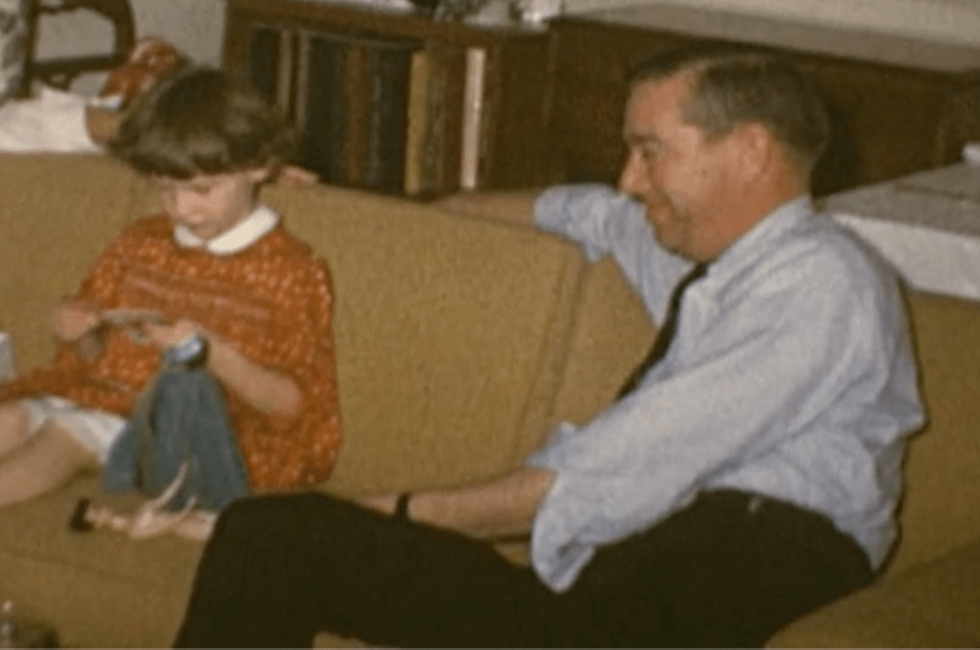
Lately I’ve been listening in a “yes, and…” kind of way. This improv exercise is pretty great and it’s a place I’m visiting with my dad right now. There are never, “Hey you said that already” comments, there are only “yes, and then what” or “yes, and you’ve got something there” and so on. Whatever words want to be said, however many times, can feel new no matter the context. And listening. To stories about his dad who was a manager in a shop where parts were made for WWII ammunitions. About unions and how necessary they were. And about his good friend Tom. These stories live and breathe and want hearing. I ask a couple of questions, not to do with what he had for dinner last night though because that’s not available currently, but about whatever it is we’re currently spinning on because that’s what’s available. And I’m all ears.
I realized last week I used the verb “keep” when I was describing to friends what I think my current role with him is: “keep him safe” “keep him happy.” I’ve thought about that and realize that’s the wrong verb. I don’t have the power to keep him in either of those ways. I can make sure he takes his cane and organize his pill case. He can decide how that makes him feel. Probably “let” is more the correct word. I can let him feel his feelings, be happy when he wants to, be grumpy too. And “listen.” That’s the other verb available. The listening tour I’m on currently is local stops with far-reaching stories.
(In memory of Tom Donnely November 1926–October 2022)
 Does This Make Me Look
Yes. 💗
LikeLike