Just finished watching the adaptation of Fleishman Is in Trouble. The book is one of my favorites and I think Taffy Brodesser-Akner (author) did a fantastic job adapting it for the (small) screen. In 2019, when I first read it, what stood out had less to do with age and more to do with the kind of Rashōmon stories we all live: What we think we know about others, what we’re so often wrong about. How complicated relationships can be. Four-ish years later, something else caught my attention: Being in your forties sucks, or rather, wow, what a ball of confusion that decade can be what with the arc from beginnings (almost-new everything: relationships, possibilities, hope, curiosity) to a middle (just everything: subtle settling, a pinch in the expectation department, some sort of heartbreak), along with a door-crack into a future that alternates between ads for cruises along the Rhine holding sparkling wine and ladies complaining of the hot flashes and calcium needs (looking at you, menopause). Or maybe I’m just talking about myself here, but I doubt it.

My forties couldn’t have/wouldn’t have been such a cauldron of confusion without the Evel Knievel–ramp that was my thirties. On that birthday I’d been sat at a four-top with seven people in an East Village Indian restaurant with Pearl Jam and their publicist. No one but me knew it was my birthday, which suited me. The dinner was meant to be business but it was also a huge pleasure. The publicist was a pal because, save for two women who I’d known since college, most of my friends at the time were in the music business. When it came to female friends, those were primarily publicists and managers. (Side note: Any wonder women appeared the majority in these careers? The combining of mental acuity for the business with patient attention to being the caretakers who set up playdates, er, I mean interviews, press trips, tours, and also found lost passports, local support meetings, and doctors who made hotel calls impressed me more than I probably ever expressed.) On that night, turning thirty, I remember clearly feeling the thrill of where I was. Somewhere I had always dreamed of being both physically and emotionally: Sitting with a band I loved doing a job I felt would catapult me into forever happiness. My career path. One that felt like a diamond dropped into my lap for me to polish into a satisfying career crown. I had a plan on how to make it shine. To stand out from the guy-ville gang I wanted to be a part of while also cutting a little deeper into the heart of rock’n’roll by lowering myself slyly into the souls of musicians. I not only wanted to understand them bones&all but also bring them to a deeper understanding of themselves. I craved hearing at the end of an interview, “You! You have opened my eyes to myself and my art in a way no other interviewer ever has.” (See: relationships, possibilities, hope in first paragraph.) I wanted to combine the fierceness of music-writers, Julie Burchill and Caitlin Moran, who were over in the U.K. with a stateside sensibility that might have resembled therapy.
It didn’t really work out that way. I maybe should have just turned the therapy on myself because by the time I was exiting the music business bruised and confused about why the guys got to make the raw moves, then write about it (you know, the drinking, drugging, disappearing with a band only to surface days later with a juicy story) they were feted and given more assignments. When I went down similar paths (drinking, drugging, disappearing with a band only to surface days later with a juicy story), I got called into the editor-in-chief’s office and told I was irresponsible, called into the accountant’s office and grilled about why the hotel bill was so high, and just generally called suspect (in lieu of a more sexist term like slut) by my fellow male journalists for what exactly I’d done to get my story.
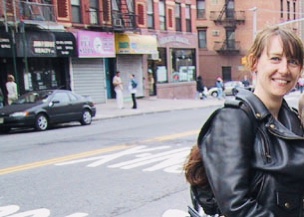
On my fortieth birthday, I sat at a table for ten across from my then-husband with mutual friends around me. He’d arranged this dinner and it was one I hadn’t wanted. More specifically hadn’t wanted it on that particular night. I had a hella early wake-up the following day to catch a couple of trains and a bus to a school in Queens where I’d lead a writing workshop for sixth graders, then head off to Brooklyn in the afternoon to do an after-school with some teenagers. A version of this schedule happened four days a week and at the time I ignored how draining it was. The over-emphasized me who’d walk into a classroom channeling my Shecky Green trying to make writing fun, telling stories to get them excited about characters and plots and stuff. I’d play music for writing warmups and when “Lose Yourself” was the choice they’d always want to know if I knew Eminem. No. I didn’t know Eminem. Often, this appeared to be disappointing and I’d feel like I’d lost them. That they might have been thinking, Well, what good are you then? Sometimes I was tempted to lie. Yeah, I know him. He’d want you to not throw things at each other or fidget so much. Probably though, I was reading way too much into their reactions. In fact, in my forties I did a strange dance of both paying way too much attention to the reactions of strangers and way too little to my own reaction to things. Like, why did I cry all the time? Where was that career path I’d been on? Had I wandered too far off it to ever get back? And what the hell was the career I wanted anyway? Music was not moving me anywhere anymore and my writing hand and heart felt paralyzed by the wizards of doubt.
I’d stuffed the chaos of my thirties into a tiny mind satchel and hoisted it onto the top shelf of an even smaller and darker mental closet, then stepped into the marriage chamber that I mistook for a safe room. From the beginning, if I’d listened to myself I would have known that it wasn’t that, couldn’t be that. Displacing inner exploration with amnesia I rolled along wondering How in hell did I get here? Sometimes quite specifically. Like when I was standing on the corner of 23rd and Park trying to get people to talk to me for a focus group, slipping inside an ATM vestibule when I thought I saw someone I knew from my music days. Being lectured when I didn’t come back with enough names on my clipboard who wanted to talk about the titillating wonders of Tide’s new stain-removal pen. I’d think righteously, Don’t you know who I’ve been? then realize, who cared. I didn’t even know who I was. But my forties also set me free. Once I finally paid attention to why I was crying all the time, went to therapy, got a divorce—even though I was blindsided by the request—something broke open and I began to find my way back.
Back to the city, an apartment of my own uptown, even a glimmer of love for music again through a movement class, the very same place I met a community of women who helped put me back together. I reached out to old friends. I thought about writing. I pretty much never used the word career, which actually felt fine.

On my fiftieth birthday, I sat on a couch in my apartment and stared out my big window at the tall trees in Forth Tryon park. I was talking on the phone to a man I’d recently met who was kind, sexy, funny, and curious. I’d come out the other end of my forties on the verge of bankruptcy but I’d found my way back to the world of words. Freelance copyediting for various magazines. It was a relief to enter other people’s stories and still indulge my love of wordsmithery. My heart might have been skitterish in that moment but it was because I was excited about possibilities: the man on the phone, the view out my window, the emotional grip loosening around my own expectations. I’d made it here and although waves of doubt around what I could do still tumbled me, I had a much clearer view of my horizon. In the decade of 50 I found my voice again in my words slowly coming back to the page, to my confidence, to my heart, where I let someone in. I paid attention less to what was expected and more to what was needed. I moved into menopause but didn’t mourn as much as notice what that transition meant. I also bought better moisturizer. I still struggled with money, which was primarily where my shame lived. And as the decade closed out, I was open to the move with Dennis, the man on the phone, that brought to California to be closer to my aging dad. While NYC still held (holds) the dreams that brought me my career and formed me, I began to understand that I it wasn’t the city that did it, but me. I did it. Still doing it.
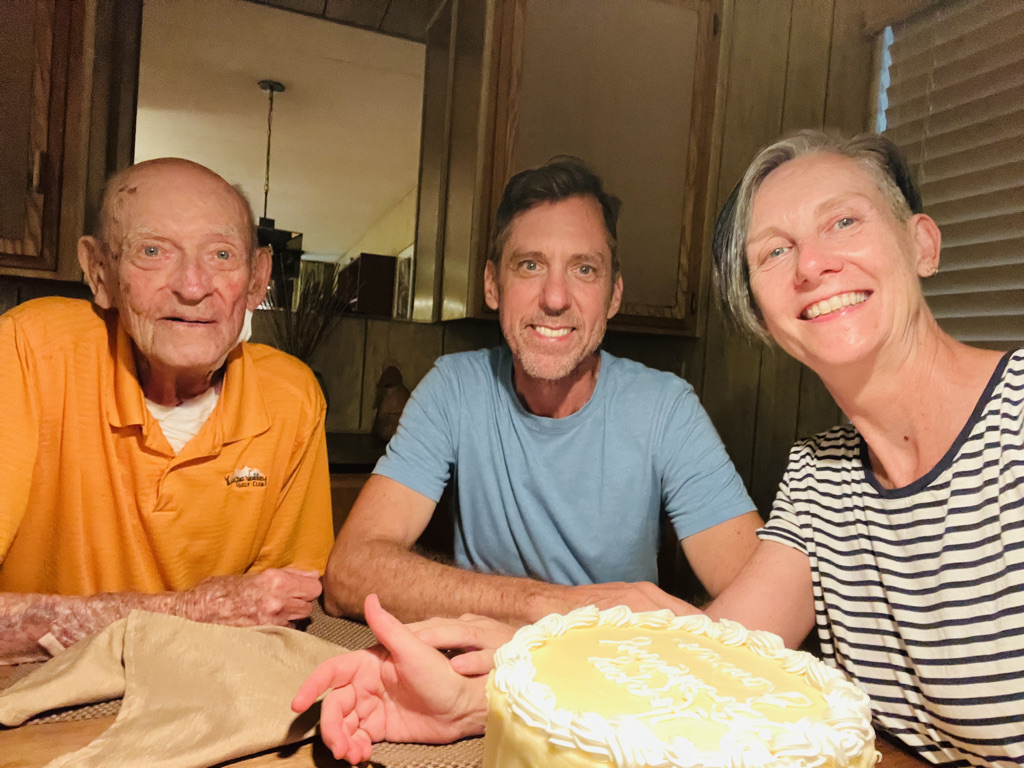
On my sixtieth birthday, I sat at a table with Dennis and my 95-year-old dad. I’m still tumbled by the occasional terror but they are quite different from any preceding decade. More to do with the immediate moment than an abstract future. I also have a better way to talk to them, and have inner discussions on my options. I’m better at breathing, something I’ve been told in countless movement and yoga classes that I uniformly misunderstood. Uncertainty rides up on the regular along with an excellent sidekick of joy and forgiveness. Of self. Of others. And so it goes.
Nine years to seventy.
 Does This Make Me Look