Memory Manor: Sorrow and Bliss*

misty 2022

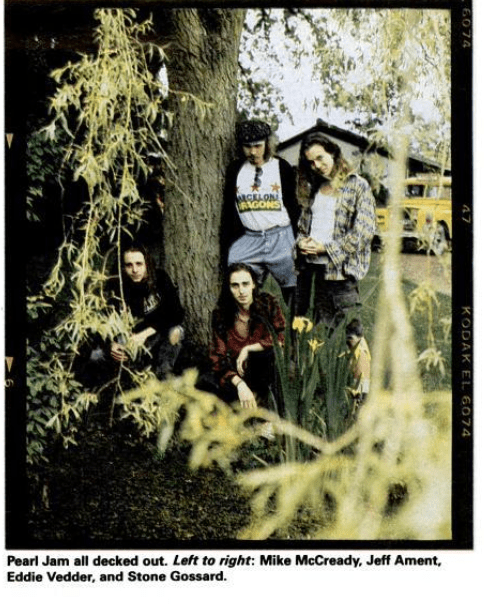
Somewhere in a box in a storage unit in NYC is stored a collection of moments caught on actual photo stock from back in the day—the nineties, to be exact—when pictures weren’t captured, then stored, in a virtual photo album. There were no Google memories from five years ago flagging me down on my device to tell me “Hey, remember this?” I’ve suffered some losses around these tactile photos (who hasn’t, really?). The most extreme of these misplacements was when I moved in with Dennis eleven years ago and a plastic bin of Polaroids taken during a tour I was on with Pearl Jam went missing…okay, didn’t go missing, I put the wrong container into the dumpster, then didn’t realize until months later. I still get all ooky in my gut about that fumble. There is no cloud they ever lived on except the one in my mind. I can recreate the images in my head, I just can’t actually hold them in my hand.

But a good portion of non-kodachrome, live-only-in-my-mind memories are hazy, personally shaded and highly unreliable. Tinted with time and emotional egress depending on where I’m standing to look at them. I just finished Candy House by Jennifer Egan (friggin’ beyond the valley of good) and in it there is a virtual service called Own Your Unconscious wherein you can download your past to access and view, guaranteeing that any and all moments can be revisited like a home movie. It’s an idea I’ve no doubt is being (or has been being) worked on and developed in a tech complex currently and will be ready for primetime any year now. As much as I might wonder about why certain swathes of my past are just gray fog where I have literally no discernible shape around a particular event, I think it would be weird to have something all laid out for viewing that would strip away all the blurred edges. Blur can be useful, make for better stories. Or maybe just continue a storyline I’ve been telling with only traces of truth. I don’t know.
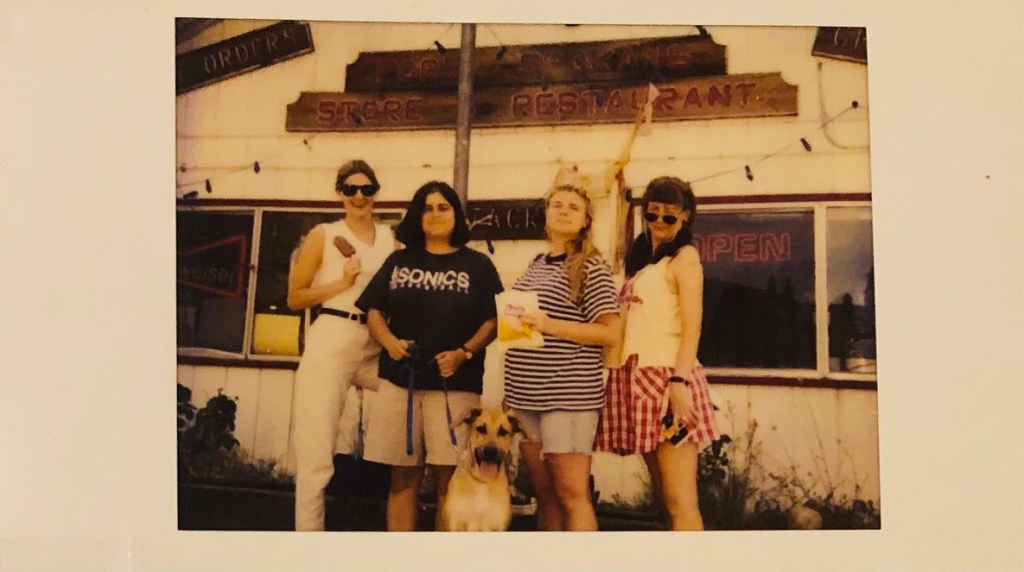
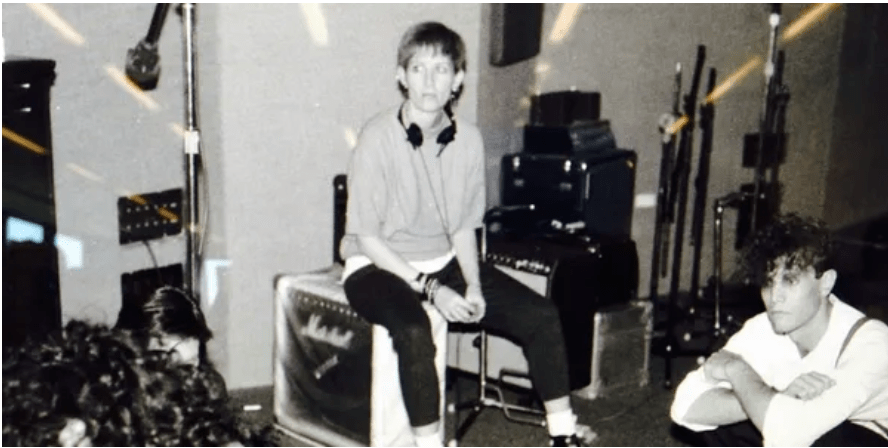
a camping trip with friends in the 90s. I can remember a lot of moments looking at this photo.

When I think about the box of photos sitting in that NYC storage unit, there’s one I’m sure is in there: It’s 1994 and a group of young women in very short, glittering, somewhat see-through, silver dresses all slanting slightly sideways because of the towering beehives coming off our heads are posing in a sassy girl-power kind of way—arms around each other, big smiles as wide as the hair is tall, knees crooked as if we’re on the verge of kicking out a chorus line. We’re minutes away from walking down the aisle as bridesmaids for Amanda Scheer during her wedding to Ted Demme. I remember nothing of the walk down the aisle or the ceremony itself. It was at a church filled with lots of at-the-time A and B (plus C and on into the alphabet) music and film folks so no doubt the air was buzzy. I have a vague memory of dancing crazy at the reception, which maybe was held next door to where the ceremony was? Literally no memory around that. My sharpest moment is the next morning when I was forced to soak my head for a very very long time in my bathtub to get out the aqua net used to shellac my beehive into a standing position (I had a lot of hair back in the day). That is my most vivid flashback of the event. I kept the dress in the back of a drawer until we moved to the west coast two years ago because … honestly, I have no idea why except that I felt it held some marker of memory. Or maybe I thought by keeping it, more memories might surface like a Proustian madeleine. But they never did and I finally gave the thing away since I recognized I was well beyond ever actually wearing it again, even as a shirt.

(Left) I had a lot of hair. that was red and didn’t like aqua net. (photo courtesy Amy Finnerty circa 1990s)

As my memories of things past (or passed) float and crumble (for instance, no idea what specifically was happening or when in the photo above except that it was, er, the nineties), I’ve been writing things down. In this blog for instance. And the more I unearth, the more thoughts do come. I definitely can let go of being overly worried about their precision although I do go out of my way to confirm certain dates and things when I can. Otherwise, these are my memories not often backed up by tangible photos and they bring all sorts of rollercoaster rides.

I named this post Sorrow and Bliss because I thought I was headed in another direction around loss and love, having been reminded of how those things are twinned after hearing of the death of the husband of a woman I was very close to many years ago. We shared a lot of important moments, then drifted into other places in our lives. Ted Demme also died some years after he and Amanda were married. By that time I had lost touch with her and except for one of the women in that bridesmaid group, I’d also moved (emotionally) away from them. Thinking about it now, these moments all thread together as one fantastic quilt of stuff. There are some holes, so maybe it’s instead a loose-knit throw to shrug on when I’m in the mood. All the colors, the lights, darks, sharps, dulls, faded and fine. Balls of yarn that keep getting pulled.

Memory Manor: Written on the Body*

“Bucket.” Les Claypool, bassist, singer, lyricist of the funk-thrash band Primus, cartoon-voice shouted into the wind toward me. We were on a boat in the San Francisco Bay fishing. Actually boat might be a generous description. Maybe dinghy, although it was big enough to hold four adults, fishing paraphernalia, and some buckets, one of which held a dwindling supply of beer. The other was meant to be used when you’ve consumed a lot of beer and have no actual choice for a toilet. I was not pleased by this notion, even though I know for certain my outward-facing person didn’t let on. It was 1991 and this was my second official assignment for SPIN.

SF bay and small fishing dinghy underneath somewhere

My interview process at the time could be summed up in one word: embed. I wanted to flow alongside whatever band or artist I was covering, trailing, tailing, observing, occasionally arcing out to ask a question—usually one that didn’t quite disrupt—then I’d dip back down and continue swimming alongside. It feels to me now like a kind of Dolphin style. Somewhere in between Hunter S. Thompson and wallpaper with aspirational shades of Susan Orlean. Experiences ranged from squirm-inducing (see: Deicide), sublime (See: baseball with E.Vedder), transportive (see: Nirvana at Redding). Overall, my theory was: If I stay fairly invisible, I’ll catch something real. It only vaguely occurred that by the very act of being there, I was present and disruptive—not in a negative way but rather I wasn’t a ghost. I took up space. I was a journalist who, by an arrangement among many humans from a SPIN assigning editor to the artist’s record company publicist, had planned for whatever situation I found myself in.

With Primus it was hanging out with the band for a day doing whatever it was they wanted to do. At least that was the line. I mean, I knew they enjoyed fishing, but clearly their publicist, manager, etc., had put their heads together and settled on this as a fun way for a SPIN writer to catch them in action—other than just watching them at a show. And I was not at all upset about that. Fishing with Primus sounded great. Until I had to use the bucket, which was weird and didn’t make the story. (In fact, re-reading the story p.38, none of this made it in since the direction of the piece shifted completely. My first lesson in assignments changing constantly. The photo does kind of look like it’s taken from the bottom of a bucket though. So there’s that.). The other things, like squeezing worms onto hooks and floating around in the sun (I’d probably forgotten sunscreen, tho) were actually not terrible. The band members, according to my hazy memory, melted into something that seemed more real than stage presence with every warm beer and occasional caught fish. (I caught none. though not on purpose.)

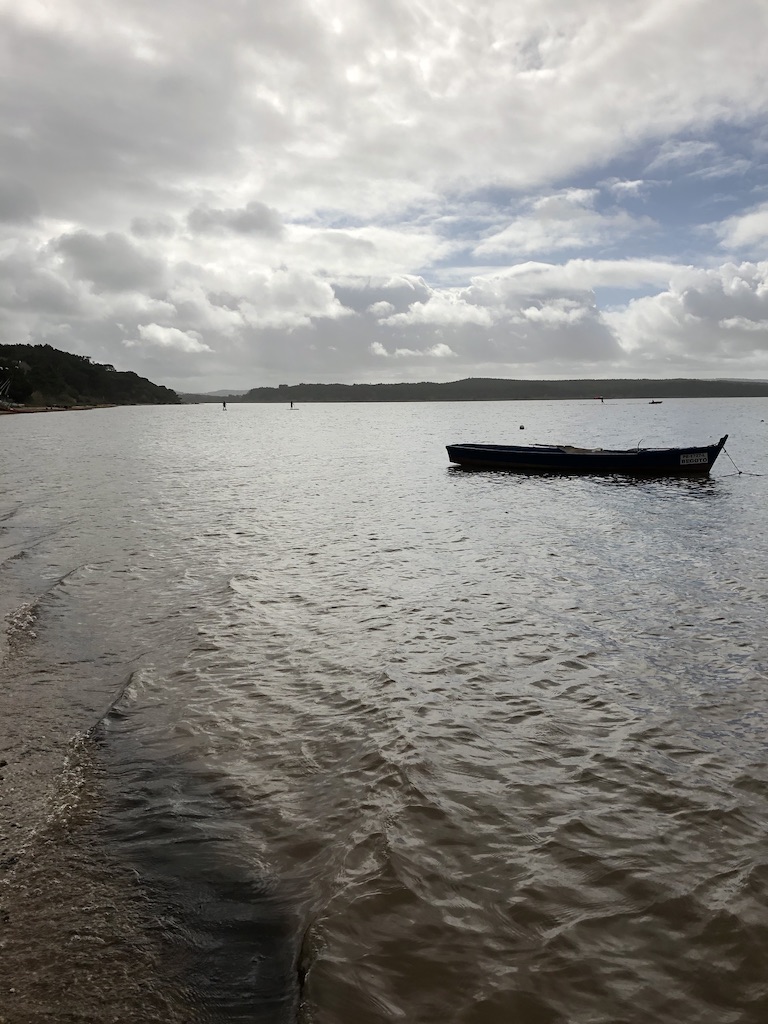
A dinghy in Portugal. About the correct Primus size.

After returning to shore, Les and I went to get tattoos because, well it seemed obvious why. It was next on the list of Favorite Things To Do. I didn’t think twice about this. I didn’t have any tattoos (yet), but it seemed as good a time as any to get one. A way to physically mark my full immersion into music journalism and SPIN, where at this point I felt I would work until the end of days doing various and random things with all sorts of exciting musicians while I perfected my Dolphin-ride-along interview technique and made a tiny salary that justified the starving-artist mindset I lived by. (Boy is there a lot of unpacking that could be done around that last sentence.) At the shop, Les decided to get a cartoon mosquito named Skeeter inked on his head. I chose a parrotfish because it seemed the most colorful of all the pictures I had to choose from. I asked the tattoo artist to make it no larger than a quarter on my upper-left arm, then concentrated on not screaming as the needle zzzzzzz’d because naturally I did not want to be uncool. I mean, if Les was having small needles rat-tat-tat into his skull, jeeeezzzuuuz, I could handle that same thing in a fairly flesh-intensive part of my body. The twist on mine was that the ink glowed under black light! Yes! You read that correctly: The colors of my little fish GLOWED. Under black light. I had no idea whether that was a dangerous thing to be putting into my flesh. I also didn’t consider that I really spent zero time in any environment where black light was a feature and I doubted I’d revamp the interior lighting in my apartment to include any nor would I be hanging out in any weird blacklight Grateful Dead/Jefferson Airplane–poster-filled dens smoking or tripping. But still, at the time, this little feature of my tattoo seemed cool and different and I bored many many of my friends and acquaintances with the fact of it. I also discovered that there was a blacklight in the bathroom of the SideWalk Cafe on Avenue A and Sixth Street in NYC and I would go in there fairly often just to make sure the thing was still working.

Now that I think about it, the slow fade of that ink was about parallel to the incremental diminishment and subsequent evening out my expectations around how I approached interviews. Somewhere between being personally frozen out by Soundgarden for the Ann Magnuson article and being yelled at for giving a bad review to a band whose album in truth I hadn’t really listened to, I realized I was more than a mammal who just happened to be along for the ride and instead an active participant in the creation of the story. Hrm, responsibility and stuff. That this realization bled into the rest of my life is not at all surprising. That stepping into my own story is very clearly still an ongoing process. Diving in and out of these stories as I write this blog helps to put things in perspective. Events didn’t just happen to me but were orchestrated and acted upon. This is always true and is increasingly helpful as I live inside family, friend, and Dennis relationships. Nothing is merely happening to me, but with me. And even understanding the really not-great things that have happened doesn’t drop me into a vacuum but with some work can crystalize where to place the anger so that it can be targeted and helpful. And with the good stuff, I can also claim that without some ah-shucks shrug-off, but recognize it with a Yeah, I did that. Hurray for me!

My fish…2021

As for my little fish, these days it’s the landing pad for shots and vaccines of all sorts. Just between the pelvic and the anal fin. Also, parrotfish are awesome as I’ve now discovered after finally reading up on them thirty years later. I still don’t know so much about blacklight tattoo ink though.

Memory Manor: For Shame

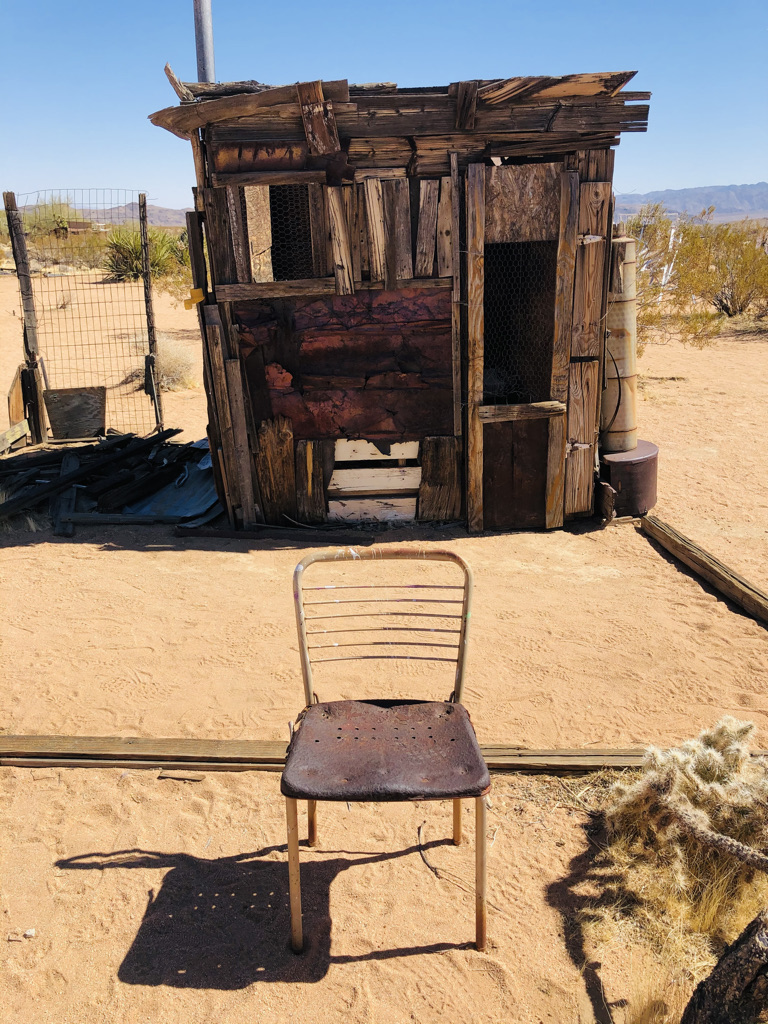
Joshua Tree: Noah Purifoy museum 2021

I’ve had four abortions. That’s the first time I’ve shared that out loud to anyone other than those close to me. And in fact, even then, it’s only been to a very few. Why is that, I wonder? It doesn’t take me long to scratch up the reason: the sense of shame, embarrassment, an overwhelming what’s-wrong-with-me judgment that soaks me even as I write the words here. And naturally that’s exactly what those who oppose women having autonomy over their bodies count on. They use the power of our own self-silencing to smother us. Obviously humans of all gender identifiers have shame around something their body carries and expresses because that is a part of living and listening to those quiet, still (or shouty, agitated) inner voices. But for the purposes of this piece of writing, I’m talking about my experiences with abortion and the oversized luggage of emotion that choice has carried. I’ve tried to check that baggage hoping it would get lost in transit, go round and round my inner carousel until it dropped off forgotten in the corner. But yet…

These experiences are in the fabric of my life. The dark colors in the quilt around my edges. Four corners. Top left, California when I was in college and a few years away from legal drinking age; top right, just back from my first trip to Europe; bottom left, New York City early-adulthood; bottom right, NYC mid-career. Naturally my fingers hover over the keyboard tempted to explain how it happened, to make a case for me not being irresponsible or lazy in marshalling my reproductive system. A need that you don’t judge me. But, no, I can’t control anyone’s reading of this, nor do I need to explain. It’s not the reason I’m writing about it. My reason is to try and peel off the shame and acknowledge what lies beneath. How in order to stare down the bullies who rely on our shame to keep us cowed and quiet, I need to unbury my stories and own them so I can fully join (proverbial or actual) hands with every other human who has had the experience of making themselves small because they were told they were nasty, sinners, lost causes, nothings.

I’ve marched countless times since the late 80s in support of Roe V. Wade, screamed with many for our collective right to choose but when it came to telling my stories, I whispered them into the wind and they blew away without anyone really hearing them. A lot of folkx were whispering, sometimes they stuck in songs and stories and actions. In the nineties, during the thick of my music journalism days, the community of musicians I cared about often considered themselves feminists—no matter whether they identified as male or female. The bizness overall was still misogynistic AF. But bands I knew like Nirvana, Pearl Jam, Sonic Youth, and many more were shouting about many human rights issues including a woman’s right to an abortion as Roe V. Wade had guaranteed. But honestly, no one ever felt the 1973 ruling was secure, hence the ongoing reminders in marchs and rallies to leave it the fuck alone. Sometimes a movement can be a box to check. That’s not a dismissal of the power in a group, but the necessity of taking some time to investigate what motivates the noise is also important. When I was swept along with the crowd, I shouted “Hands Off My Uterus” and it was a mighty roar. When I said my stories…well, I didn’t really say my stories except to myself. But now…time to make the quiet part loud.

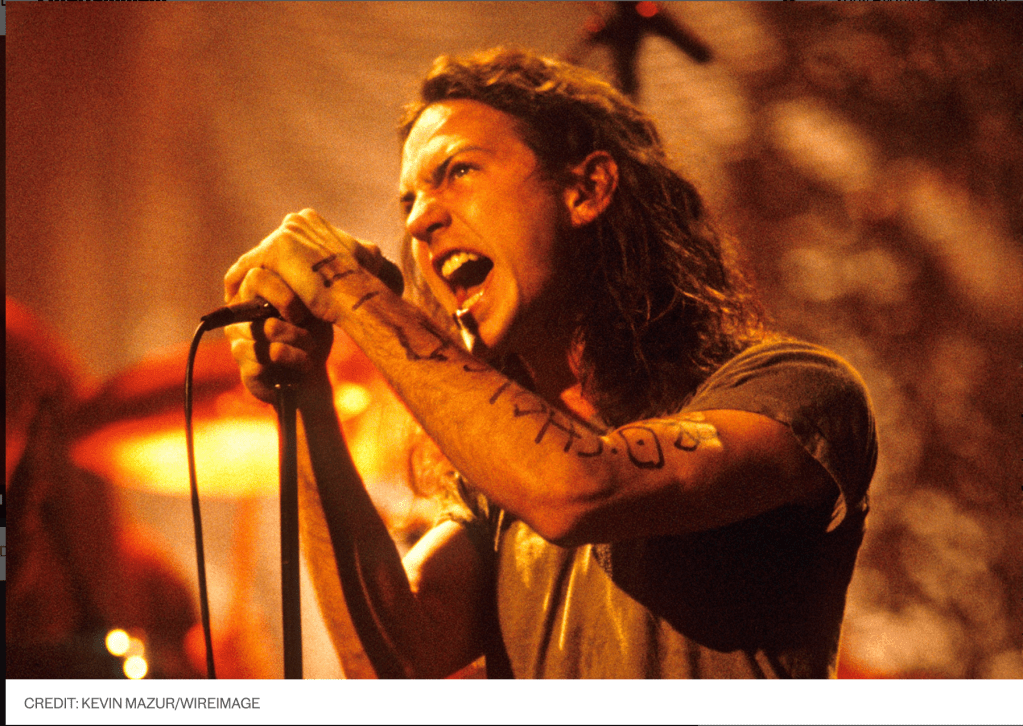
Personal and powerful. (We Testify.) Not easy. I once sat on a tour bus in Gronigen, Netherlands, March 1992 with E.Vedder and said a couple of my abortion stories out loud mainly because I felt safe. That’s the ticket, really, when you know someone is listening openly without judgment. As he got off the bus and onto the stage, I waited to feel regret around the telling, wondered how the conversation had landed. For the rest of that tour, the topic never came up again. (You can see this post-converstion performance here. It’s incredibly surreal to glimpse the ghost of me past against the far wall on the right. Ginormous humid hair frizz is the giveaway.) A few months later, Pearl Jam filmed an MTV Unplugged and during the last song, “Porch,” he inked Pro*Choice up his arm (weirdly a figurine was made of it). He said later our conversation had stayed with him and although that meant a lot, it did not move me to set those stories to sail more often.

I want to think about why there is still shame in the telling. Self-isolation. During my last pregnancy, realizing this would most likely be close to my final chance to have a child biologically, I checked again to make sure I hadn’t changed my mind around having kids. I still came up with the same answer: no. And lord, if that wasn’t an emotionally complicated decision. Truthfully, I’d never felt during any of my pregnancies that I was in a place where I could support a child financially or emotionally. I wanted to be able to write and travel. I could barely afford health care for myself. This country doesn’t even pretend to make it possible health-care, child-care, maternity/paternity-care-wise for a woman, whether single or otherwise, to bring a child into this world unless they are privileged or driven and committed or some combination of those. I was none of them. I also never felt the passion&pull to have a child.

Yet still, when I made the appointment at Planned Parenthood, I felt the familiar panic, shame, and embarrassment. I was a woman in her late thirties, had been through a fair amount of therapy and felt fairly self-actualized, yet there I was still hiding this very important, extremely universal experience from even my closest female friends. Not totally misplaced since sharing hadn’t always brought wide-open arms. So there we are again. Expand, shrink, rinse and repeat. During my last, I opted for a home experience. RU-486 (mifepristone). It was a wholly different emotional rollercoaster. Rather than make (brief) eye contact in a waiting room with another woman who is processing her experience while I try to keep my big emotions in check, I went solo in my apartment and processed my moment of loss with a lot of wide-open space to mourn loudly and openly and sometimes terrifyingly.

If I’d known of the places to read or hear of other women’s abortion experiences, I would have pricked up my ears, opened my heart and probably my mouth. (Maybe I didn’t look hard enough, but they needn’t be so hidden.) And as with all things rooted in personal stories, would have wrapped the words around me like a comforter, or maybe strung them below as a net, peppered the conversation with strings of consonants and vowels of my own.

The actions of a rabid minority losing control are always blind, dangerous, at-all-costs committed, and it’s not as if we didn’t see this body politic coming, waving its cane trying to beat us all into silence, but yet… let’s not let them.

Screw the shame. Lay pearls before the swine who want to grind us into quiet. Share the hashtag howls, lift up to the light all the moments that make us who and why we are. I’m burning with it. Not shame but the pure flame of anger. I want that torch to illuminate every individual choice a woman makes around her body with pride, no matter how complicated or hard-won that pride is, because no one else can know that path but the woman who is walking it.

A couple of pieces for further in-the-now reading:

The Cut: Ways to support.

The Atlantic: The Future of Abortion in a Post-Roe America: Inside the covert network preparing to circumvent restrictions

Memory Manor: Endings

end of day

Currently, I’m sliding out from tutor responsibilities for the semester and I’ve been counting the days in a few ways, one being: I’m ready to devote more time to my own writing, which I’m hoping the summertime will let me do, but another reason is the more acute frustration of just feeling like the time has come for this particular moment to end. I’ve noticed how squirmy and adolescently “I-don’t-want-to” I’ve been. As if that frontal cortex thing that holds attention and patience has reverted to pre-closing stage (which is about 25 years old and explains a hell of a lot of bad decisions in my past).

Patience and the slippery slide away from it makes for wacky decision making. My proverbial butt has slalomed down that mountain multiple times as I’ve decided to move on, not look back, get to the new place that’s just around the corner. But fuck the corner, I’ll just sledgehammer through the wall justified by an immediate sense of I’m miserable, time to leave even if there’s nothing v$able lined up in my future. The initial sip of freedom is sweet, but if that take-flight cocktail is equal parts escapism and speculation with a dash of fantasy, then the hangover’s pretty hardcore. I’ve shaken not stirred my share of those life-libations throughout my time and have been lucky in that a get-scrappy reflex usually kicks in around as destitution seems about to knock through the door. But the experience has often left me financially freaked out and sometimes worse (see past post: kach$ng). But still I agitate for the exit. Difference now is that I may ask why? And how? And what’s next?

The why of when I left SPIN is only becoming slightly clearer now that I’ve decided to take a bit of a closer look. I remember being soooo ready. My emotions pacing around my insides in readiness to step out the door for good although I couldn’t point to one particular event to make me completely switch off. As with most things, it’s a build. The memory of the how I left is strong: Going into the office with my friend Jon late at night. He was helping me move my boxs. It was pitch-black getting off the elevator onto SPIN’s floor. No one was there. Maybe one desklamp on in the art department (mood-setting in memories is so important). I do have an intense flashback of how weird it was to be in this place where so much had happened, so many formatives and follies. There hadn’t been a going-away party although there were probably rounds of drinks at the bar, but even that, I don’t really recall. My sense was that I really just wanted to peel off, crumple up that part of my life, pitch it in the can, and move on. But why the urgency?

Overall, working at SPIN had been everything I’d wanted my rock’n’roll journalism career to be. My office had moved from the supply closet (literally) to an inner room to (finally) a corner space with windows where I’d written and edited and interviewed all sorts of funtime, complicated Charleys and Charlenes. I’d gotten inside the heads of musicians and found interesting, strange, sometimes terrifyingly too-real stories. I’d gone shopping with Kim Gordon, clubbing with Courtney Love, fishing with Primus, pubbing with Pearl Jam. Then there was Nirvana. Kurt was still alive, which meant the band that had unequivocally changed my life were still creating. New bands were popping up with this&that. But yet … maybe I’d stared at the sun too long making it hard to see around the black spot seared into my life’s retina. Honestly it wasn’t as dramatic as that though. Just a nagging gah this isn’t fun anymore sensation. I’d recently gotten a view of how someone else saw me when one of the interns dropped off a stack of records and CDs in my office and stood in the doorway for a beat, then said “You’re lucky” and left. I was. I’d been an intern at Rolling Stone and recognized the look, the yearning, and it was not lost on me that I was standing in a privileged place. But it was complicated because that’s what life is.

Tired

In 1997, after I’d been gone for a few years having knocked around as a freelancer, then become a VP of video promotion at Elektra Records, I got a call from a lawyer representing Staci Bonner, a researcher who’d been on staff during my time at SPIN and who was bringing a case against the magazine’s then-owner, Bob Guccione, Jr.,(he was in the process of selling his stake in the mag around the time of the trial). Staci’s claims were this: “that she was the victim of quid pro quo sexual harassment, intentional gender discrimination and hostile work environment sexual harassment” here’s the summary. At the time, I had no interest in being involved in her suit mainly because I had always felt SPIN was exactly what I’d expected it to be: a place of rock’n’roll roughhousing where if I was lucky my gender would be able to soften some jagged male edges. But in reality it became a place where I toughened my outer hide and gave up on the squishy bits. I was not really successful at this, obviously, which led to my exhaustion given the reflexive roll inward to protect those soft spots. But honestly, this became a wholly unconscious movement, and I can guarantee this was/is the way for any woman in any male-mostly industry, which is mostly all of them, at least back in my workaday world. Maybe it’s getting better. But that’s where I was at the time the call came to take the stand for Staci/the plaintiff. I went in for an interview with her lawyer and remember thinking (and maybe saying) over and over, “It’s a rock’n’roll magazine, of course he/they said/did/acted like that.” Truthfully at the time I felt confused that calling it wrong was even a thing. It just was.

end of season(?)/beginning of season(?)

I did end up taking the stand for Staci. I did try very hard to come around to the complete and utter wrongness of how the men of SPIN conducted their business toward women. I wrote an article about it back then (Jane magazine piece) and my editor sent the draft back to me a few times with notes like “more blood on the page, please” and “I want to feel your tears.” Rereading the article now, I’m not sure I ever delivered what he wanted mostly because I wasn’t clear on where my tears were located. After being so long in the music business by my own choice, I’d seen how the yes/and worked: Yes, rampant and utter sexist bullshit (in my case from mainly white men) was daily and I was often utterly thrilled to be in the mix of said men and would actively stop up my ears from their words and actions. On more occasions than I like to admit, I’d join in the smiles all around as inappropriate comments dropped like little plastic parachute soldiers from the sky. Oooh, incoming, duck. What, that little thing? Harmless. My guilt then and now stems primarily from not doing anything when I’d see another woman caught in the parachute drop. (Why is it so much easier to see someone else’s discomfort than to pay attention to my own?) The last line of my Jane piece, as I read it now, rings hollow—”It’s ironic that the place where I found myself as a writer is where I lost it as a woman.”—because it’s only one shade of true. I didn’t lose my voice as a woman. I did sit on it like teenager hiding a joint (unlit). I didn’t want to see what that voice could do because that would take a type of inner and outer work I didn’t want to do. I enjoyed the club. But when it was time for me to go, when my arm got tired of holding up the armor, I ran out fast&hard without wanting to look back. Maybe instead “It’s ironic that the place where I found myself as a writer is where I hid it as a woman.”

Nuance. An elegant little word with a definition that makes so much more sense to me now as I get older and appreciate the multitudes inside a moment. My impatience then to leave the icky bits behind, the confusion of who I was supposed to be and the sense that because I did not have righteous indignation around how I was treated meant I did not sufficiently get it, moved me toward amnesia. Certainly now as I revisit these stories I can embrace both my joy around the adventures and my reckoning with my timidity and desire to please.

I avoided reading anything about the trial at the time given my confusion around what it was I actually felt so I missed this piece in Salon by Celia Farber, one of the staff writers at SPIN during my time there and someone who personally and professionally was taken apart during the trial for having been in a relationship with Bob. (In essence, any woman who testified, no matter the side, whether involved with Bob romantically or not—and I hadn’t been—had her career dissected in ways that left us all shredded. It would take a lot to build back confidence in my writing work after that). But now, reading this bit in her article, I feel a ping as she described the vibe at the magazine: “A lot of people Bob hired were simply very angry, very dark and above all very, very passive-aggressive people …. They sneered and gossiped and tripped each other up. And sometimes it seemed that the only ones who provided relief from this sour, competitive way of life were the ones who, occasionally at least, expressed something resembling lust. At least lust isn’t passive-aggressive.” Now, mind you, this is her recollection, but as I read that a bell did ring and a thought did come. Of course I was tired by the end and wanted out hard enough that I left my notice on Bob’s desk and took all my stuff in the middle of the night. Anger. I hadn’t been that when I’d stepped through the doors on my first day. I’d been excited. I hadn’t quite put my finger on how the people who were would spin me upside down in those gaslighting ways that some people are so good at. I fancied myself dark in a there-is-no-god kind of way and I did try on a few styles of sneer and gossip. I cliqued. Then I stumbled, couldn’t keep up. Ultimately I wanted lust in a very different way and had begun to mistake it for lewd. Then I just needed some time away. To (not) think. Now, I don’t regret the leaving at all, but the exploration into how that time shaped me has taken ages. But of course, that’s how life works, or rather, how my life works.

Memory Manors: Reflections on Control

LA April 20222

Even trying to set up the format of today’s blog post, I’m reminded that sometimes a person’s just got to let go of what they thought they wanted and go with what is happening instead. So this blog features a column.

Control, the flipside of chaos. A kind of Janus: beginnings, stepping through doors, portals, facing forward and facing backward.

In choosing the music business to work in, I knew there’d be chaos. In choosing journalism, I counted on guardrails. No matter how much insanity an artist, band, moment threw down, there would still be a story to be written and delivered by a certain time. Even though 9.5 times out of 10 I was convinced the thing would not get done and then the cascade of failure, firing, falling apart would follow.

It did mostly get done though, even as I slid my jitters under an It’s-all-good layer of cool. But underneath….whooo…the stress. I’ve always been a girl who gets to the airport too many hours before my flight. Just ask Dennis, whose MO used to be: show up with a reasonable cushion, wait until the announcement “anyone left in the boarding area,” get on plane, go. We’ve worked out a fine compromise. We still get there probably too early in order to avoid my going into paroxysms of inner-gut-gripping, teeth-clenching craziness, I’ve learned to curb my hovering tendencies. I stay seated until I’m invited to board, but I do spring to it when I hear the call. It’s not about securing an overhead bin. It’s more there’s something inside me that thinks I’ll be stopped from getting to where I want to be. I used to have the same itchy-crawly sensation around being on the list for a show. As soon as I’d get in line, I’d see the person with the clipboard and feel the uncertainty. Imposter syndrome’s cousin Anxiety would pull at my sleeve and mutter Do you know who I am? as more of a plaintive plea than a snarky statement.

LA, April 2022

When I was at SPIN mag and Elektra Records, a woman from MTV who I often traveled with was so much more casual around schedules than me. I’d call it borderline psychotically casual when I was honest. If we had a flight together, she’d arrange the car pickup with just enough time for us to be dropped off at the airport, revolve through the doors and hit the terminal hallway—me trying not to run like a madwoman and instead match her steps, then get to the gate (pre-ultra-screening days), with seconds to spare. Often before boarding, she’d ask if the flight was overbooked and volunteer to get bumped to the next flight for a free roud-trip voucher. I would stand there slowly dying inside. My nerves pounding out some Motley drum solo (I hate drum solos. And guitar solos. A topic for another time.) complete with spinning upside down and quiet nausea. I never cracked and yelled, “Let’s get on the mutherfkn plane NOW,” which was what I was screaming inside, because that would have seemed nuts. Uncool. Uptight.

One of the quirks(?) Bob Guccioune Jr. had as owner and puppeteer of SPIN was to throw the editors and writers into random situations with random people and see how we’d do. Like a publishing snowglobe, he’d drop us into unfamiliar surroundings (see blog post: Travel Edition for Tampa drop), then shake things up to see where they’d settle. Looking back, it said a lot about advertisers, and publishing, at the time that none of the money honchos balked at some of these adventures: Send the editors far and wide, bring in Saturday Night Live and Spike Lee (not together) to guest edit an issue, take the staff to a college to set up shop for a month.

LA sidewalk, April 2022

The University of Missouri in Columbia was the scene of our first college issue. It has one of the top-tier journalism programs in the country. And for some reason it made sense for the staff of SPIN to basically move there for a month so the students could help us produce the March 1991 issue. R.E.M. were on the cover because of course they were. College. Alternative. Those terms were important back then. I remember the blustery sense of self-confidence as the staff arrived in front of our Hampton Inn, rolling out of the mini-van like a band of unruly layabouts, half-zipped duffle bags and bleary drunkeness because, well, airplanes and cocktails always seemed necessary. If I remember correctly (and that’s a very big IF), one of the advisors from the journalism department was there to meet the lot of us editors, writers, managing staff, and art folks to make sure we got checked in smoothly. Again, if memory serves (out-clause here), Bob and one of the other notoriously creepy, older editor/writers, was already in full lewd-comment mode about the women they were looking forward to meeting at that night’s mixer. The part of me that held all my outrage had checked out of my consciousness months earlier, so the back&forth bounced against my skull with a dull thud. As did the elbow-in-my-side “maybe you’ll find a frat boy” comment.

I certainly didn’t know what a serious journalism program looked like. I’d started at CalState Long Beach, which was great, but completed the lion’s share of my degree at the School of Visual Arts in NYC, which was wonderful, but not traditional: a class of seven in a pilot program that had a lot to do with interning in the industry rather than studying in the classroom. Mizzou, as they call U of Missouri, was formidable in its journalism reputation. But still, we SPIN folks raged against the correctness of it. The lecherous editor set up an interview session in his hotel room to find a research assistant for the three weeks we’d be there. The position was only open to women. He interviewed them one at a time, making the women line up in the hotel hallway while he brought them in person by person. My closest friend at the magazine and I watched and discussed this wrongness, both ashamed, yet neither doing anything about it immediately. He’d commented (not wrongly) that Bob would think it all funny (which he did). My friend though, to his enormous credit, finally went up to women in line and told them the position wasn’t worth it and that they’d do better coming to the rest of us directly with story ideas or whatever they felt they wanted to do to help us out. Gawd knew we needed it. He was a good man (hopefully still is).

On that trip, my ability to wrap my arms around the vessel of control shattered neatly and cleanly: I couldn’t manage the schedule we’d set out for the students because it was bonkers and we were crap-ass at assigning things in any sort of chain of command. What was one day a story around on-campus bands became instead a story around on-campus bands at parties…at frat houses…at sororities. Bob changing it up to make it sexier (his word) every five minutes. The professors quickly became frustrated with us. We laughed it off. I felt more and more uncomfortable with the peak of that discomfort culminating in an intro to journalism class where I’d been asked to speak on my career. How I got there. During the Q&A I realized how out of my depth I was. They wanted to know about libel. Investigative reporting. Real stuff that I didn’t know or follow. And I kept telling stories, but sometimes when you say things out loud that you think are funny, there quickly follows a reading of the room as you watch the words land. My tales were not funny. Kind of tawdry and not landing lightly. They had more the sound of the thud of inappropriate. And even though I knew I wasn’t really that person, I’d figured that was the person I was expected to be. The face I was meant to show to the world. The one I was hired to hold. Naturally I found soon enough how untrue that was. A realization that came full force when I faced Bob in a courtroom years later. That was a doorway into my next enlightenment. And a soon-enough post for the future.

Memory Manor: Judging…Books…Covers…What-Have-You

(Dean Spencer collage, 2020)

It all started on the floor of our living room, Christmas Day, 10-ish years old, Little Women splayed out in front of me. And I was gone. Completely taken in. And that’s when books came to be immersive. Escape hatches into other worlds. It wasn’t that my world was bad at the time, just that I’d never visited any other. Sure, there had been fantasmic worlds built from stories that had been read to me by my parents and teachers, plus imaginary friends who helped me create imaginary places. I also had real-live friends and we’d romp it up around created worlds. But something about visiting places completely different from where I lived in time periods I’d never know was mind-blowing on a very visceral level.

And so it began. Books as companions and then lenses through which to see the world. And I wonder, are the places we inhabit influenced by the book we’re reading at the time or the book infused with the place we happen to be? This site suggested by a friend is a cool experiment on that subject. Jami Attenberg’s memoir I Came All This Way to Meet You has this bit about traveling with books: “The books we carry with us … become a part of that journey, as much as a special meal we eat, a piece of art we see in a museum, a viewpoint we climb to ….”

I’ve got my markers that plant a pointy, story-sized stick in the ground of a memory around certain novels (and it’s always a novel as I’m a fiction lover with side dishes of non): Paul Bowles, The Sheltering Sky, out on the fire escape of my first Lower East Side apartment; Anna Karenina while standing in line at the passport office on Fifth Avenue so I could take my first trip as a music journalist to England for Rolling Stone; A Moveable Feast in Paris, then trying to visit every cafe and bar that Hemingway and Fitzgerald did—not drinking as much though, so probably missed a lot of the experience, though I wouldn’t have remembered if I had been drunk that much; Colette on that trip too. I wondered if I’d feel more of the city if I wrapped myself in those writer’s words and in a way I did, but in another way, I was probably insufferable about it. It was probably good I was traveling solo.

Then there are the covers of books and the messages they’re meant to convey. I took Presumed Innocent with me when I first got called for jury duty in NYC. I was legit reading the book at the time but thought maybe it would also get me out of serving. It didn’t do a damn thing. Of course not. No one even noticed and I got chosen for a trial that involved a crime that had happened at a playground one-half block away from where I lived (with the Paul Bowles–reading fire escape). One of my fellow jurors freaked the fu*k out of me by suggesting the defendant may recognize me on the streets if we didn’t convict him. In retrospect, that comment didn’t make a lot of sense, but at the time I’d moved onto Bonfire of the Vanities, hardcover, massive, possibly good for protection if needed.

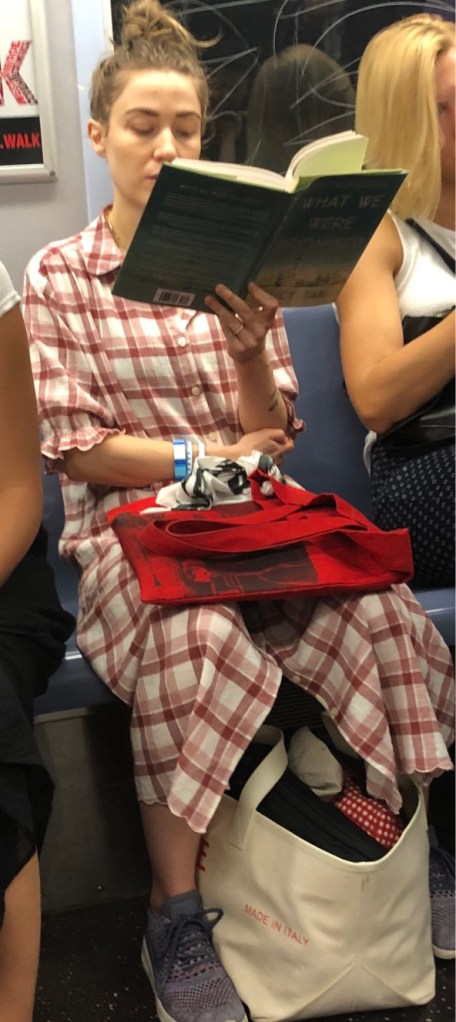
On the subway, there was a lot of judging people by the covers of their books—at least by me. (Hotdudesreading Instagram.) There was an article, which I can’t find right now, about someone taking the F train from end to end, which means Jamaica, Queens, through Manhatten, into Brooklyn and last stop Coney Island. A stop in almost every version of a New Yorker’s existence. It was pretty funny how on-point certain neighborhoods were with their book choices (as I remember it): Newspapers in early-morning Queens, mid-town New Yorkers, textbooks near NYU, East Village poetry, children’s books entering Brooklyn, Eastern European novels by the end of the line.

And I’ve been one-hundred-percent on board with picking up a book for its cover, then reading the flap to see if it’ll fly and if so, the first page to seal the deal. With humans, flap copy and first pages aren’t readily available. You have to hang in there for a minute to decide whether it’s worth your time or not. But without a doubt, judging from the covers we all wear on the outside give a quick good read on what’s inside. Obviously, this can backfire.

September SPIN 1991. Photo by Bart Everly

During my first interview with Pearl Jam in London, they were mixing their major-label debut Ten at a massive old house outside the city. The record company’s publicist thought it would be funny to take them for tea at Harrod’s department store, that stiff-lipped bastion of all things British with a capital B and rolled off your tongue with just the right Queens (UK) accent. Point was: One of these things is not like the other. We would meet said publicist in the tea room on the fourth floor. There would be crumpets. And tea. And little triangles (or squares) of sandwiches with cucumbers. And absolutely no crusts, unless you consider the upper kind in service to social status. The band and I approached the revolving door: four of them (no drummer was with them at the time), me bringing up the rear. And in they went, and out they came like pez’s released from each door-cubby. And there we all were standing again on the sidewalk. Some confusion, but really not too much considering the pretty standard-dressed security guard (white shirt, black trousers, a tie) revolved out to explain there was a dress code at the store and these lads didn’t live up to it. Eddie offered to buy an appropriate outfit. Still no-go. That’s when we realized the band had already been judged unworthy of entry and no amount of purchasing power would change that. As we walked away, leaving the publicist to wait and wait and wonder (pre-cellphone days and they wouldn’t let me in either), one of the guys said, “We wouldn’t be able to afford to buy anything from there anyway.” And another added, “Better things to spend money on” (or something along those lines). We all nodded and agreed how uppity some people could be and how good it was to just be normal (read: poor). And funnily enough, not that many years later the band would have enough to buy any damn thing they wanted from Harrod’s. But they probably didn’t. We passed by a newsstand on our way to a pub and there, staring out from the cover of Vanity Fair, Demi Moore, pregnant and naked, an image that had caused a beyond-stir and became one of the magazine’s biggest sellers, because of course it did. The point of a cover: To catch your attention. We carried on, drank some pints, I got the interview, went back to my hotel, can’t remember what I was reading at the time, although I’d been going through a massive Milan Kundera phase.

And we carry on. New covers to consider every day. Much hope for what lies between. On my nightstand now: from the library, The Madwoman’s Ball, Victoria Mas, and Lessons in Chemistry, Bonnie Garmus. This last one gives me tons of hope as the author is a woman of a certain age who was signed to an agent through the same CBC writing course I’m involved in, so naturally I’m channeling her juju and cheering her on! Plus the cover’s really eye-catching.

Memory Manner: Between the Covers

Chris Cornell sharin’ a laugh with the E.Vedder backstage somewhere sometime in ’91/’92 (Lance Mercer Photography).

What kind of covers, you may wonder. Lots to choose from. Their are the salacious kind for instance. Or at least how they turn that way in my mind. One of those, sitting across from Soundgarden’s singer/guitarist/lyricist, the late Chris Cornell, in a hotel living room. Upper floor, LA, sunshine streaming in the windows. He, backlit, golden (my memory painted to my liking). Me, facing him. His mouth was moving although I was not actually listening to the words floating out so distracted was I by his, well, his everything, really. This is why they invented tape recorders. So that distracted journalists could get lost a little bit (and also that libel issue and all). After hours (actually maybe only minutes), Chris’s wife and manager, Susan Silver, stuck her head around the corner to see how we were doing. She was (no doubt still is) a really cool lady, so as envious as I was of her being the one between and betwixt those Cornell covers, I couldn’t really pull off any dislike. That days interview would be sent sideways after a companion-piece dinner with another very cool woman, Ann Magnuson, mainly because these two personalities—the Sundgarden variety and the Magnuson manner—were not at all compatible. This was my first experience with having to withstand anger from a band I liked. I’d been yelled at a couple of times before by bands I didn’t much care for when I’d written bad reviews about their albums and although I was often gutted when it happened, this time I felt destroyed. Susan had come by the magazine to see the photos running with the piece, then seen the headline and read the first paragraph, at which point she came to find me, standing in my doorway and asking, “how could you?” My whole self fell right through the floor. Or at least that’s what I wanted to happen. Between the covers of the magazine, the band she loved, that I loved, that many many many people loved were being sent up in a way that was humorous but also felt like a betrayal.

What were we saying?

Yoshitomo Nara, Guitar Girl

Words tucked between chords, Lyrics. What happens between the heart and the head. The words were not always clear on meaning. I mean, I would attempt to unpack them like building blocks and put them together in all sorts of ways to spell out what I thought they might mean. But really, the words were more Rorschach than Realism, test pattern rather than transcript. What stays with me more is where I was when those words and sounds entered me. Maxwell’s in Hoboken, NJ, with my friend Chris. Soundgarden singing “Hands All Over” two feet away while I slowly melted, went deaf and dumb (but not blind. Oh no, not blind) as sweat dripped and sound rippled. I’m right back there now. We all have those aural trips, right?

Whenever I think of a vacation I took to Santorini in August 1991, Metallica’s so-called Black album and Nirvana’s Nevermind will always play right alongside the incredible sunset over the caldera and the immense amount of glass-breakage that happened late-night in the bars (very passionate people, those Greeks).

By the time I was letting myself slip between the proverbial & literal covers of Dennis’s life, I’d lost the breadcrumb trail of words set to music. But he’s a man for whom words are everything so Ray Lamontagne‘s Trouble and Till the Sun Turns Black; Ben Folds “The Luckiest” these were the sounds and the stories that defined us. And while I was curious and open to it, I was also having a helluva time letting myself go where those words wanted to take me. There was fear of feeling too much and music will do that to a person. But I did. Go there. Although I still struggle with it and I’m still trying to figure out why. Or how. Or something. Luckily Dennis is patient, so that when we drove down the most stunning bit of California coast on my birthday (you know the section of coastline that’s on all the postcards) and listened to Led Zeppelin and I got all nostalgic, then squirmy, then annoyed at my nostalgic, then finally gave in and started singing along, although not loudly, I think maybe he felt there was some triumph there. In this I’m glad to have a partner in figuring out how the words work.

Carmel, July 2021

Next week: Between the Covers: part 2. The paper edition.

Memory Manor: Invisibility

Zihuatanejo, 2019

When I think about it, one of the reasons I’ve always felt I became a music journalist was because I like to watch. Be a part of the story without being a PART of the story, as it were. Fly on the wall and all that. Always felt safer that way because it meant I could disappear at will thinking no one would notice seeing as how I was so invisible and all. Of course, this was absolute bullCrap given that once I was in a situation surrounded by music folx, friends, and the like, I would become part of it all. Stay to the end not wanting to miss out on anything even as I shouted down the voice inside pulling toward home for a long, hot bath and sleep. Dualing desires.

I did have a friend who was brilliant at disappearing. Would walk right out, poof. Be gone. One of the most memorable of those was a time we were at a karaoke bar on 9th street in the East Village that had a band of Japanese guys who played the music while the karaokers would warble along. It was next-level karaoke to be sure. We were there with Mike Patton and Roddy Bottum, singer and keyboardist respectively, of Faith No More. Because of course we were… My friend had just ordered his nth drink. Mike Patton had just freaked the F out of the musicians by losing his sh*t while singing “Like a Virgin,” rolling around on the stage recreating Madonna’s MTV performance. I dimly remember being shaken at the mayhem and a little scared of what would happen if I stayed. It wasn’t like anyone was calling the police, but it did seem like things could potentially get even more loud and freaky, which for some reason meant I’d have to get weird and freaky too. But I was also thrilled to be there. One coin: two sides. Somewhere in that whole cluster of fun, our friend went missing. His drink was gone but his coat was still there. An hour later, the place closed. We took his coat because it had become clear he wasn’t in the bathroom or under the bar, he had just vanished. This was pre-cellphone, so all we could do was hope he’d made it home with the drink but without the coat. We all knew this was his way and moved on. I remember admiring him in that moment because I’d wanted to go home acutely some hours before, but now I was on the sidewalk asking where we were all going next. That the musicians, the people who would most likely be the ones to ask that question said “Nah, we’re turning in” exposed something about my conflicted state of mind.

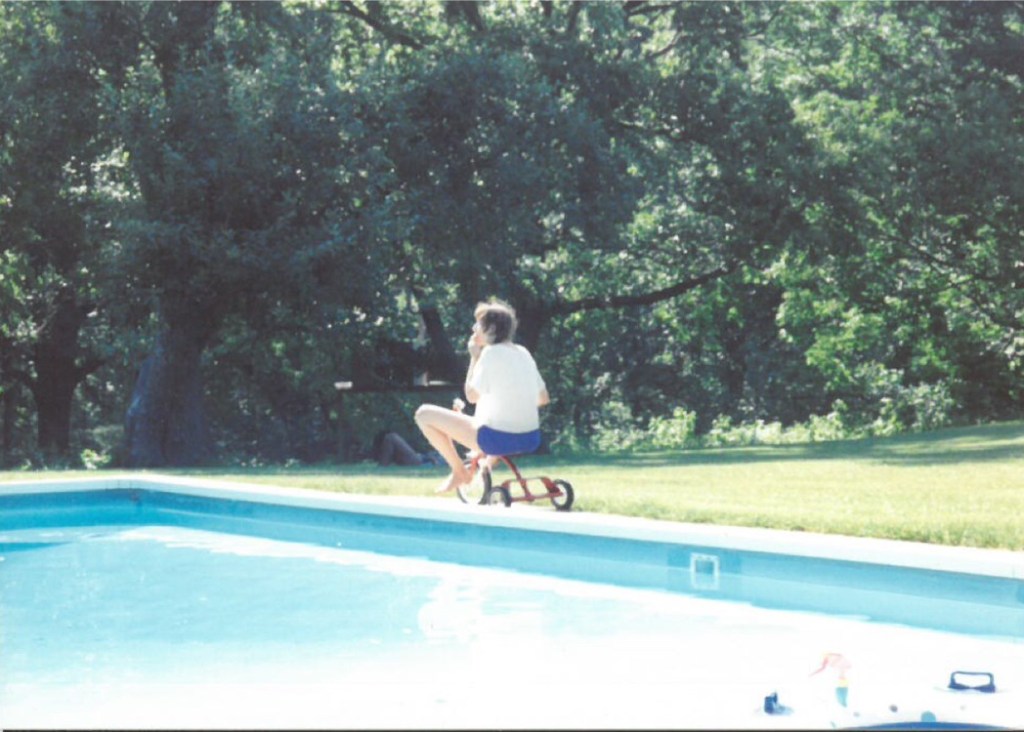
Not a kid in this moment, but I am pedaling off in search of alone time…or maybe just riding around and around the pool.

But there it is, the dualing desires: to be invisible, disappear, yet not to be forgotten. Because when I drill down, that’s what it is. I want to be wanted. And if you don’t, please don’t let on. When I was just new to junior high, one of my classmates said she’d meet me to walk to school together and she forgot. Just plain didn’t show up. I saw her at school and pretended nothing had happened. So did she. Didn’t say a WORD. I convinced myself that nothing had happened. Until someone at lunch mentioned how this person had walked with them to school and, oops, they’d forgotten to come by my house. Where I’d been standing on the sidewalk. Waiting. Still, I said nothing. Those who know me, know my conflict-averse-ness is pretty solid. I’ve had a lot of practice burying the lead of my emotions.

I’d rather go invisible than have to face an uncomfortable emotional moment. Example: I was in my forties, married, sitting in a theater on my own watching Brokeback Mountain when a voice inside me said clear as day: “This is your marriage.” I looked around to see if maybe I’d said that out loud. Not many people in the matinee crowd. No one looking at me. I burned hot, then turned back to the screen, finished watching the movie, went home, and stayed married for another few years until it became clear why I couldn’t be married any longer. And the reason tracked fairly closely to the moment I’d had in the theater. The thing I’d completely shoved away to be dealt with never. Until I was forced to. And I’m still not sure I’ve fully dealt with all the emotions around that period in my life. I keep feeling little knock-knocks on my soul, and when I put my ear up to the wall it’s Trust whispering things that make me nervous. Like: Are you sure? and What if? At this point in my life, I figure why not answer the damn call. Open up the door and let the conversation in rather than pretend I’m not home. Such a good question, right?

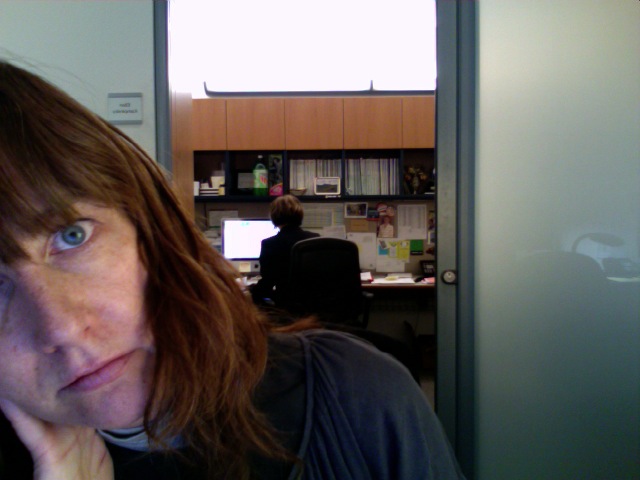
Post-divorce: I look at this picture and recognize it’s one of the only where I let myself look truly sad.

But will I? Now that I’ve blabbed about it here, I feel closer to asking. Being accountable and all. I’ve always been someone who loves having time on my own. A day all to myself but I also realize that keeping perpetually solo means not having to face and figure out how to deal with the complications of other people. And no matter how much I might think about invisibiliting myself, disappearing is not a solution I want to choose anymore. I’ve already worked that poof-outta-here reaction when I left the music industry, left a whole crew of friends, left a marriage, left writing, left, left, left, without really looking at why or digging under the floorboards to understand about the beating heart of it. Luckily words are shovels so currently a whole load of nouns, verbs, and adjectives, not to mention a tiny collection of adverbs with some pronouns trailing behind trying to keep up are very interested in digging a tunnel to the core of it. Now I just need to say yes and follow. Plant some seeds where the bodies come up. Understand that the answer to the party question: Would you rather be able to fly or be invisible is clearly to fly.

Memory Manor: the Beat

NYC 1984-ish

The foundation starts with a beat. A heartbeat. A steady rhythm. The tap-tap-tap that carries on even after the person who set the pace is gone. Many many too many heartbeats have stilled in the last short while. There are two in particular who today I think of who were mixed into the concrete of my foundation in ways they didn’t know, because we barely knew each other.

In 1984 I moved to NYC from SoCal to keep building myself. I wanted my own room as a music writer, an interviewer of musicians, a deep diver in some music mayhem. I packed up my typewriter, tucked away my first interview (Lee Ving, Fear, conducted on a big black rotary phone, appeared in CalState Long Beach newspaper. Although I can’t find it now.), and sorted myself on the Lower East Side. I dated a drummer in a band called Three Teens Kill Four, their band name coming from an infamous New York Post headline. The city was gritty. The mayor was Koch. I lived on Stanton Street between Norfolk and Suffolk with a roommate. We had the whole floor and I would sit on the fire escape looking down on the street listening to the street. Slaves of New York by Tama Janowitz was the read during my first summer in that apartment and I could relate. (People trapped in bad relationships because of New York’s impossible real estate.) The Village Voice came out every Wednesday, and people would show up at the newsstand on Cooper Union at midnight in order to get a copy so as to scour available apartments. I felt pretty fortunate to have landed in mine. The sounds from the fire escape told me how things were changing though: a block toward the East River an abandoned building was where heroin lived. A steady stream of weebles wobbling, until one day punch&judy showed up. High-wire crack turned nods into gnashing. A night I woke up to screams outside my window, a woman yelling for help. Dragging the rotary phone to the window, I opened it and screamed “I’m calling the police” as a squad car pulled up and a man ran away. Into the kitchen for a drink to calm my nerves and the sounds of pots&pans across the courtyard (where on Saturdays there were cockfights). I felt comforted that someone was up, maybe making a tasty treat in the wee hours. Then I heard “Fire. Fire” and realized the sound was not a midnight snack but a panic attack. But still. My building stood and right alongside. There was a magazine at the time, Details, started by Annie Flanders. It was the voice of my world. The stories of my New York. The hubris&hum of the streets I walked and where I felt I’d become. CBGB for the first time (don’t remember who I saw, only remember the smell, the humid sensations of the place). Gem Spa for a vanilla egg cream. The Pyramid Club for dancing on the bar and bands in the back room. All laying down the steady beat of my days.

grampa bar popular hangout LES (thx Mary)

Some decades later, my feet had fallen on those streets hundreds, thousands of times. The foundation was pretty damn strong. I’d felt a lot of beats move me in clubs all over the city. It was November 2000 and the Foo Fighters were playing at Roseland Ballroom. I’d left (run actually) from the music industry a few years before and this was the first time I was seeing an old friend with his new band. It was transcendent, not just because the band is so damn propulsive and present, but also because for me it was like being somewhere I’d never been while at the same time recognizing the front door. Afterward, there was a gathering at their hotel and I had with me a Polaroid camera (I’d just gone on the road with the band Bush, where the premise had been candid Polaroids). Two things stand out in my memory: 1) Winona Ryder telling me a story about how she was on a plane overseas and had to turn around and come home because she was emotionally wrecked from a recent breakup and me thinking how surreal it was that I knew she was talking about pulling out of The Godfather Part III after her breakup with Johnny Depp and that I was pretending she was just any old Josephina confiding a story one gal to another. Number 2 standout was the wide-open wonderful of Taylor Hawkins, who I’d never met before. His being. His complete and utter presence as someone who supported (as drummers do) while also partook (as confident musicians do). He seemed a fun-as-hell goofball. Somewhere in a storage box in NYC is the Polaroid I took of him across the table on the balcony full-body grinning to light up the sky.

Under this sky, Taylor

And now, under that same sky, the sidewalks and songs are the things that hold Annie’s and Taylor’s beat. Always.

Memory Manor: Words, Words, Words

I haven’t been inside my novel for a while. Today, when I opened up the Word doc to see if I could follow some breadcrumbs back in, I got the “Welcome back!” banner. Even though the message is probably meant to merely be the wordsmithery version of a wave & smile, a friendly HiYa, I landed in a “where ya been?” guilt puddle that agitated like a Whirlpool on spin cycle. Words and how we receive them. Sheesh. Every person on the planet has no doubt had the experience of words landing sideways from how they were meant to be delivered. Not to mention the vigorous debates around their intentions when it comes to ideology and the like. We’re smack dab in the middle of that kind of crisis right now regarding how one country is (mis)representing their actions by way of the words they use.

Being a person who loves words out of all proportion, I know without doubt the feeling of putting more meaning into a collection of consonants and vowels than is necessary, helpful, or sometimes wise. How those little squiggles, when committed to a piece of paper, can represent something. Even more, how the way in which they’re delivered can often add more meaning to the words as written. Think of notes passed in class during school, love letters struck through the slats of lockers, slips of paper tucked under pillows. The person who delivers them infuses the thing with that extra dose of meaning.

Back in October 1992, SPIN magazine handed the February issue over to the cast and crew of Saturday Night Live to guest edit and write. Each of the editors was in charge of one person to shepherd through the process. I was given Adam Sandler. He would be writing a couple of pieces, interviewing Prince, and generally contributing whatever the hell he wanted within reason for the issue. Mainly, I was to make sure he turned in his articles on time and then go over them with him to make sure the piece fit the word count and like that. As far as deadlines, it was clear he understood them. He worked on a weekly show that had a hard deadline of LIVE, 11.30, every Saturday, so that seemed doable. As for article length, editing, and such, I came to find out he didn’t really have a problem with his words being tweaked or cut, which, again, considering his day job in a comedy writing room, where the pace was fast and cuts to jokes and the like were brutal, this also made sense. What I didn’t figure on was how challenging it would be to put him at ease as Adam the guy rather than Adam the professional. It wasn’t as if he was required to step away from his pro-comedian self given the SPIN gig was a job, but I was caught off guard when we had our first meeting in his dressing room at the NBC studio. He was very very quiet, a bit mumbly, little-to-no eye contact. Awkward. (I’ve come to understand that comedians are often so much different when their public switch is flipped off.)

As mentioned in this space a few weeks ago, I have a thing about the challenge of getting someone to like me, confide in me, talk to me. That can obviously come in very handy as a journalist, but it can also be exhausting and sometimes completely unnecessary. In the case of Adam Sandler, some determination set in as I sat explaining to him when his articles would be due and how we could take off some pressure time-wise (for instance, the Prince interview will require you to only walk in a room, push record, gab away, push stop, leave, give me tape, I’ll transcribe, you tell us what you want to use from it). But I was also determined that this would be the best experience he’d ever have. Ever. Site set unnaturally high. Naturally, that required me to turn my personality up to eleven.

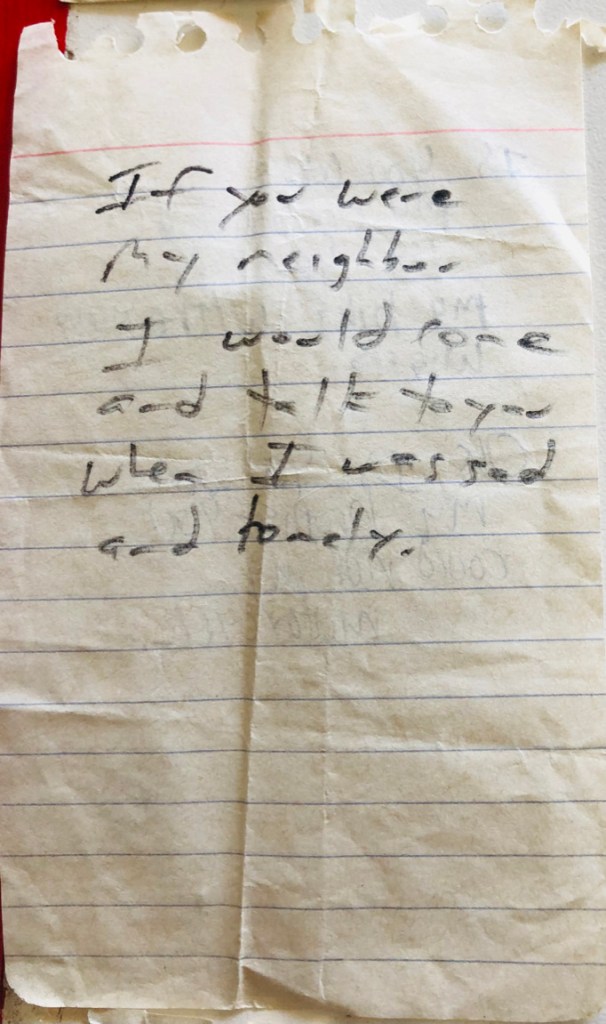
And all went fine, despite the fact I felt I was constantly facing into the kind of industrial fan you’d see at photoshoots to make you think Cindy Crawford’s hair always blew like that. Exhausting. My cheeks aching from grinning or emotional wind chill. As we were putting the finishing touches on the issue, there was a celebratory dinner planned at an Italian restaurant downtown. DaSilvano. It was one of Bob Guccione Jr.’s favorites. We had a long table set up outside for about twenty people and the vibe was to make merry. Over the past weeks, I felt A.Sandler and I had forged a bit of a bond and, truthfully, I had developed a crush, so my flirt reflex was on. Somewhere before the appetizer, after turning back to my place setting from a conversation between one of the other magazine writers and Hal Willner, (RIP) the brilliant sketch music producer for the show, I noticed a slip of paper under my bread plate.

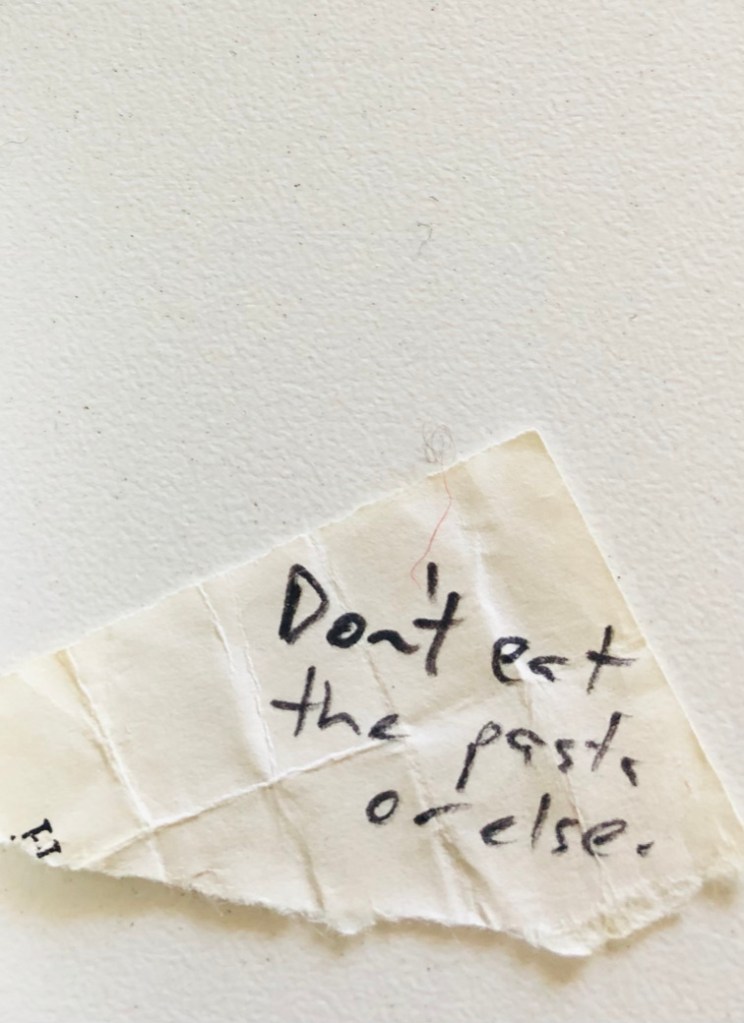
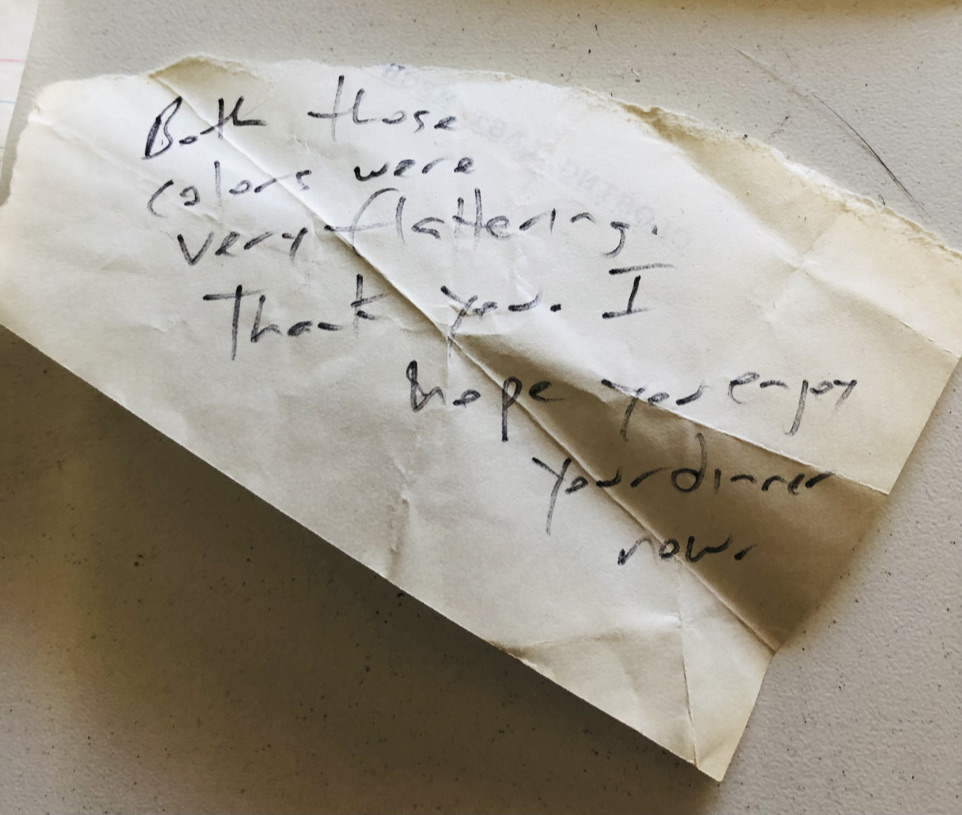
I recognized the handwriting and looked over toward msr. Sandler, who was two down to my right and was looking in the other direction. I tore off a piece of the paper tablecloth, wrote OK, then made whoever was on my right (memory fails) stick it under his plate. A couple of minutes later another note arrived.

I flipped it over and wrote something back. Then another note, apropos of nothing that I can remember, landed.

And on it went, notes back and forth about ridiculous nonsequiturs until the person to my right got annoyed and demanded to switch seats, but Bob had other ideas. He asked A.Sandler to sit next to him so they could pow-wow about some-such-stuff.

Earlier in the week, A.Sandler had mentioned how much he liked Pearl Jam and said he hoped Eddie wasn’t angry at him for the impression he’d done of him as Operaman. I doubted it, but knowing as I did that Eddie and guitarist Mike McCready were in town that night to soundcheck for a Bob Dylan tribute show at Madison Square Garden, I thought it would be nice(!?) to invite Eddie to stop by after. (SIdeNote: they were performing Dylan’s “Masters of War,” which watching it now, is as timely as ever. Speaking of words.) So just about the time the Panna Cotta arrived, a black car pulled up outside the restaurant. We were on the same side of the table facing out toward Sixth Avenue and as the door opened, Eddie got out. Mr. A.Sandler saw him and froze. Eddie was scowling. For a second I thought maybe he was for-real angry about Operaman. I flipped my attention back and forth between them as Eddie made straight for Adam, the scowl hardcore. And just when it looked like Adam might dive under the table, Eddie reached him, came around the table, put out his hand and pulled him up. The table had stopped breathing and in that instant before Eddie’s face cracked happy-smile and he pulled Adam in for a hug, I thought “Oh, shit, was this a mistake?” But then it wasn’t. The moment came, there was brief conversation, back slapping, laughter, then the singer left.

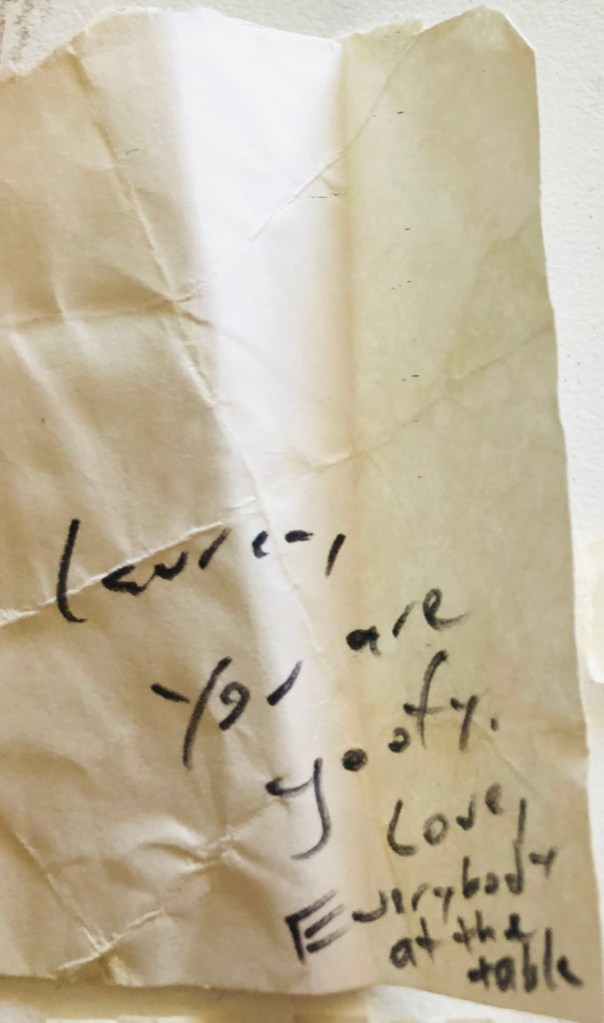
I got one more note that night:

And that was all. Truly. In mid-January there was a party at Two Boots Pizza on Avenue A (where my friend Mary was manager. Maybe she arranged this party for us?). I was nervous, still working a distant sense of Sandler crush even though there had been no actual communication since the DaSIlvano dinner. When Adam showed up with his girlfriend, because of course he did, I had a moment thinking how dumb I’d been to put so much weight into those little missives passed back and forth. It took a while for me (like years) to understand how words can float around in a moment, be happy-making and all, or just be taken in whatever way strikes in the moment. They’re powerful little buggers loaded with things that preserve moments in time. And that is all. And that is good.

Welcome back.