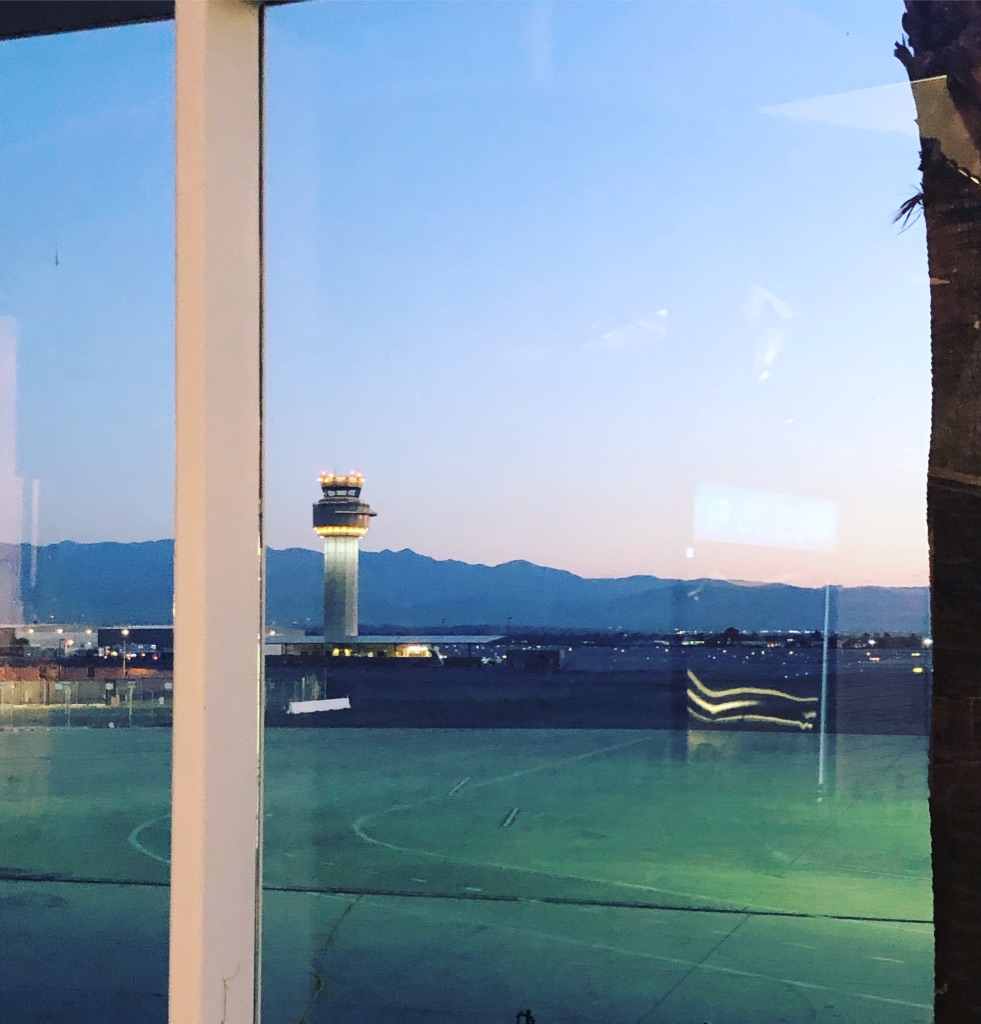
Memory Manor: High-FLyin’ Hubris

I’ve been thinking a lot about hubris this last little while as certain cretins in the world are working it to a horrific and heartbreaking degree. MW definition: Exaggerated pride or self-confidence. Mulling on the thin line that separates hubris from a helpful proportion of pride and self-confidence. What kicks that moment into exaggeration? For me, I suspect it’s to do with my ego being blown up like a helium balloon, which at first bobs around happily all shiny and mylar, attracting attention while people smile from below. The placement thing is very important: Above. Below. Me. Them. Then, as happens, the deflation. Loss of altitude, ending up saggy on the ground. In human terms, translated to an intense desire to disappear or crawl under something.
Redlands 2021

I had a major dose of hubris during a high-altitude period both metaphorical and literal. In late summer 1991, I was flying back from Los Angeles from a music conference where I’d interviewed Soundgarden, hung out with Pearl Jam, been in an elevator when Ted Nugent had made a woman from PETA cry (that last bit was not fun-making, the other two were). I was feeling pretty effin’ good about myself when I got on the airplane back to NYC so naturally finding out I was near the window with an empty seat next to me was just an extension of my specialness. Seconds before the doors were set to close, a commotion and three guys rushed onto the plane all disheveled and the like. Trying not to stare—or even look like I was looking, an under-the-bangs move I’d perfected since living in the City—I saw that one of them was headed for the middle emptiness at my elbow. My headphones were strapped over my ears so that would protect me from having to talk, but, damn, there would now be a body where I’d looked forward to none. The maybe-middle-aged guy crawled over aisle-human and buckled in while I stared out the window as we started taxiing. All remained quiet until the flight attendant wheeled up with food questions and tray dispensing. As she rolled away, middle-seat man asked me what I was listening to, I answered (my memory says smugly) with some band whose advance tape I’d no doubt gotten and was therefore responsible for critiquing, figuring he’d have never heard of them. I mean, he looked pretty old. He nodded and asked me what I did. I told him, proudly (maybe smugly). He said he was a musician and I remember clearly my inner-eye roll and Here-We-Go. Dude’s gonna try and work me for a story, seeing as how I’m a writer for SPIN and all. I believe at that point I pontificated on all the challenges of being in the music industry, how important it was to keep up, know all the right clubs to go to, just persevere until you might be lucky enough to succeed. Go for it, don’t give up, and all that.

He nodded a lot. His face had a lot of sharp edges and a definite receding hairline. I probably thought, Poor him, just starting out at this point in his life. How’s that gonna work out? His sideways smile said, Ah, she’s so wise or Wow, this one’s full of it. He asked if I’d like to hear his band? He had a tape of the sessions he and the guys had just completed in LA. Their album was coming out in a few months. Okay, I’d thought, so they’ve gotten that far. A record release is a good sign, even if it’s on a small label. still. Their name was Little VIllage and he was the singer and guitarist. I’d never heard of them, but I thought I’d be gracious and say yes, I’ll listen. Why not, good karma and generosity and all that. He pulled out a cassette from the bag at his feet, handed it to me, and said, “My name’s John.” I nodded, took the plastic cassette case and cracked it open to slip into my Walkman. That was when I saw a list of names written out in black sharpie on the insert card. The only John there was John Hiatt, guitar and vocals. Then my stomach flipped and a flush of heat rose from some gut place and crawled all through me.

Shit. John Hiatt. He was an actual bonafide successful musician. He’d had a decades-long career. He was way more in-the-know about music than me. Like beyond. His songs were covered by legends like Elvis Costello and Iggy Pop. I felt nauseous, wished the headphones might become a hood where I could disappear. I probably smiled, maybe mumbled cool, then pressed play. I’m pretty sure he smiled, although not unkindly as I remember it. Then I turned toward the window and listened. It’s always awkward to listen to (or read, or watch) someone’s creation with them near you. Out of the corner of my eye though, I saw John had put his head back and was maybe napping. Such was his relaxed state around me listening to his music. Or maybe his worry reflex was sleeping, who knows, although I’m fairly certain that my opinion was not the make-or-break I’d imagined it to be when I thought he was just a trying-to-make-it guy wanting my approval. I read the insert card and learned that the other musicians were Ry Cooder (guitar, vocal), Nick Lowe (bass, vocal), and Jim Keltner (drums), all beyond-established musicians. Like BEYOND…Jeezuz. I felt the fool.
Redlands 2020

I honestly cannot remember what I thought about the music. I mean, it wasn’t actually my speed and I had a deficient appreciation of singer-songwriters of that style, so I was probably non-plussed about the actual music. But I was most definitely extra-plussed about my outsize confidence, which I now had to deal with for another however-many hours we were on the plane. As it turned out, once I was done listening, John slept on. And it wasn’t until the plane was coming in for a landing that he turned to me and asked what I thought. I said something…who knows what but no-doubt slightly gushy, even though I also had a pretty intact cooler-than-thou armor I had been shining for a while, so I’m sure that was reflecting too. I’m also sure I thanked him for letting me listen. I don’t think I had any questions, but I remember the residue of chastened. Then the doors opened, he said goodbye and disembarked. I saw him later as I exited baggage claim. I was headed toward a bus, where I would sit next to a lot of grumpy, travel-smashed folx heading back into the City. He was about to climb into a black town car, no doubt sent by the record company, to take him to whatever nice place his final destination was. A place that was probably a good bit larger than the apartment I was headed toward. He did give me a wave and a smile before I stepped up and onto my bus. I did the same back, although I felt slightly more shrunken inside than when I’d first deigned to acknowledge him on the plane. Not shrunk too small, but just adjusted to the actual size a human being is when they’re faced with an ego course correction. And I rolled on, staring at the city and thinking about how many people I didn’t yet know and wishing Ted Nugent hadn’t become one of the ones I did.

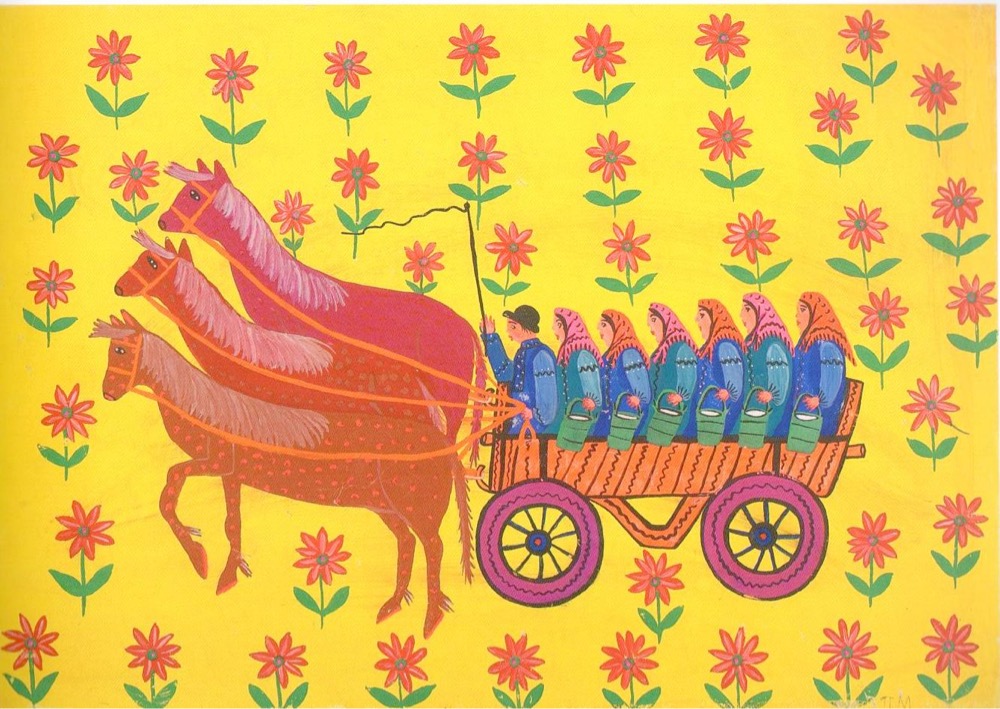
Across the Universe

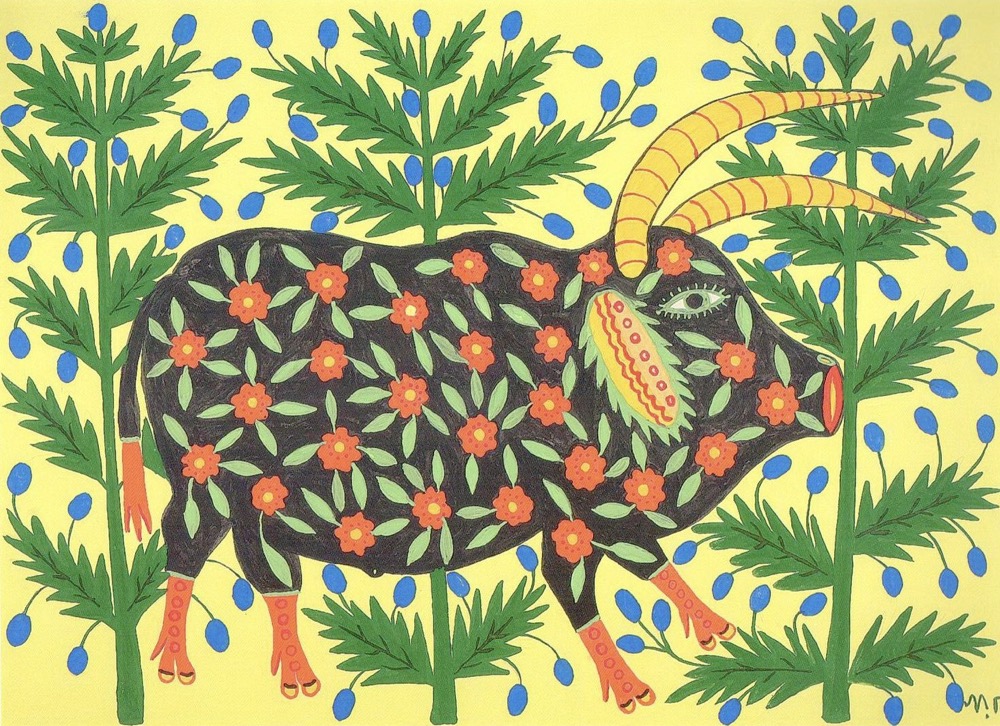
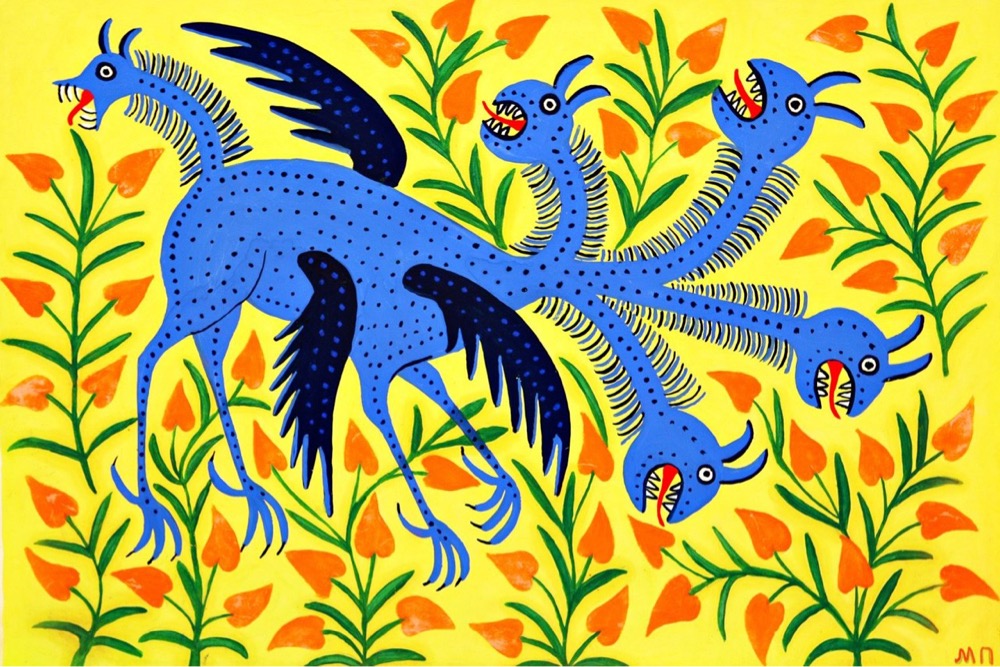
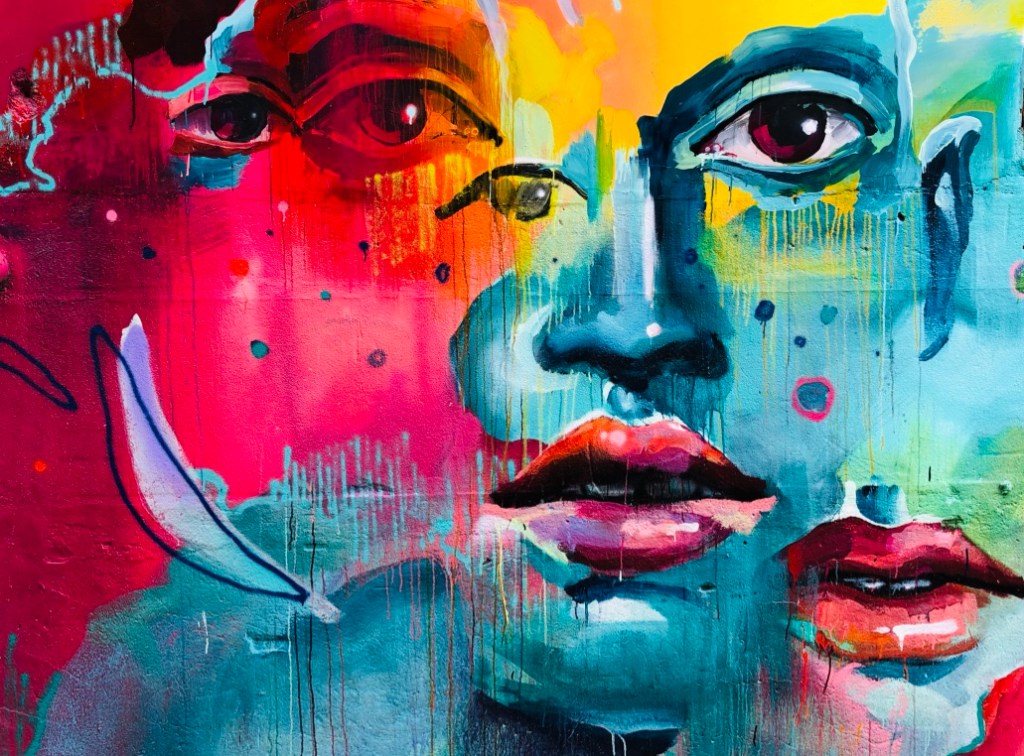
Ukrainian artist Maria Prymachenko

Although I can find a few stories of greed, hubris, and insanity on the walls of my memory manor, today I’m out front holding a bundle of sunflowers and looking across the universe where those three things along with a hard case of other tragedies are being visited upon the people of Ukraine.

Because stories transcend, yet it often seems the ones who hold the power never do take their history to heart, today I’m letting the writing on Ukrainian’s way-back walls talk instead.

“The Story of the Unlucky Days” A Ukrainian folk tale

At the end of a village on the verge of the steppe dwelt two brothers, one rich and the other poor. One day the poor brother came to the rich brother’s house and sat down at his table; but the rich brother drove him away and said, “How durst thou sit at my table? Be off! Thy proper place is in the fields to scare away the crows!” So the poor brother went into the fields to scare away the crows. The crows all flew away when they saw him, but among them was a raven that flew back again and said to him, “O man! in this village thou wilt never be able to live, for here there is neither luck nor happiness for thee, but go into another village and thou shalt do well!”

Ukrainian artist Maria Prymachenko

Then the man went home, called together his wife and children, put up the few old clothes that still remained in his wardrobe, and went on to the next village, carrying his water-skin on his shoulders. On and on they tramped along the road, but the Unlucky Days clung on to the man behind, and said, “Why dost thou not take us with thee? We will never leave thee, for thou art ours!” So they went on with him till they came to a river, and the man, who was thirsty, went down to the water’s edge for a drink. He undid his water-skin, persuaded the Unlucky Days to get into it, tied it fast again and buried it on the bank close by the river.

Ukrainian artist Maria Prymachenko

Then he and his family went on farther. They went on and on till they came to another village, and at the very end of it was an empty hut––the people who had lived there had died of hunger. There the whole family settled down. One day they were all sitting down there when they heard something in the mountain crying, “Catch hold! catch hold! catch hold!” The man went at once into his stable, took down the bit and reins that remained to him, and climbed up into the mountain. He looked all about him as he went, and at last he saw, sitting down, an old goat with two large horns––it was the Devil himself, but of course he didn’t know that. So he made a lasso of the reins, threw them round the old goat, and began to drag it gently down the mountain-side. He dragged it all the way up the ladder of his barn, when the goat disappeared, but showers and showers of money came tumbling through the ceiling. He collected them all together, and they filled two large coffers.

Ukrainian artist Maria Prymachenko

Then the poor man made the most of his money, and in no very long time he was well-to-do. Then he sent some of his people to his rich brother, and invited him to come and live with him. The rich brother pondered the matter over. “Maybe he has nothing to eat,” thought he, “and that is why he sends for me.” So he bade them bake him a good store of fat pancakes, and set out accordingly. On the way he heard that his brother had grown rich, and the farther he went the more he heard of his brother’s wealth. Then he regretted that he had brought all the pancakes with him, so he threw them away into the ditch. At last he came to his brother’s house, and his brother showed him first one of the coffers full of money and then the other. Then envy seized upon the rich brother, and he grew quite green in the face. But his brother said to him, “Look now! I have buried a lot more money in a water-skin, hard by the river; you may dig it up and keep it if you like, for I have lots of my own here!” The rich brother did not wait to be told twice. Off he went to the river, and began digging up the water-skin straightway. He unfastened it with greedy, trembling hands; but he had no sooner opened it than the Unlucky Days all popped out and clung on to him. “Thou art ours!” said they. He went home, and when he got there he found that all his wealth was consumed, and a heap of ashes stood where his house had been. So he went and lived in the place where his brother had lived, and the Unlucky Days lived with him ever afterward.

Ukrainian artist Maria Prymachenko

What I wish for the fierce and tender people of Ukraine is that in their fight to bury their unlucky days, to have understood what it is to live independently, even if western alliances could be goat-horned devils delivering money—though removed enough to let them create their own existence—that when the hubris and greed of the putrid, psychotic Putin, after pulling a chump-fat-pancake move by offering, then throwing away, poisoned-pen offers, that his greed leads him to the river of unlucky days, which follow him forever and leave Ukraine to become what they deserve: free, proud, and living good days end over end.

Although I don’t speak Ukrainian so don’t know precisely what’s being said, this clip from Servant of the People, the Ukraine president, Volodymyr Zelenskyy’s, 2015 comedy series about a school teacher who becomes president of Ukraine is not so much life imitating art as an example of the generosity it takes to bring people in with laughter, then hold them in community, as opposed to rounding them up with fear, then holding them in crisis.

Memory

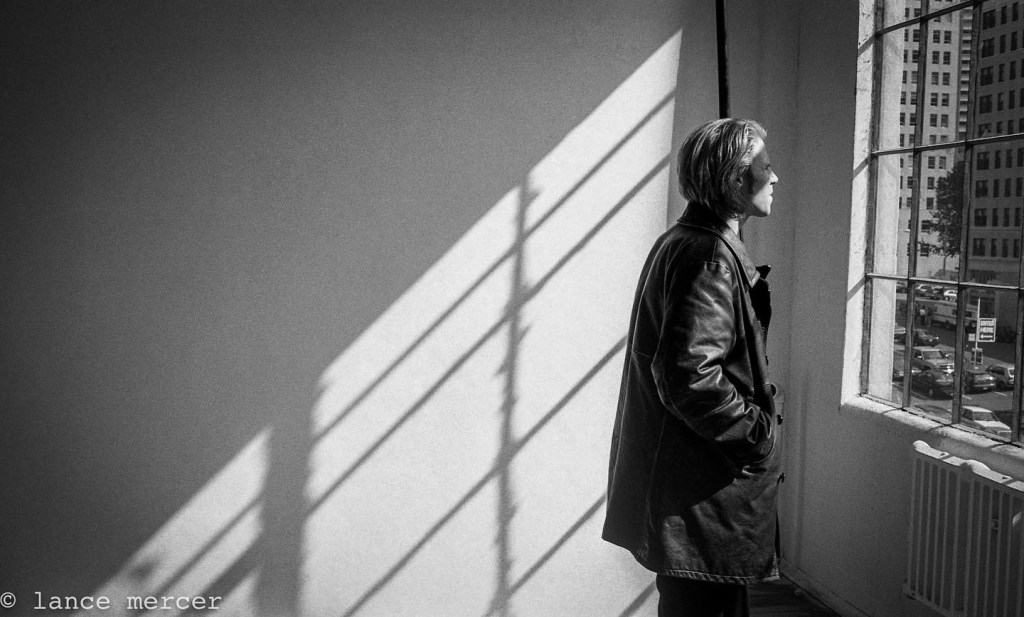
In last week’s post, I mentioned an article I’d been working on at SPIN that had been red-lined within an inch of its life and had become, in my mind, a primary reason for me to leave the magazine for other adventures. The story was on the band Screaming Trees and it never was published. A few days after that post, just this last Tuesday, February 22, Mark Lanegan, the band’s singer, left this planet, possibly for other adventures if one believes in that sort of thing. His death, sitting squarely as it does in my excavation of memories, brings up acutely what a voice can do to a person—and possibly why I’m currently struggling to dive as deeply into music as I used to.

Mark Lanegan circa 1992 (Lance Mercer photograph. Lance is an amazing photographer whose shots of Seattle moments are stunning. His website holds those and so many more moments as well.)

Vocals in songs have always soaked me in a way I don’t experience with any other form of creativity. I can and do get completely lost in stories, whether fiction or non, printed or visual—although I mostly prefer written. And song lyrics usually tug me deeper into a song, yet they’re not crucial to my embrace. Smells Like Teen Spirit isn’t a collection of words to move the world. John Lennon’s Jealous Guy (and this Roxy Music version. sheesh.) is. Both those songs rattled me fine&good because of where the voices took me. A note hit, sustained, dropped, caught, high, low, I’d follow with more than my ears. And I’d go with abandon, which is why I suspect I’ve grown shy of those moments, given I’d feel the rip deep inside as I opened myself to the moment. I’d do that gladly because I wanted to feel as much as I could even knowing there would be a scar. I like scars, by the way. I think they tell stories of their own, are testimonies to healing, resilience, a life lived, whether physically visible (I have a stupid amount of scars on my hands from getting the pits out of avocados because I never learned the right, safe way) or the kind that exist hidden from view. What seemed to happen with me and music was that I started to mix up the person breathing life into the song with the flesh&blood person delivering it. I mean, of course I did.

A confusion that darkness always indicated depth. A kind of Eurydice in reverse. I’d follow the voice down and down, curious to know what was underneath but only as a visitor. A part of me happy to not see an inch in front of my face, but to have to depend instead on all the other senses. I wanted to know intimately where the voice might take me…but maybe not really. The thing that would override at some point would be fear: of getting stuck wherever it was we were going, of losing absolute and total control and never being able to get it back, of falling the F apart. So at the very last minute, just as I was about to step over the threshold, I’d feel that voice looking back to make sure I was following, and I’d turn tail. Run left, right, backward, flail off back to shore.

Russell Bates stunning video from Mark’s solo album Whiskey for the Holy Ghost (1994)

Mark Lanegan was one of the sirens. His voice held every dark corner. I’d never heard anyone (except perhaps Tom Waits) who in the timbre of their vocal was able to communicate exactly the place their emotions lived. As if he was daring you to explore that, stay there, do. not. take. your. attention. away. It wasn’t the fire so much as the vapors. The rubbing of notes one against the other, gravel soaked in kerosene sparked by a Bic that for me burned through to meaning. Felt brave what he was offering. So the courage to hold myself in the white-hot heat he seemed to be offering, to burn away bullshit, kept me curious but also scalded because, once I knew him, I couldn’t separate the soul from the song.

Lance Mercer

I met him as this song was making its way into the world. Screaming Trees had performed at some kind of SPIN shindig and as I remember it, they were all sitting at the bar: the two Connor brothers (bass&guitar) and Barrett Martin (drummer). (Side note: this documentary Hype! is amusing and has a funny Connor brother quote at minute 49.27. Here’s the trailer. And BTW, watching it now, gads was that scene pale. This article on the Black Godmother of Grunge puts so much perspective on the intrinsic race&sex-ism of that scene.) I went over and we all started talking, except for Mark, who mostly smoked. And drank. His vibe was very much Jim Morrison—not that I ever met Jim Morrison, but I guess my version: sultry, removed, and fascinating in a way that shot a neon danger sign above his head. But yet I persisted because, yes, I was that person who felt I could crack a difficult man’s (any person, really) veneer. Become the one they confided in. Be the only human who truly understood them. (Spoiler alert: this was never in any universe true.) It was a fantasy born from the very first stirrings of Led Zeppelin–listening and why I favored the Stones over the Beatles. The hell-raising, not the harmonies. The difficulties, not the delight. That was my soundtrack.

The conversation turned. The party ended. Mark had talked and watched, and I knew he’d paid me attention. We took a walk through the NYC streets stopping at bars, then up to my roof where I’d brought my walkman with two little speakers and we listened to Percy Sledge’s “When a Man Loves a Woman” over and over and over. And the fact that we cried while listening made me feel whole. Then the sun came up. That day I was traveling but Mark had decided I should cancel that so we could continue wandering and listening. He couldn’t understand how I didn’t want that also. Well, sure, if I could split myself in two, but I loved my job. He was miffed and said some things. In some part of myself I knew this wasn’t about me, that I was getting a really clear view into the part of him where the darkness lived and the lyrics sprang. I left him on the sidewalk and got in a cab. (It makes my head actually hurt to think how I could function with no sleep.)

Lance Mercer

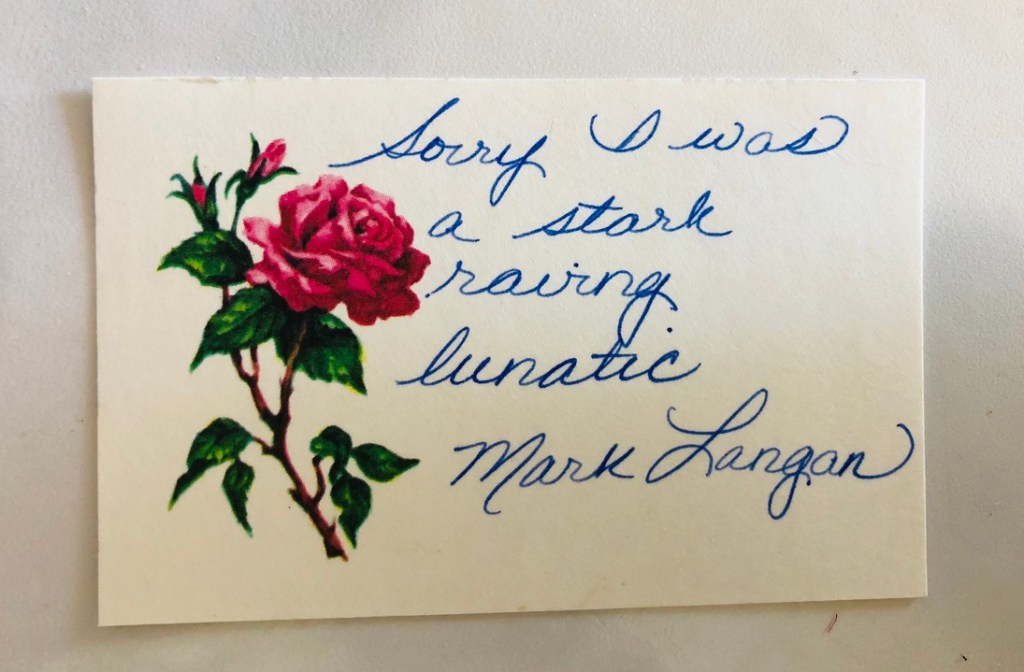
When I got to my location, there were flowers waiting and a note and while there was a part of me that still thought Maybe this is something, there was a whisper of reality that said No, that needed to only have been a moment. I cannot save this person. No one’s asking me to.

The last time I saw him outside of official music-biz stuff, we were meeting in a hotel bar after one of the band’s shows. I was coming in from the airport late. He arrived with a girl in tow. Suggested we all go up to his room. This was that Eurydice moment for me. I couldn’t follow him there. And weirdly, as I stepped out of the lobby onto the street, I had a moment thinking I’d failed. That I wasn’t willing to experience everything life had to offer. That I was too scared to really live. And in one of those this-is-your-life flashes, across the street my former boss from Rolling Stone was just coming up from the subway. He had on a tux. If he saw me, he didn’t acknowledge, but I immediately entered the one-of-these-things-not-like-the-other zones and felt the road I’d chosen hard under my feet. It was a fine road. Maybe not always solid, but somehow being reminded of what had been while leaving what couldn’t be reminded me I was all right just walking my own road. I was glad in that moment I hadn’t followed anyone into darkness thinking it was the entryway to feeling. It wasn’t the last time I tried to follow though, because memory is fickle.

I understand this confusion around emotion, living, feeling deeply as being connected to where I am with music right now. Until I can sit with the sounds, let the voice enter me, understand I can lose control, but yet find my way back—maybe a Hansel and Gretel version rather than Orpheus—then I’ll still watch from a distance and study the bread crumbs. Listening to Mark Lanegan in this moment scratched me up inside the same as it did decades ago. I go immediately to his pain, yet he undoubtedly had pleasure too, so I’m going back in to listen for that. But really, it’s not about him. I can’t say for sure what it is about altogether, but if singing is a sustained scream delivered on pitch (direct Dennis Fox quote), then the parallel of living is much the same: Holding that sound, finding the pitch, remembering to breathe.

In memory of Mark.

Memory Manor: Minor Mayhem

long ago, galaxies away

I’ve turned over and over in my noggin’ the circumstances surrounding my exit from SPIN. The whole sheboggle has become a shiny nugget of memories rubbed smooth by the long fingers of time. On the one hand, I remember vividly being presented with an article I’d written that had been edited by boss-man Bob. This was not his regular role. He would read the pieces for the upcoming issue toward the end of the process once everything had been laid out with visuals, etc. The early line edits of stories were done by us other editors, then we’d pair up with the art department and put the whole layout together. In this case though, my regular editor came into my office and showed me this piece I’d written that had been red-lined within an inch of its life by Bob with comments like, “Who does she think she is to say this” and “I don’t believe this is true.” The thing was that this was a pretty run-of-the-mill story with details about a band he admittedly knew little about. At that point, staring at his scrawl, I can distinctly remember a bullhorn in my brain blasting “I want out of here.”

In transition

That moment had been seeded by other things. My soul aching to be moved by music again just as I’d been a year earlier during Nirvana, Pearl Jam, Hole, Soundgarden, Bikini Kill, and all other new sounds I’d felt stunned by in the same raw way I had when I was a teenager listening to Led Zeppelin, Heart, The Who’s Quadrophenia, etc. I hadn’t become too cynical to want another magic portal to climb through so that music could magic-carpet me into another state of being. But what I didn’t figure on or take into account was that the blockage lay in me, not the music, so that when I’d gotten the story back from Bob my internal “fuck this” ejection button got pushed and I decided it was time to move on.

Looking back, I also now realize that there were a couple of other things at play I wasn’t willing to explore. The tension of sexual innuendos in the office and in the business were taking a toll, even as I basically refused to see they were anything but just a part of being in the rock’n’roll circus. Running alongside that funny car was the fact that a coworker had just overdosed while in the company of a woman who’d recently been hired and who was about three degrees of separation from my Seattle music friends. Even though it had become increasingly clear she had a drug problem, Bob liked her and kept her on. That she then became involved with one of the young interns who was at the tail-end of his time with the magazine turned tragic when he was found by a mutual friend dead in his apartment from a heroin overdose while she and he had been together. All this accumulated to move me out the door wanting amnesia.

At this point in my career, I’d become a funny combination of confident and reckless in that I knew my way around the industry but I didn’t have any interest in the traditional trajectory of music journalism. For instance, getting another job at a music magazine or as a newspaper columnist held no interest for me. My goal, as I remember it, was to separate as fully from the scene I’d known as I could while still using some of the skills I’d honed to get a paycheck. So when a mutual friend suggested an interview for a talent producer job at the Jane Pratt show, a new Lifetime TV talk-time situation by the woman whose magazine Sassy I’d been devoted to, I thought Hell, yeah, a place to work with a little femme power and a paycheck.

So it happened that in 1993, I was hired to entice musicians and bands to come on the show to support whatever theme was being covered during the hour. The setup was one topic, a couch full of authorities and personalities on said topic, and a studio audience. Jane would bounce between the couch and the audience fielding questions and driving the conversation. Then, if the topic lent itself to some sort of musical guest, I’d be tasked with finding them, booking them, getting their rider in order (which meant having their instruments rented, delivered, set up, and making sure the green room was stocked with whatever libations and food they wanted. And while I was never tasked with removing all the brown M&M’s from the candy bowl, there were weird moments like Wu Tang Clan asking for a dozen Bic lighters). It was an adventure that flexed me in ways unexpected. I learned things like never try and move an electrical cord onstage as a band is setting up thinking you’re helping. You’re not helping. You’re instead asking for a member of IATSE to yell at you because it’s his job and if you mess it up, he will suffer for it and the union will smash you (or something like that. I was too stunned being screamed at to really listen to the reasoning. Plus I knew I’d never even try anything like it again.).

The hubris in me really felt How Hard Could This Be? And here’s what I found out: while interviewing musicians is slippery business, musicians themselves are slippery when left to their own devices in the act of waiting to perform on a TV show. When the Supersuckers were booked for a show (topic: smoking pot), they went off on foot to get coffee. The studio was in Astoria, Queens, and although there was a deli literally next door, they turned the wrong way when they stepped out. Maybe they were stoned. Then they wandered away. A half-hour later, ten minutes before they were meant to be onstage, they were still gone. This was pre-cellphone era. (Imagine such a time.) Why had I let them go out alone? Because I had a shit-ton of other things to do. Did I mention Wu Tang Clan were also on this episode? And they’d sparked up a big joint in their greenroom and the security guard had let me know that I needed to stop them from doing that. I don’t know if you’ve seen those guys, but the thought of doing that terrified me. (As it turned out, years later when I worked at Elektra, Ol’ Dirty Bastard was on the label and I promoted videos from his album Return of the 36 Chambers and he was super fantastic to work with.) As I remember it, I got someone else to go with me to tell the Wu Tang they needed to snuff the joint. It must have gone alright because I’m still alive. And the Supersucker fellas found their way back with a couple of minutes to spare. And the bands played and the people on the show talked and Jane did her thing, then I went home and couldn’t sleep because this was only my first week and what the hell?

Ween played and that was a blast because they’re goofy and fun. We did a Riot Grrl episode where Kim Gordon was the guest. I had to book and pre-interview her and even though I knew her a bit from my SPIN days, she still intimidated the hell out of me for being so cool. Evan Dando from The Lemonheads was a musical guest, and while I can’t remember the topic I do remember feeling super-extra walking down the hallway with him as the studio audience stared because many girls and boys were in love with him and look, here I was just hanging out palling around with him. Wasn’t I special? When I’m honest, it was just that kind of adjacency that often gave me a rush. I wasn’t the talent, but look at me being friends with them. (Hrm, there’s something more to explore there.) Then there were the moments when my star-struck didn’t align with the rest of the crew. For a show on Soap Operas, while most of the producers, studio audience, and Jane were fairly fixated on the hunky-hunks from One Life to Live (or whatever show they’d pulled the actors from), I was smitten by organist Eddie Layton, who’d started his career writing music for soap operas but was currently the organist for the Yankees at the stadium. (We all ended up getting some comp tickets to see the Yankees play, telling us they were going to put the show’s name up on the diamond vision board during the seventh-inning stretch. When they did, it read “The Yankees welcome Lauren Spencer and the Jane Pratt show.” Jane seemed not so happy about that. It was awkward, but not as bad as getting yelled at by an IATSE union guy.)

Just as I was getting the hang of the booking-for-tv thing, having some fun, the show was canceled. One season was all it took for the network to pull the plug. The last taped episode was on date rape (no musical guests). During a commercial break, Jane was spotted on the couch with one of the guests. She appeared to be weeping. The woman next to her seemed to be consoling her. Our executive producer, who could apparently read lips since Jane’s mic was off, hissed in our collective earpieces, “Get her away from the guest.” It appeared Jane was sad that the show had been canceled. Well sure, except the woman she was telling was sad about much larger issues so… well, again, awkward. There was a final end-of-show party at a bar in a very hip midtown hotel and as we drank (and drank), Jane looked around and spotted Johnny Depp at a table in the corner. She grabbed me to go talk to him with her. He was sitting with a guy who, when we came up to the table and she said, “Hey, Johnny” looked at us and replied, “I think it’s so rude when people only talk to the famous person.” Jane smiled and sat down next to Johnny. I said, “Hi” and sat down opposite, feeling weird. At some point the friend got up at which point Johnny looked at me and dragged his finger across his throat. What was he trying to communicate, I wondered? That I should call it quits? from the table? from life? I had no idea. Then he said, “I like your choker,” which was a piece of lace I’d tied around my neck. I almost took it off and gave it to him. This was often a response I had when someone complimented me on something, as if I must pass the thing on so as not to feel uncomfortable about having a thing someone else might want or admire. (Oh, lord, so many complicated future topics for exploration.) He did not covet my choker. I did not give it to him. When he got up to leave, Jane was convinced he wanted us to follow him to his room. I hadn’t seen any secret signals that would indicate that as true, so I begged off to the bathroom. When I came back, she was gone.

That was about the last time I saw Jane Pratt. And from that period in my life, I discovered a few things about myself: I can learn new stuff pretty quickly. People can be hard to handle and signals difficult to read no matter the business you’re in. Never. Ever. Under any circumstances, fuck with IATSE.

Memory Manor: View Into a Side Window

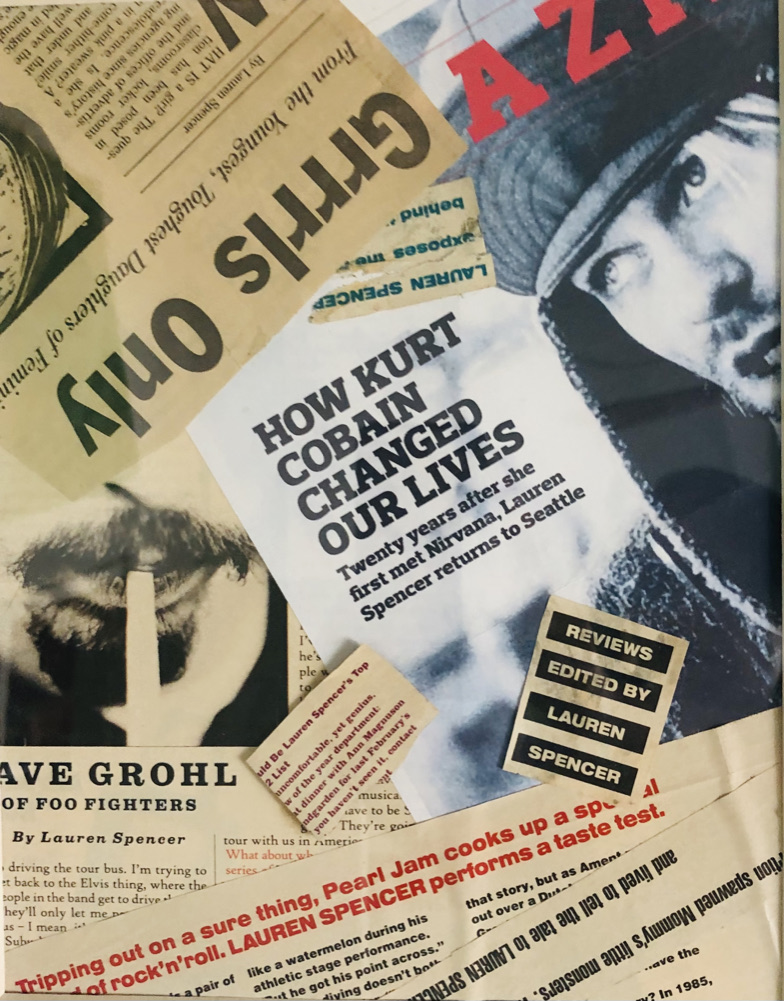
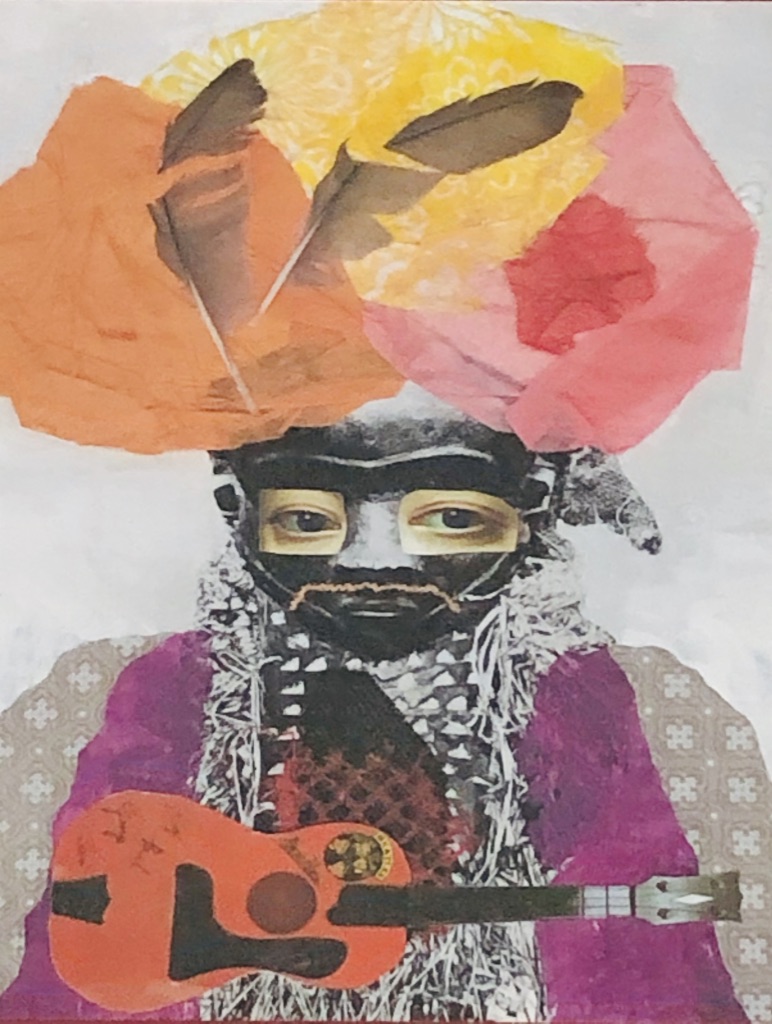
(Dean Spencer collage)

Last week I scratched at the surface of what lay below my proclivity for career Yes’s. The quiet whisper of pleasing that would often turn into an inner roar of WThaHell? Why’d I think I could do this? Yet … I don’t want to disappoint by saying no. If I fail, I’ll just relocate somewhere else.

I had been thinking about where all those Yes’s led me. I was rarely putting anyone in danger except occasionally myself. I wasn’t pretending to be a schoolbus driver, then learning on the job. It was entertainment and while there were certainly stakes, they were relatively low in the larger scheme of things. My Yes-I’ll-Do-It became a spicy stew of doubt and confidence swirled with flop sweat. Truthfully, I usually did fine, sometimes less than, sometimes more than. But an interesting thing happened on the way to telling my own tale: I created an origin story that positioned me as having just fallen into it all. Of being a random participant in all kinds of adventures. Just happened to be standing here and look what happened? This Rolling Stone job? Well, hrm, didn’t see that coming. Becoming a writer/editor at SPIN? Well, I’ll be damned. I just wandered in. Producer on a TV show, well y’all left the door open, so I slipped through.

These shuck-sy stories are mostly bullshit. Of course I worked, plotted, planned, studied, and the like to get onboard the music journalism train. I wanted first-class travel in the world I loved. To be delivered while also getting blissfully lost in words and chords, lyrics and notes. What did I need to do to take that ride? And for sure I wasn’t immediately qualified for a couple of my career highs, but yet I was always willing to bluff until I could mostly hold my own. So why did I spin tales that made the event huge and the person (or rather, me) small ? When I’m honest, the stakes of success seemed too scary a responsibility. What if it was a one-off? Beginner’s luck and all. A kind of what’re-y’all-looking-at? mentality and I can’t keep up the quality. Don’t get me wrong, I liked (still do) the attention on the upside but staying in the glare of it made me uncomfortable. Light too bright, trip and fall, unbearable embarrassment…I’ll stay over here, thanks. But there’s another layer underneath. The one that murmurs “Don’t brag. Not seemly. Unattractive.” Gaaah. That damn spot.

I’m going gendered on your ass here: After 60 years on the planet, the message that women talking themselves up is side-eye cocky or outright abhorred while men are considered confident and assured is not a new one. During my career, I swam in that sea for…always. Even as I write this, my inner chatter is juddering with “oh, no, stop. don’t go celebrating yourself where everyone can hear you.” False humility is just annoying. I started with a good dose of that decades ago when I’d tell my story of how I started working at Rolling Stone. It went a little like this: “I was the intern who wouldn’t leave,” then there’d be some ha-ha-has where everyone would be put at ease because I wasn’t saying I was special and people could feel like I was just one of them. It could happen to anybody. I didn’t tell about how a month before my internship ended, I stopped by the desk of Jann’s assistant almost daily to say Hi and let her know I wanted a real paying job at the magazine. There was no human resources at the time. She was my golden ticket and I’d already gone out of my way to help her when she needed it. I knew I was laying the table for my future so that when, for instance, I covered for her during vacation and Jann came out of his office with cocaine all over the end of his nose accompanied by Michael Douglas and they were headed to the elevators for lunch, I didn’t tell anyone, even though I was dying to call all my friends. I was also unsuccessful at miming the wiping of my own nose while staring at Jann thinking he would understand what I was doing and therefore wipe his own. When she got back, I did tell her though. She thanked me for not making a big thing out of it, even though everyone knew. Everyone saw him. Very badly kept secret. But yet, these little things added up so that when a job as assistant to the executive editor came about, I got it. And not just because I could keep what happened in the office in the office but also I also knew who sat where, how to use the copy machine, and which editors preferred cream no-sugar for the daily deli coffee run. AND, I could do the job.

When I was promoted to the Rolling Stone copy department, I actually didn’t really know how to do the job, but it was entry-level and I knew I would learn, even if I was constantly afraid I’d fuck it up. And I did mess up. And I did learn. The boot camp meets rock’n’roll vibe was exactly where I wanted to be: Surrounded by all my people, working into the wee hours every two weeks to send the magazine to press. The magazine would cater a meal on those nights, where there would be alcohol along with a range of drugs available from the Capri Lounge which was a small dark space where the magazine pages were photographed for printing. (Here’s a slice’o’time article on how magazines were made pre-computer and one on the Capri Lounge.)

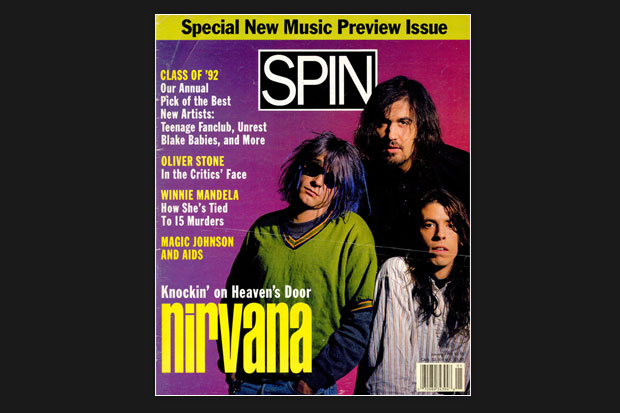
Nirvana SPIN Cover January 1992
My first cover story and first US cover for the band as well.

Then I was hired at SPIN for another job I wasn’t really qualified for, but again, I’m a stubborn bitch and although terrified 24/7 that I’d blow it, I was also determined given this was my dream job, even if I had nightmares on the regular while doing it. In August of 1991, I got a cassette tape from DGC records of an album set for September release by Nirvana. Called Nevermind, it was their first major-label release. I’d heard their first, Bleach, but this blew me right out of the pool in a way I’d never been blown before. Subsequently I pitched them as a feature story. I was given the green light for something to be included in our January 1992 New Music issue, which was put together in October/November (magazines always work two or so months ahead). This was before anyone really knew how the band or the release would do. There was something in the air that suggested this thing would be big and it wasn’t just me who felt it, but ultimately, when it was decided that Nirvana would be on the cover—the first US cover story for the band—I knew I’d had something to do with making that so. And I had a chance to crow, but in a lot of cases I “Aw, shucks”‘d my way through the attention.

So owning it is what we’re talking about here, because today I even questioned my own belief around the story of writing the first cover article on Nirvana. So I researched it and came across not only proof that yes, inner-doubter, it’s true I did do that, but also an article that erased me altogether. And that has my pulse quickened and my heart hammering. For two reasons, really: One, when I left the music industry, I truly walked away. A little like one of those explosion walks in movies (Penelope Cruz in Desperado although without Antonio Banderas) where I just stepped away from the fire and kept on going. Didn’t take anything with me. Just wanted out. In doing that, I believed I’d forfeited any claim over my successes. Now that’s a crazy amount of bullshit right there. Second, in so doing that, I rubbed myself out. Stopped telling my stories and let them roll away alone or, in the case of this article about the Nirvana SPIN cover choice, recognize them as mistold/misremembered (see the section in piece under “Baltin: What was your thought process as you were listening to the record?” I have more to say on that in the audio bit below).

So here I am coming out the other side of the fire. Been decades, I’m a little ashed-on, dusty, but I’m writing my stories. In fact, today I’d meant to tell the one about being a producer at the short-lived Jane Pratt television show but instead my writing self had different ideas, so I let it roll. This is what came out. I’ll visit Jane Pratt next week (probably? maybe?) but until then I’m putting away the matches.

(more thoughts on audio above)

Memory Manor: Yes!

(Portugal October 2019)

Hello there. I’ve been ruminating on what stands behind the word “Yes” around the topic of jobs and such. (On the relationship front, I could spin stories on the motivation underneath that response for pages and maybe someday will since I don’t think they’re so dissimilar.) The phrases “Sure, I’ll do that,” “Yes, I’d love to,” “Who me? Well of course, I’ll try it” come to mind as ones that more often than not are uttered even as my brain is screaming “Wait? What? I’m not equipped for that.” Then I’ll go ahead and do the thing anyway, ignoring the banshee in my head.

There’s a syndrome (imposter) and a rhyming-slangy saying (“fake it til you make it”) attached to this phenomenon and I’m pretty certain that everyone reading this has felt it at least one or a few times in their life. Thinking back to when I first noticed the Yes propelling out of my mouth while my innards flipped in fear of discovery, I know I was skating on different ice. Wanting to be accepted (looking at you middle and high school), needing money (hello, waitressing), craving something new (ah, a New York state of mind). As I got older, the idea of Yes took on a different kind of import. Writing and music, I’ll be damned. I wanted the moment to happen. I wanted to burrow forward inside that life. If I kept on moving quickly and just kept saying “Sure,” “Yeah,” “Bring It” maybe no one would notice I wasn’t qualified—at least that’s how I felt about it/me. Just move so fast, look-shiny-object diversions and I’m in. That’s how I felt about getting the job at SPIN. When the owner, Bob Gucciione Jr., asked if I could do the job of senior editor–a position I’d never held and which would skip me a couple of steps over more entry-level jobs in preparation–I said, “Would love to.” Being a copy editor at Rolling Stone really didn’t at all qualify me for the gig. The underlying message there was: Bob loved to take people from Rolling Stone. At least that’s what I told myself. Once I’d gotten the job though, I had to figure out how to do it. Of course, the job was my dream: rock’n’roll adjacent combined with putting my journalism degree to use. Great.

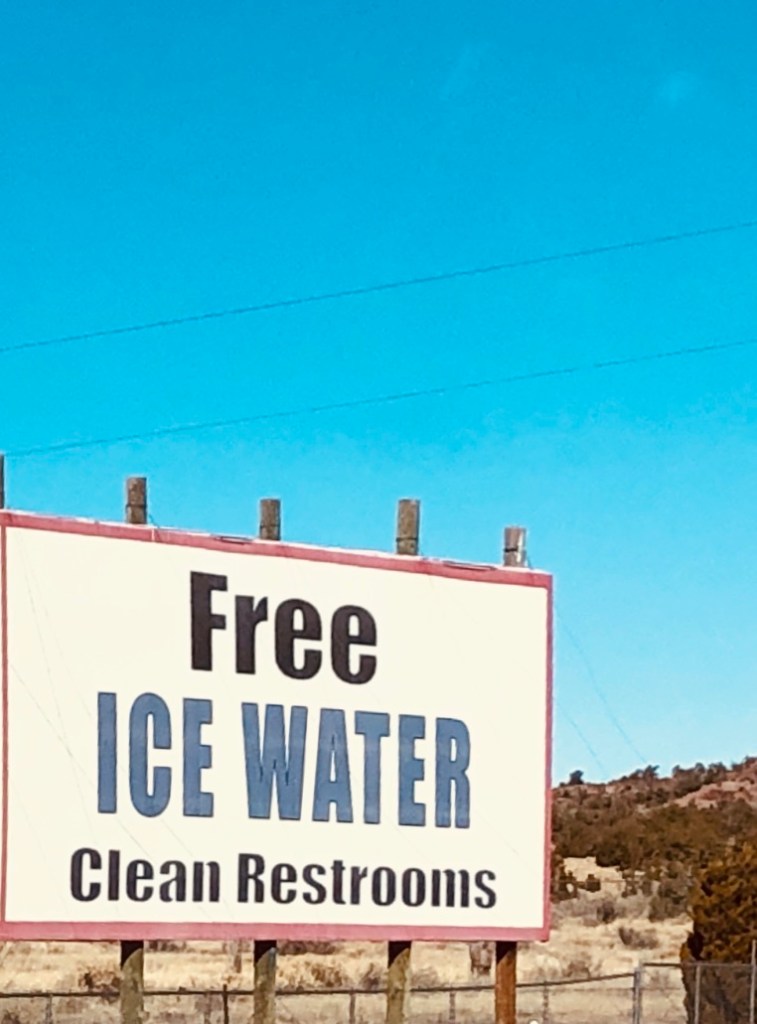
(Grants, NM, January 2020)

While the thrill of getting the thing never really faded, the actual asking for help part never seemed available. Or rather, I never made it available. I never asked “How, exactly, should this go?” I’ve also got reams of writing on the gendered bits inside music journalism and how in my career during the late eighties into the nineties women were not so present as helpmates. There were very few to be found at Rolling Stone in the editorial hallways and the only other woman writer-editor at SPIN did not cover music and was dating Bob, so I didn’t feel she was available for questions around the topic of How to do this job. The creeping sense was that each of us filled a quota and our position had to be guarded like Beyonce’s beauty secrets, which are maybe more readily available than advice from fellow female music staff editors was at the time. And there were no internets, so… if there was a group meeting somewhere sharing tips, I never found it.

Just Do It, the phrase somehow coincided with that damn Nike ad. Hence one month in at SPIN and I got my first feature assignment to fly to London and interview the Cure. About that, I felt both exuberant and unwell. Triumphant and terrified. First off, I loved the Cure in a pretty average way. I recognized their place in the pantheon of English music of the eighties who, when I was growing up in SoCal, fell into the category of “crying in the sunshine” bands whose lyrics were deep and music hypnotic in a thoroughly submersive way. They lived alongside the Smiths in my album collection (truth, I loved the Smiths more). But hell, I was going on my first overseas assignment. Put up in a hotel and given a chance to flash my SPIN press pass around. I also had to do a thorough interview with a man (Robert Smith, singer-lyricist, guitarist) whose reputation for shyness was well known. I would have rather Robert Plant or even Robert Palmer, both of whom I would have had ready-made questions for, although in retrospect the latter wouldn’t have worked because I had zero real feels for his music and the former because I had too much.

But yet, I’d work it out. And I wouldn’t ever, under any circumstances, tell anyone how nervous I was. Once in London, I bounced around on my hotel room bed, went down to the pub, had a pint, and continued to write out questions in my skinny reporter’s notebook. My assignment was to report on their upcoming club-mix-y album, Mixed Up, which would make a good story because the Cure were not a dance band and so why were they remixing their songs to make them sound like one? I figured I could tease out that question for at least a half-hour, over drinks or something. Unless that line of questioning made Robert or the band upset, in which case I would need to shift into some sort of sure-I-get-it mode and we could make fun of dance music. But then I’d need to spin that into a story about how dance music is really okay in the end because of course the record company would be annoyed if we dissed the music they were releasing on their label, and they’d paid for this trip. You see the web I was weaving. And all that depended on the fact that the band would talk to me at all. Who was to say they (or Robert) wouldn’t take one look at me and say out loud, “What, her? No bloody way she’s qualified to talk to us.” Then I’d have to leave and would get fired. It was all trouble.

(Adrian, TX, January 2020)

Not to mention, I hadn’t been told yet the when and where of our interview. I’m a morning person, by the way. The time was set for midnight. A car would pick me up. It would take me to a sound stage where the band were shooting a video. There would be no libations. or food. No distractions like that. Also, I’d be in the dressing room where they would sometimes be together but mostly not as each band member would be doing some video thing at different times and I’d just need to get what I could.

Sure, no problem, I told the publicist. No, I didn’t actually say, Hey, I need at least thirty minutes of us all in one place. And I’d like a beer. But nevermind. I turned up. The place was freezing, as soundstages usually are, though how would I know that. I was underdressed. I walked into the dressing room for introductions and Robert Smith was in his boxer shorts mid costume change. This felt awkward. I looked away while introducing myself, then felt rude, tried to decide where my eyes should look, and put out my hand as a hello gesture in the way I’d been taught was proper. I didn’t curtsy or anything, that would have been weird. He did not shake my hand, mostly because he was putting on a shirt and needed both of his for that. He nodded and mumbled hello. I think it was hello given the playback from the video shoot was pounding through the walls. It became immediately clear what the main problem would be. That I wouldn’t be able to hear him. He was soft-spoken in the best of times and it didn’t appear he would be the type to shout to be heard. I pushed record on my tape recorder, turned up the volume to eleven, and asked the first question, shouty, thinking I might model a vocal level he’d match. He didn’t. I remember the panic rising in me like a high tide. Band members came in and out and I kept asking and recording. I don’t recall having anything witty to say mainly because I don’t think I understood enough of what anyone was saying to respond appropriately. By the time the interview was done, which I only knew because the publicist told me so, I was icy with flop sweat. Disaster. I would return with nothing and be instantly fired. The end of my dream job. The publicist had invited me to a pirate radio event with the band later that night—or rather very early that morning, like in an hour—but I would have no chance to sit down with Robert or the band. It was just for color (or rather colour). As the car took me to the radio event, I madly scribbled whatever I could remember of the pieces of words and such that I’d heard and seen. By the time I was in a chair on the edges of the very small room where two DJs were interviewing Robert—and he was mumbling again, but it was into a microphone—and playing Cure music I began to just get fatalistic. I drank a beer, then three. I would get on a plane and go home at some point in the next eight hours. I’d fake it. Write what I could. Get fired if I must. Yes, I’ll have another beer. Thank you.

Back at the hotel, I rewound the tape and could hear about one out of every ten words. I’d interviewed a couple of fans outside the video location. They sounded swell. I got on the plane and scribbled out some stuff. I went into the office the next day (crazy how that worked. Youth and beer equaled no jet lag?) and wrote something (pg65). My editor didn’t ask for more, just shredded and polished. I gave it a final read and said Yes, done. I never said anything about feeling less than able even though I waited for Bob to call me in and tell me so. Three years later, as I headed out the SPIN’s door for the last time, I’d stopped saying Yes to everything, although I did end up taking my nodding-affirmative situation to another place I wasn’t qualified for. And I didn’t perish literally or in mortification. More on that later.

Memory Manor: Money, a Redux

Last week I wrote about shame of the personal sort, mine being money. I heard from a lot of people who shared how they could relate. (And by-the-by, I love hearing from all you fine folks on any and all topics that land in these four corners, so thank you for that!) It occurred that although money was the thing the shame was woven around, the real guts of it, the innards if you will, has really to do with something much less tangible than bills or coinage you hold in your hands or 0s&1s that click through electronic accounts. So with that in mind, I’m digging a little deeper today to be more honest about who I was (still often am) around this particular shame.

In writing about the Pearl Jam Groningen experience, I wrote about how busy the band’s tour manager was keeping them on the road and doing their daily thing (his actual job), which meant me bothering him with my needs would be out of bounds. Two things about that: 1) considering my situation—that I didn’t have enough cash to get from the club to my hotel a mile-ish away or so—as an embarrassing problem to be kept a secret meant I didn’t ask for his help, thereby watching the taillights of the tour bus pull away while I smiled tightly and waved into the dark, then walked really fast and not a little nervously through a city I didn’t know. If I’d told him I’d needed his help, I have no doubt he would have offered it so we could have found a solution. Because he was an aces fellow like that. Thing two: if I hadn’t felt shame around my finances, I would have called the record company to straighten out the problem with the hotel bill as soon as I’d become aware of it. But because I didn’t want them to think I was a pain in the ass who couldn’t cover the cost, then get reimbursed later, I did not make that call. Which meant I wrote a check against an account that didn’t have any money in it. And because we were all living in a time without WorldWideWebs, my piece of paper was just a slip of something that wouldn’t be known to be useless until Monday morning when the banks opened and I’d be back in NYC. But the larger point in these examples was that I consistently played myself small. The core being: It’s money, you fool, of course you’re messing it up (now put that inner dialogue on a loop). Naturally when I got home and told two fellow (guy) editors what had happened, they were baffled. Said stuff like: “Why didn’t you call the record company to straighten it out?” and “Shit, man, you should have called me, I could have wired you the money. Probably.” In fact, none of that had even occurred to me. My monkey, my circus, my madness and shame.

For some reason this photo reminds me of money excess, probably because who else could afford
to have suits like this made except Wall Street wolves on their way to Belmont Racetrack, 2016.

Sometimes the layer of denial around how to be inside of that circus made me mad and I would become a very tiny-aged person who wanted something no matter what it took. In my mind, at the time, I’d justify it as Well this will make a good story someday and actually, the one I’m about to tell did become a pretty inciting incident in my first novel, where, because it’s fiction, I spun it for more drama. Suffice to say it turned out less well for the fictional me. In actuality, while it didn’t turn out well in a make-wise-choices kind of way, when I’m honest, I’m glad I did it. Of course, this is retrospect.

It was the end of June 1992. The New Music Seminar was going on in NYC and I was scheduled to speak on a panel about—educated guess-memory here—the state of grunge music because that was what I was usually invited to talk about on panels. Like so much about the music industry, this was an unpaid thing. More for profile than money. Although I came to realize from others that the doing of these things often became monetized by way of raises. But I was far from thinking like that back then. So there I was in a hotel room with a bunch of friends visiting for the conference and I mentioned that I’d gotten a phone call from those crazy kids in Nirvana that I should come over for their show that very weekend in Dublin where they were playing with the Breeders and Teenage Fanclub. It was the band’s first show in months. Wouldn’t it be fun, they asked, if you came over and joined us? Of course, it would be. And yes, I wanted to. But, well, the magazine wasn’t going to pay for it because in no universe was a show review worth the price of a ticket from NYC to Dublin. And plus, I was speaking on a panel the next day. So, no. Have a great show guys, and look forward to hearing all about it. And that, I thought, was that.

Except for the people in the room decided no that wasn’t it and that I should go. You obviously want to, they said. And they weren’t lying. Then we did some (probably tequila) shots and the idea itched and scratched around inside my cranium. How would it work if I decided to go? I thought. Then I said that out loud. How would it work? Someone said, “Charge it on a card.” “No room on my card,” I admitted (drunkenly? quietly? defiantly?). “Well write a check,” said another. “It’ll bounce,” I said (quietly? embarrassedly? avoidantly?) “Yeah, but it’s Saturday. When you get back, you can work it out.” (Side note: the amount of worthless paper floating around back then disguised as money and calling itself a check is bananas to think about now.) And so I called an airline just for giggles. Just to see. I found out there was a flight to Dublin leaving in a few hours. I asked if I could write a check and when they said they preferred credit cards, I said mine had been stolen. What happened in between then and getting to the airport is fuzzy—I assume I went home, stuffed some clothes into my purse, got my passport, and was taken by one of my friends with a car to the airport. Stepping up to the airline’s ticket counter, I remember adrenaline. The lovely woman behind the counter found my reservation, expressed sadness about my losing my credit cards, hoped I hadn’t been hurt in the incident. I nodded and became the person she thought I was and embraced the story she was telling me…about me. I’d been mugged, was writing a check, needed to get to Dublin for a …thing, a special thing. The out-of-body-ness of it, the this-is-actually-working stirred in with the guilt and stubborn defiance I do remember. I became someone who wanted what I wanted no matter how. Cloaked it in the story that money was a bullshit corporate contrivance. Why should not having it stop me from experiencing things? Did I wonder about how I was breaking the law? That because I was a woman of a certain color that it was unlikely I’d go to jail for this? No, I did not think about that. Did I instead double-down on my want? Absolutely. Plus all my friends wanted this for me as well. Hadn’t we all come up with this batshit alternative together? As if we were fighting the man and taking what was ours in the process. The tale end of the go-go economy (remember that?). But it wasn’t really that grand or punk rock. I wasn’t Abbie Hoffman making a stand, I was a girl sliding a worthless piece of paper across an airline counter, then getting on a plane overseas with only $20 who wanted to see a band and be with her famous friends.

Nirvana, The Point, Dublin, 1992

So I did that. And, oh, small point. The band didn’t know I was coming. For some reason it had seemed like a good idea to surprise them, which, while turning my last 20 dollars into Irish sterling at the Dublin airport for the taxi, suddenly seemed like a very bad idea. Also, one of my fellow SPIN editors was showing up to be me at the panel in NYC, which also at the time had just seemed a hilariously good idea, but now in the furry light of an Irish morning seemed career suicide. I got to the hotel. The band had not changed their alias check-in names. I found them. I had a very good time: soundcheck, glimpses of a city I’d never been in, hijinks in the commissary, watching the Breeders and Teenage Fanclub, taking in energy from the audience, standing side stage during Nirvana’s power-fueled show, diving headlong and losing even more of myself in the music and mayhem that was being passed back and forth between band and crowd, meeting some of the fans at the hotel and hearing about their dreams, going to a hotel bar in Dublin owned by U2’s Bono and the Edge (maybe they were there), then going to the airport the next morning for my flight home. Even though I’d expected an excuse-me-Miss-come-with-us, hand on my shoulder at the terminal, my bounced check hadn’t yet been caught. By the time I walked into my apartment five hours later, it had. A message was on my machine from a man with a thick brogue and very clear directions to call him directly. Then when I walked into the Spin offices the next day, Bob the boss yelled at me for missing work on Monday without calling. And the schedulers at the New Music Seminar had been very unhappy with my bait and switch panel decision. And no, I didn’t even ask the SPIN accountant if the magazine would pay for my flight to Dublin. Instead, every month I sent a little bit of money to slowly knock down the bill. I couldn’t ever afford to send whatever chunk I was, but I’d also decided I couldn’t have afforded to not have gone.

It would be a few years before I’d realize that there wasn’t a helluva lot of romance around poverty and debt. That I wouldn’t often find any simpatico partners in skint-ness who would laugh with me about having a dollar in the bank. Maybe I started running with another crowd, but I instead stopped talking about money and me. I fashioned a shiny shame shield and over the years I used it to cover my beyond-means living. Eventually, I did learn how to express myself around the almighty dosh, probably more out of fatigue at the stress shooting too much cortisol through me. I began to ask a little more regularly for what I needed even though I didn’t get it as often as I wanted (I’m looking at you music publishers and yearly raises). And after every No, I had to work hard to not roll up in a ball and take it as confirmation that I didn’t deserve it. I also started to learn the difference between a crazy impulse that needed tending to now and a crazy desire that might just take a minute.

And about that Nirvana show at the Point in Dublin on June 21, 1992: It was a time of flying high on the people’s energy, everyone singing along, watching Kim and Kelley Deal, whose band The Breeders were one of my favorites and submerging myself in life with all its terrors and triumphs. And for a while, standing there in the magic of it, I forgot about the mess that I knew would be waiting when I stepped outside the circle. Started spinning the story as success even as deep-down I’d colored it in deprivation. The two coexisting. And that’s just life. Paying for it. No shame in that.

some words too:

Memory Manse*: kach$ng

(the box broke out into a slightly oversize container)

good combo (Arizona 2020)

Don’t we all have things deep, deep inside that, when they knock on the soul, they flush the system with a sense of cringe? Might call it shame. That cagey cousin of the Fear family (BTW she and he have amazing things to say about that clan).

A friend’s was around being messy. Especially when it came to her apartment. Although she wanted a romantic relationship, she felt she could never invite anyone over because they’d take one look at her place and flee or if she was at theirs, she’d bring her cloud of chaos with her. Mine was/is around money. Not having it. Mismanaging it. General lack of control around. Which in essence is what I think all shame is about: how to get our arms around something that brings big and unruly emotions that want looking at, talking to, understanding. But damn, Skippy, that takes some work and bravery to invite that thing out for a chat.

back in dat day

When I decided that writing was what I wanted to do with my lifetime, I chose journalism because it seemed a more guaranteed way to get a regular paycheck. Yet truth was, and as everyone told me, there was no real money in journalism, it was just slightly more stable than getting an MFA and trying to get a novel sold. The fact I loved music made the choice of working at Rolling Stone and Spin an easy one though. And absotively I never expected to get rich in dollars and cents doing it (spoiler alert: I didn’t).

I had this cockamamie idea that as long as my annual salary matched my age, all was well…absurdity and delusion. So my years at Spin spanned from thirty-one to thirty-four and I didn’t ever hit the high number while I was there (got to around 33,000). But I did often think how romantic it was to drink really extremely cheap wine and use dollar-store shampoo for bubble bath. As if I was gaming the system and finding luxury in an affordable way. What wasn’t at all romantic: the bill collector messages piling up on my answering machine as I drank wine in the bathtub. It would get extra dodgy when I’d find myself in a situation where I’d stress myself sick wondering if a credit card would go through so I could pay for a band dinner during an interview. Sometimes the answer was no and I’d have to call someone—most often a fellow Spin journalist who knew the drill—to come foot the bill. And my shame cave would grow deeper and colder. You’d think as a working journalist for a music magazine there would be a corporate card. You’d be wrong, at least in the case of Spin. After one of the more Hunter S. Thompson-esque writers had abused the concept by charging up huge sums on inflatable sex dolls and vintage bottles of wine, all delivered to his apartment and claimed on his expenses as “story research,” the magazine’s brief excursion into corporate card land saw its borders shut down. Instead, writers would charge expenses to their own credit cards, then be reimbursed. The problem was that we didn’t get paid enough to sustain that but, and here’s where shame made an entrance, no one, or okay more specifically me, didn’t want to admit that. So I carried on going into overdraft at the bank, being charged late fees on credit cards, not paying bills in lieu of having cash. My workmates and I also knew the finer points of saying yes to all record company lunches, dinners, and parties where ordering extra and loading the food into to-go containers or swiping off catering tables was a well-practiced activity. Artful Dodgers dressed up in careerist rock’n’roll gear. Record companies also footed the bill for junkets, sending a writer to wherever one of their artists or bands happened to be in order to get coverage for a just-released album or tour.

Redlands 2022

It was always wink-wink around whether, after the trip was done, you’d choose to write something favorable about your experience. But if you wanted to be on the good side of that record company or publicist or band or artist, there was usually a fair amount of pay-for-play going on. (An aside: Rolling Stone rarely accepted record company junket offers, thereby retaining some journalistic integrity. But they were more flush than Spin, so….ya know.) It was on one of these overseas junkets with Pearl Jam that money, shame, and questionable resourcefulness collided. I’d pitched a story (can see on p.50 here) on the band, whose major-label debut Ten was becoming massively popular, wherein I’d travel on the bus with them for a few dates in Europe while also taking Polaroids for the piece. This last bit of picture taking had been inspired by singer Eddie Vedder’s habit of snapping photos of the audience from onstage. In essence, Spin was getting a two-fer given they wouldn’t have to hire a photographer. The record company would pay for the flight and hotel and all would be well.

Yet…somehow it wasn’t. In London, where we started, everything was hunky-dory. Accommodations, check. Credit card in working order for one round at a pub, check. Record company rep along for meals and such, check. Room service for solo times, check. Then we took a ferry over to the mainland where I would stay for one more show, then home. The band was playing in Groningen, a tiny, picturesque (naturally, there was a canal) town in Holland. Because this tour had been booked before the album’s release, all the clubs Pearl Jam played in were slightly too small, which added to the mayhem both inside and out. Eric Johnson, the band’s tour manager, had his hands full making sure the guys weren’t swarmed (literally) by fans pre and post show. As an example: In London, Eddie had walked into Hyde Park after their performance to get closer to the fans as he was always interested in doing. Eric had been forced to wade in five circles of humanity deep and drag him onto the bus so we’d make the ferry on time. I imagine he had him by the ear. In Groningen, Eddie and I had decided to check out a local cemetery in the tour bus before the show, but no one had told Eric, so with go-time approaching he was … well… stressed. This was the kind of busy the man had to be always. He was in charge of these guys, both individually and as a whole. They were a commodity the record company expected him to keep safe and sound. I was very well aware of that, so when it turned out something had gone wrong with the record company booking my hotel and my credit card was unusable, nor did I have any ready cash, I felt literally untethered and terrified. (This was at a time when international ATMs were just not part of my world. Traveler’s Checks. They were an actual thing. And Karl Malden commercials…classic.)

But I didn’t say anything. I pretended all was cool, even after I’d asked if they could give me a ride on the bus back to the hotel (no money for taxi) and Eric said Sorry, we’re heading out of town in the other direction. The cold sweat colliding with the hot stone sinking in my stomach as I watched the bus pull away kicked in and autopilot was the thing that got me walking toward my lodging. Why didn’t I find someone from the club and ask if anyone was going that direction? Because I was embarrassed. I had shame. My overriding moment was How could I have gotten myself in this situation? Maybe the walk took twenty minutes, maybe an hour, I’ve no memory of specifics, but I do know I was freaked out on a couple of levels. It seemed stupid to be walking alone in the middle of the night, even somewhere as picturesque as this town in Holland because I watched Twin Peaks, I knew there were weird people everywhere. And also I wasn’t sure how I was going to check out of the hotel and get to the airport the next day. Even now, thirty-plus years later, I can touch the flush of embarrassment, worry, and self-recrimination I felt during that moment in particular and that time in my life as a whole.

I made it home. I wrote a check for the accommodations (the Dutch are very trusting. The check bounced). There was a free airport shuttle from the hotel. By the time the plane had touched down in New York and I’d used a bus ticket into Manhattan I’d smartly bought round-trip before I’d left, I chalked the whole money thing up to a rock’n’roll, starving artist, romantic adventure story. But my stress levels always told a different story. And I’d never admit just how broke I was. After leaving the music-magazine industry, after having a well-paying job and spending literally every cent to keep up and go out with other well-paid New Yorkers, after leaving music altogether and realizing I was a bona-fide adult, someone who in the olden days would have been dead already at 45, I still struggled with money. And hid it. As if it was a worry stone I’d rub always.

Over the last decade, I’ve managed to pull myself out of the spiral and feel safer, yet the sense of spinning down again is never too far under my skin. The difference: digging into where that shame lives, paying some attention to it and recognizing I’ve just made up so many stories around what others will think if they really knew my relationship with money, well, it all falls apart when I yank it out of the shame cave and stare it down. There are issues for sure, but the learning curve rollercoaster is a lot more manageable when I keep my eyes open.

Funnily enough, it’s been pointed out that some of the things I gathered over time, like the Danny Clinch photo above and the limited edition t-shirts and the like could be worth some money on the open market. But really, the stories they remind me of are not of shame but of joy, so no amount of money needs exchanging there. The shame comes from somewhere altogether different. The memories are the things that shine.

Memory Box: Blurry Boundaries

One thing around this pandemic is that I’ve began to recognize no as a clear option when a situation or person feels wrong or risky. Maybe this is also age talking. I hear tell it’s a helluva lot easier to stop pleasing people for the sake of it after you’ve been on the planet a while. I’m finding that more-or-less true.

Back in the day, I was much conflicted around saying no or offering up differing opinions because I felt I was being disagreeable, which (alert: gender observation to follow) as a female had been woven into my soul as a bad thing to be. The words strident, harpy, bitch were all the sprinkled-on-top descriptors used when a woman spoke up and out. (Again I refer you to this brilliant book, Rage Becomes Her and thank you, Windy, for turning me toward it.) Story assignment meetings at SPIN were particularly tough times for me given my only-female-music-editor-in-the-room status. I’d work extra hard to come in with a well-crafted idea that I’d have spent time circling round and round checking for leaks, making sure it was sea-worthy and air-tight—no room for changes—only to walk out of the meeting with a saggy dinghy loaded with extra ideas and angles. Unwanted passengers hanging over the sides already drunk and disorderly dragging me down. (Example: Story on Soundgarden. Simple and straightforward. Take the band out to dinner. Have conversation. Write it up. Everyone on the same page. But instead somehow it was decided I should take along a musician/artist who, although brilliant, was decidedly more edgy than the band could handle. And while I’d sensed this meeting of the minds might not be a dream for anyone, I did not say that. I nodded and when the time came for the interview, it was a nightmare for everyone and almost from beginning to end I wished I could slip under the restaurant’s table and into some hole in the floor.)

(Dean Spencer collage)

So I lived in this mental space of conflict. Follow my dream, which I was doing as a music writer. Develop relationships in order to understand the minds, lives of the people I interviewed. Become friendly with the gatekeepers who guarded said people. Try not to get pushed around. In this last thing I probably failed more times than I succeeded…at least that’s how I remember it. But I did have some eye-opening times that I wouldn’t trade. I also came face-to-face with some self-knowledge I wouldn’t have otherwise paid as much attention to. For instance, I’d always admired women who spoke their minds and didn’t seem to give a toss what people thought about them. Naturally I wanted that bravery, so I’d get as close as I could and hope some of their forthrightness would rub off. Courtney Love was one of those people. At least her outward-facing self told me she was would not put up with BS whether from men or women. She would get where and what she wanted. No one doubted that. At the time we met, her band Hole was on Caroline Records and their release Pretty on the Inside had just come out (1991). I had a really good friend who worked at Caroline so there would be plenty of times we’d go to shows, be with the label’s bands, and so on and so forth. My initial impressions of Courtney were a sampler of fascination, awe, and terror. For a hot minute during our acquaintance, she would call me in the wee hours and just talk. Pre-cell phone, I’d lay my black clunky rotary receiver on the pillow and listen, occasionally saying something. Topics may have included science, humanity—the plight of, current bands, or shoes…I don’t honestly remember yet I did feel flattered. When the calls stopped I was disappointed but also fully expected it, knowing she’d moved on and that although I existed in her universe, I wasn’t a close pal, which was an initial lesson learned around how these kinds of relationships worked. It wasn’t personal, until…

In 1992, Lynn Hirschberg wrote a piece about Courtney and her husband Kurt Cobain in Vanity Fair. This article has been much discussed and dissected over the years. Some of the details included in it led to a temporary removal of the couple’s newborn, Frances Bean. This ignited a hell-storm from Courtney and Kurt that grabbed me inside its funnel. When I’d worked at Rolling Stone, I’d gotten to know Lynn pretty well. My first paying job (after becoming the intern who wouldn’t leave) was as the executive editor’s assistant, which meant I came in contact with quite a few of the magazine’s writers. Lynn was one of those. I’d sometimes transcribe her interviews or chase down payments, get her contracts sorted, and generally be a go-to troubleshooter. She gave me cards at Christmas and once even a fancy-schmancy scarf from Bergdorf Goodman across the street. We weren’t pals but had a pretty solid work friendship. After I decamped for SPIN, we didn’t really stay in touch.

When the Vanity Fair article came out, Courtney went into full retaliation mode and because her memory was a venus flytrap and I’d apparently mentioned having known Lynn at Rolling Stone, she decided I would be enlisted to help her and Kurt get revenge. On so many levels this was a bad, terrible, career-ending idea. I was asked to do and say various things while taping a phone call Linda-Tripp style with Lynn, then Courtney and Kurt were probably going to do something no-doubt nefarious with that information. I demurred. I skirted and hedged and explained why this was in no way a good idea for anyone. I found the strength to stand up for myself and say NO. But none of that mattered. It took my friend from Caroline Records, at that point a high-powered manager, to intervene and kibosh the situation. And that, I thought, was that. But it wasn’t.

Courtney carried on and put Lynn on the receiving end of giant-size drama deliveries. Lynn called me. Asked if I’d appeal to Courtney and/or her people to get it all to stop. Although that was impossible. I had roughly the same ability to influence the ways of Ms. Love as I did to control weather or the NYC budget, which was to say zero. No power. This was a good lesson in power dynamics and relationships. I was in many cases star-struck and therefore not able to clearly call out where an advantageous work relationship and a true friendship began and ended. And while power dynamics exist everywhere, in every single facet of life, the ability to see clearly what place folks existed in my life was an eye-opener.

In the end, the Courtney/Kurt/Lynn troika played itself out. I can’t altogether remember the details, but everyone moved on to the next shiny object and no one got hurt in the transition—except for the emotional upheaval Frances Bean no doubt suffered at the time inside her tiny self. For me, a steep learning curve around boundaries. The consequences of oversharing. Understanding the difference between work relationships and true friendships. Naturally, it’s weird when a good portion of the work involved trying to get at a deeper level of a person involves bars, clubs, hotels, and other like-minded places. Locations where intimacy thrives. After a little more than a decade, I moved out of that particular house of secrets and sharing. Left the music industry to teach writing workshops where there was no confusion about who was my good friend and who was my workmate. Honestly, I admired whole swathes of six-year-olds for their ability to say exactly what they wanted out loud, even when the ask was wildly out of the question (ice-cream after writing wasn’t the worst idea ever, but the teachers in the classrooms I visited knew hell would follow if they got their way). I recognized a lot of the behaviors of the nine-year-olds as some of the acting-out I’d seen in the music biz. But these were actual nine-year-olds, so they were in fact right on track. I didn’t build any ongoing relationships with those kids, though I still have some very good friendships with music business pals, which happened after I learned what the word nuance means and how to express myself. Learned how to say no and get my own ice cream—whenever I want it.

bits&pieces of audio

Memory Box: DaPress

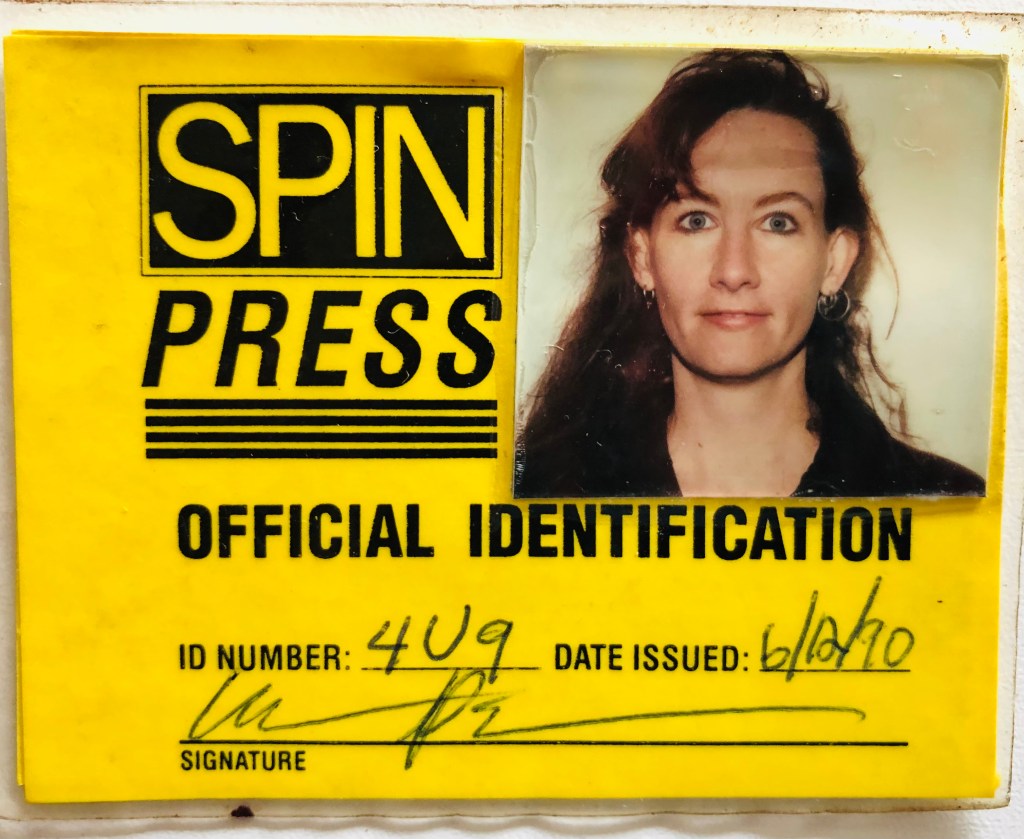
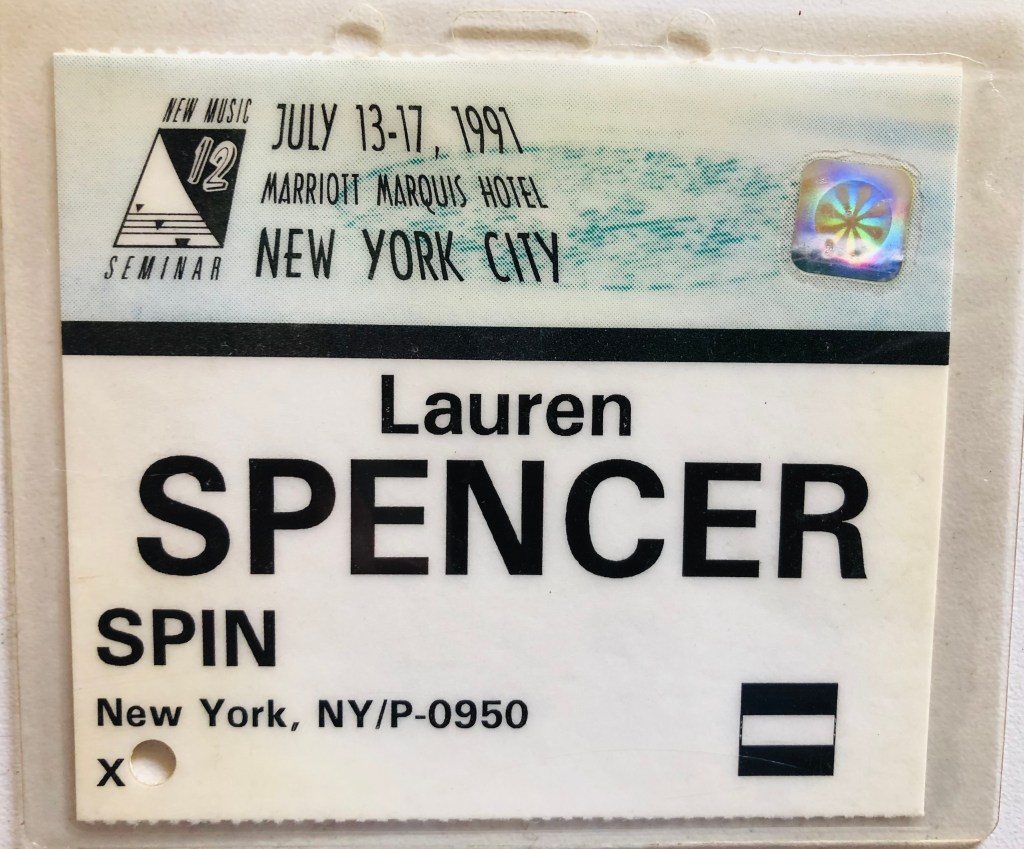
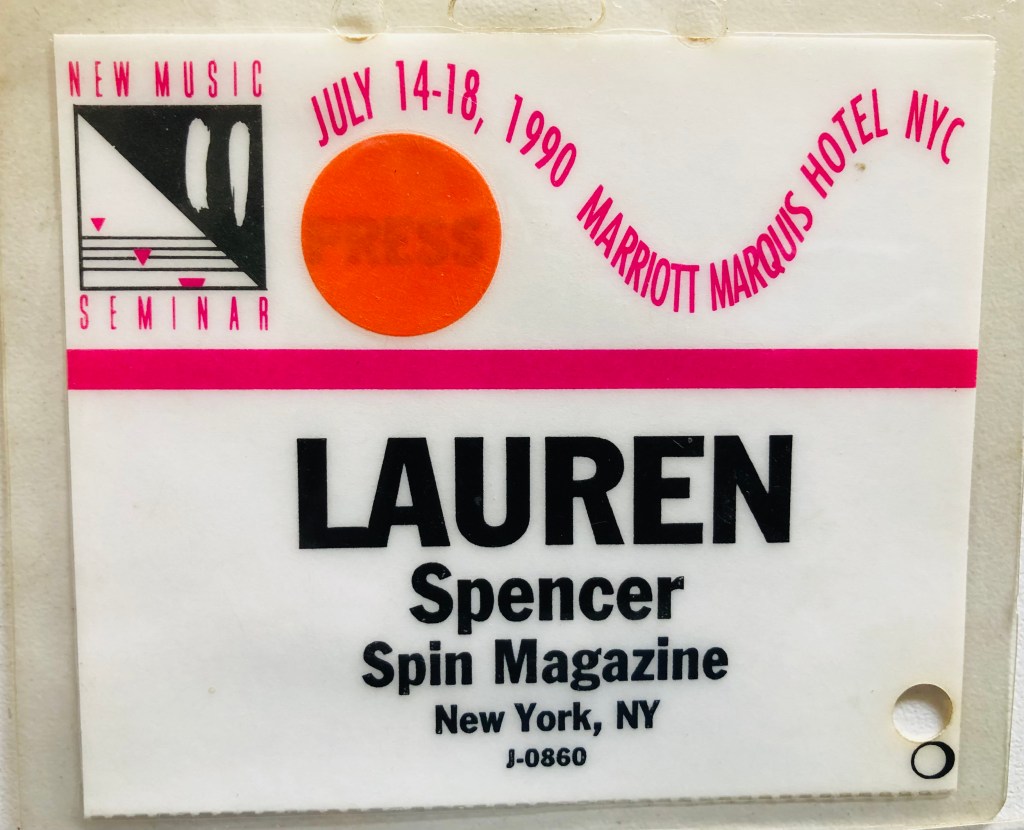
Been there. Done that. Laminates from my days as a music journo that let me into nooks and crannies at shows, at jobs, at showcases.

This last week, I listened to a Daily episode where FBI transcripts were read from one of the 1/6/21 insurrectionists. Besides it boiling my blood and making me walk so much faster up one of the steeper hills in our local Prospect Park, it got me thinking about the whole “media made me do it” defense that seems to be all the rage of late. Akin to the Twinkie defense (this oh-so-entertaining podcast nails it), it’s a classic look-over-here tactic that delivers a handy one-size scapegoat, thereby removing responsibility for folks to read deeper, find nuance, then make individual decisions. I’m also guilty of slotting myself into the bias of a news source that upholds my worldview. Nor am I an apologist for a chunk of current news media and how parsing out the crap-ass from the well done is a struggle. But I’m still willing to look and read and believe that good journalism is out there because know it is. I’ve read it and seen it and continue to trace it. So while capital-M-edia is seen by many, many too-many in America as the enemy because that’s the line being spun—something that wasn’t birthed on 45s watch, altho taking a page from narcissism 101 along with authoritarian and communist governments the world over, he is a master at taking his manipulation spade and digging into division and distrust, then pointing at The Media—the tarring and feathering’s been around for decades.*

Thinking back on my days as a music journalist does have me marveling at how things have changed regarding access and acceptance. Intention and motivation. What that looks like now is in stark contrast to the way creative types and journalists used to fly in and out of each other’s airspace during the nineties (and before). I hear tell of how now the process of interviewing folks hanging from any rung of the I’m-(almost)-famous ladder is challenging at best with pre-vetting of questions and hovering publicity agents and impossible at worst given a set of parameters that only allow for the most facile of interviews. My time was so different as to almost feel like some scene out of an adventure movie where I rolled under the gate right as it was slamming down. It’s hard to imagine that today’s story plucked from the Memory Box could happen right here, right now.

Every July in New York City for as long as I was in the music biz the New Music Seminar was a thing. The city would fill with bands and artists whose record companies had jockeyed hard to get them a spot at venues around town where for five nights all kinds of noisy music stuff would happen while during the day “experts” would blab on about the blah-blah-blah of the future blah-blah-blah. Twas fun (for real). My birthday always fell smack dab in the middle of this melee of music and I didn’t ever mind that since record biz honchos would foot the bill at fancy restaurants every night. Sometimes my SPIN cohorts and I would triple-up: cocktails at one place, main course at the next, dessert somewhere else. Because record company publicists were my most regular day-job contacts, a few of them became friends. Blurred lines and such. One such person worked at Epic Records and they had a new band, Pearl Jam, who were playing during that summer of 1991. I’d already been to the UK to interview them while they were mixing Ten, their first album (that story involving an English manor house, sheep, and getting kicked out of Harrod’s department store to come), so I knew them a bit. As we ate Indian food during seminar week at a local restaurant, the topic of baseball came up. Eddie Vedder (lead singer, etc.) had noticed that the San Diego Padres were playing the NY Mets at Shea Stadium the next day and wanted to go given he’d developed a liking for the Padres during his time living and surfing in San Diego. Stone Gossard and Jeff Ament (guitar and bass respectively) were more hardcore basketball fans, Mike McCready and Dave Abbruzzese (guitar, drums) had no feelings about baseball either way and had other plans. I liked baseball and while I was more a Yankees than Mets fan, a trip to Shea sounded like fun. It wasn’t meant to be part of any SPIN article, but rather two people going to a baseball game before one of those people played a show with his rock band at the Marquee that night.

I met him the next day at the subway station near the band’s hotel and we rode the train to Queens. At one point, after he’d pulled a face at a baby sitting in a stroller across the way and her mom said, “Aww, you two would have such cute children” or something equally mortifying and thrilling as those things go, he turned to me and said, “I’m not sure how Beth [his longtime girlfriend] will feel about that” and I laughed to stomp down the sudden rise of weirdness that flashed through me. I loved hanging out with musicians. I also loved writing. But the two were not always joined. And perception could be a problem. If I wasn’t there as a representative of the press, then what was my end game? As a woman, especially at that time but even still, the problem was often an assumption made. Was I angling for a groupie, a hanger-on, or some kind of succubus role? Was it possible to just be a friend, no strings? And if so, how would that affect my ability to write clear-eyed stories about said friend without personal stuff getting in the way? To be honest, I never figured out or fully answered those questions. If I wasn’t on the receiving end of that type of judgment, or at least assuming that’s what someone was thinking, I did a fine job of posing the question to myself, then becoming pissed that my male cohorts were pals with famous people yet weren’t subject to any they-must-be-sleeping-with-the-band hypothesis.

So those thoughts flashed fast through me as the 7 train pulled up to our stop and Eddie and I walked toward the stadium. Going to our gate, a guy who looked familiar waved. Eddie nodded. The guy said Hi, then kept on going. Turned out, he was one of the reps from Epic Records. I remember thinking, what a coincidence, then it dawned: Who goes to a baseball game alone? during a workday? He had to have been there to check on us. To make sure I wasn’t going to kidnap the label’s hot commodity and stop him from getting to that night’s show on time. Like some sort of rock’n’roll secret service. Pearl Jam’s debut album wasn’t out yet (not til August) but there was buzz. To the best of my memory, we both forgot the weirdness of being the ones watched and instead watched the game. Ate some stuff. At one point we were talking about our families and I asked how his relationship with his stepdad was going, especially since finding out he wasn’t his real dad and all. Eddie looked at me surprised. “How did you know that?” “Um, the lyrics for ‘Alive’ say so?” He looked a bit shaken and I remember thinking, This guy may be in real trouble once people start deciphering his lyrics. But then we went back to the game. The Mets won. We got back on the train and he headed for the club for soundcheck. No sign of the Epic rep, although we weren’t really looking for him. And the show that night was amazing. All in all, a delightful day from beginning to end.

And that’s the thing, I was really lucky to have had a lot of journalistic latitude in getting to know amazing people in bands, in solo careers, behind the scenes, on all levels. I didn’t have to sign NDAs. I didn’t have to send in my questions for approval. Hell, most the time I didn’t have a very clear-cut set of questions to begin with. It was meant to be in the moment, ferfuxsake. Rock’n’roll and all that. I formed friendships and got to know incredible people, even if just for one day. I did get a glimpse of what can happen when lines are crossed because the subject of a piece is angry about what was written. When writer Lynn Hirschberg wrote an article in Vanity Fair about Courtney Love in 1992, it got ugly and I had a very uncomfortable center-row seat, which I’ll write about in an upcoming column. But until then, suffice that the time spent with artists was joy sprinkled with confusion, naivete, and many other things that I’m starting to name as I pull more out of this particular box of time.

  • (from Columbia Journalism Review article) …“the media” as a general term for what we now call “the mainstream media” …[made its] full entrance into the American vocabulary … strategically promoted by the Nixon White House. To refer to journalists as “the press” ceded them an emotional upper hand, an aura of rectitude and First Amendment privilege. That advantage—unacceptable to Nixon, whose aides sensed that reporters held a bias against him—could be removed by calling journalists “the media.” William Safire, who was a speechwriter for Nixon, describes in his memoir, Before the Fall (1975), how the administration pushed the term “the media.” In the White House, he recalls, “The press became ‘the media’ because the word had a manipulative, Madison Avenue, all-encompassing connotation, and the press hated it.” Nixon judged journalists to be his opponents, Safire remembers, and declared to his staff  that “the press is the enemy” a dozen times in Safire’s presence.