More Than a Feeling

Vogue 2020
Vogue 1992

I’m at the age where pretty much every fashion styling moment I’ve experienced in my life has come round the mountain (at least) one more time. I don’t altogether mind this except for the fact that having lived in New York City where closet space is as valuable as gold (there’s a reason Carrie Bradshaw, she of Sex in the City, used her oven for clothes storage) there was always a clearing going on to make room for the new. Some of my favorite moments—and pieces of clothing—have come from closet clean outs with friends (I’m looking at you, Elizabeth and Ruth). But, truth be, except for the odd pair of jeans or dress, I probably wouldn’t pull out and on what I used to have in regular rotation since it was mostly specific to my time in publishing and city living. I still love style (the original inspiration for this blog, after all), but what I’ve discovered is that my source for ideas has flipped. Thrift/vintage store trolling is still in the top five of my favorite things to do, but paging through fashion magazine has fallen from the list.

From the age of fourteen and up until very recently (last year even), the September issue of Vogue was a marker in my August. The bound, not online, version. A weigh-me-down affair that I always felt bad the postal person had to deliver, since it added at least another five-or-so pounds per issue to their load. In the heyday of magazine advertising, the reason publications can actually be so hefty, Vogue‘s 2012 September issue was the largest in the history of the mag coming in at 916 pages. Even if the bulk of those were pitches for products, it was still fun to thumb. There was a documentary about Vogue‘s September issue, ferChrissakes, and it was called The September Issue. So, you know, a big deal.

Personal style outside the Hearst Tower 2018

When I was young, I dreamt about working for a fashion magazine until music journalism won out. Weighing the choice between covering a cool new pair of shoes or a cool new band, I tipped toward the humans. But after doing time in music, I wanted a rest from humans and stepped into the glossy world of Condé Nast (publishers of many fashion and lifestyle titles) and later Hearst (another powerhouse). For a long time, the air still felt rarified, but as happens when you step behind the curtain, reality barges in and resets the view. By that point, though, I wasn’t as emotionally tied to the thing. The players were less offensive boys and more mean girls (although search sexism and magazine publishing and you’ll come up with plenty of reading material). And, as with music publishing, there were also plenty of fine folks to know. But it was as an observer that I had the most fun watching the pageantry unfold. I once rode the elevator with Anna Wintour and I’m pretty sure that was because A) her private elevator was broken and B) someone was meant to pull me out of the car before the doors closed. But there I was standing like a statue feeling the tension in that rub-off way that happens when you’re with someone who brings about big crazy feelings on all those in their vicinity. We rode twelve floors and it felt like twelve years. By contrast, Grace Coddington, Vogue‘s former creative director, was a hoot the one time I stepped into the elevator with her. Dry sense of humor and, while not exactly trying to get to know her audience, at least open to us being there. I would have ridden a few extra floors with her for sure.

But of course times, they do change. And industries mirror those moments. I was lucky to glide out of my magazine publishing day job from a place of happiness having spent eight-ish years with some really amazing people at Hearst (you know who you are, most excellent ones). So fast forward to Cali and a new way of looking at life. As I stood in the local store, staring at the rack of magazines, it felt surreal. I knew those people putting out those titles, and while not necessarily personally, at least in how they did what they did to produce the issues I was staring at. I instinctively reached for the Vogue, not only because it was reflexive, but also because I’d read a bit about the cover(s). Plus I was curious about how they’d pulled off fashion in these pandemic and racially charged times—a discussion regarding relevance I’d been having with my publishing pals recently. Could they shift and find a different footing that spoke to the times we’re living in? A period when the seams of the clothing industry’s already frayed business model have completely come undone as a good percentage of people have spent the last few months living in sweatpant nation and daywear pajamas. But also on the humanitarian front, a time when the clothing industry had been under the microscope for unethical and inhumane business practices. And so this reckoning combined with the current world and US crises merged like the least successful, too-busy pairing of Marimekko and H&M in 2008. Unfortunately though, and as usual, the people who suffer in the business are the ones who can least afford to.

It was with all that in mind that I bought the Vogue, brought it home, settled into our inflatable pool, and opened it. I tried really really hard to keep the cynicism at bay but I couldn’t get beyond Anna Wintour’s editor’s letter. While I don’t know the woman personally, since you can’t count an elevator ride as a deep connection, and I can’t speak to her demeanor around puppies or kittens, which I often consider a litmus test for kindness or at least heart, but from what I’ve observed and heard of her actions around humans, it’s been no bueno for awhile. Certainly that’s no surprise. For me, though, it’s becoming harder and harder to separate out the person running the show to the show itself and so after reading her words about why the issue was dedicated to hope and thinking how tone deaf they sounded, I completely lost the thread and put the magazine in the pile to be dropped off in our public laundry room.

There is a very distinct emperor’s new clothes moment going on right now, an elemental and spiritual nakedness being exposed everywhere you look in the world. The Venn diagram of health, racial, and political issues are going to be with us for quite a long spell and while I welcome pretty pictures and beautiful things to look at, my approach has changed. I’m looking for more intentional escapism. Still satisfying without the psychic hangover. Two friends have made me think more deeply about this lately. One, who posted on social media regarding what her art is about (or, more specifically, what art is about for those who create it). What resonated is her message of staying with the unanswerable. You don’t have to know outright what a piece or a movement is about. Sit in it, feel discomfort and inspiration and follow where that leads you. And the other instant was a friend who asked how I feel I’ve changed during this pandemic. And what came almost immediately was the sense that I’m quicker to get to feelings. I don’t talk myself out of my thoughts and convictions the way I have in the past. I still need a minute, but it’s not a minute that turns into an hour, then a year, then, ah, forget it. Cutting through some bullshit is a place I’m working on.

So staying power. The uprising of voices calling out crimes against humanity, all of them sewn together into a common quilt: COVID health disparities, police departments attacking Black lives while police unions interrupt the process of bringing those officers to justice, an upcoming election where we know we need to be ready to deal with the current person in the oval office not leaving on his own volition. None of these are good looks. I’m searching out a style, something from top to bottom, that is more along the lines of joy and good intention. I’m searching my proverbial closet. What to wear to the revolution. What about you?

An uprising: Betsey Johnson pink velvet blazer bought in 1992 at Patricia Field store on 8th street, NYC. Wonder Woman t-shirt from Goodwill on 24th street, NYC, on my way to SFactor class, 2018. 501 jeans from Assistance League Thrift and Vintage in Long Beach, on my way to see my friend Mary, 2020. Doc Martin’s from Beacon’s Closet, Brooklyn, 2019, on a shopping trip with my friend Denise.


On Choosing

Apple fire smoke plume.

For the last many months, taking in news both national and local has been like living in a dystopian novel where Diamond Dogs is playing on a loop in the background: unsettling with weird moments of beauty. While I actually typed a list of those events here, I just erased the whole of it since it ate up the rest of my blog space like a Ms. Pac-Man gone berserk. So at some point between my learning curve of California fire tornados (erps, let me not forget to put the adjective rare in front of that) sparking one of the many many blazes currently torching the state and my discovery that the LA Times runs a daily earthquake tracker because they happen on the regular and that’s information I need, my brain started to smoke and I thought about shutting the whole amygdala cortex down. When I realized that’s not actually a thing (blame the fact we just finished viewing Watchmen for that bit of mental digression), it occurred an easier, less messy way to deal would be to choose how I could participate in the world’s goings-on in a more realistic way.

Not participating is not an option. At this point in time, I realize that if I care even a little about the world I’m living in and the people who are in it with me, then I have to pay attention, do my research to stay informed, and continue to put in the effort/fight for a more compassionate world. This week, while listening to one of my favorite podcasts…wait for it…This Jungian Life (people, I should just move into this podcast I love it so much), the episode had to do with living a provisional life. I’m not going to go into great detail regarding the specifics of what that means—here’s the link if you want to—but there was talk about the phrase “follow your bliss” and how that Joseph Campbell phrase has been neutered into a tra-la-la sensibility. To some it suggests that if a moment is too hard or doesn’t yield your dream in a set amount of time, then move on, because if it’s meant to be it will materialize with ease. But, no, desires are messy affairs that require work to make them happen.

I’ve for sure, absolutely shied from sticking with dreams that seemed like A) they were impractical because fer fux sake, how would I pay the rent; B) that’s a helluva lot of work and no doubt a good amount of rejection, and I’d rather not, thank you; and C) what would people think, me giving up a perfectly good, paying (though not pay that is good, but that’s another topic) job in order to fill my days with the long shot of writing. Those are just my top three run-screaming from dream items. There are plenty of other reasons lurking side stage. What I did choose sustained me creatively for a certain amount of time. Writing about music, being in publishing, these were not small moments of fulfillment, but retreating from the scene because I became unsure of my own talent, that’s where I chose a backroad that contained a solid dose suppression. Corporate jobs and abandonment of words on a page, fingers stuffed in my deep-down-inside ears so I wouldn’t listen to the voice going Hey, you, why’re you ignoring me? Yours, Creativity.

I chose a road back when I started writing my first novel for real, and then sent it out to agents on the regular, and then accepted that it wasn’t getting picked up in the immediate. This realization was followed by the resurgence of the teenager in me that said, “forget it, I didn’t want to do that anyway” and I shut down operations for awhile. Being a grown-ass woman never inoculates one from all those past ages we’ve been. But I did at least allow the adult back in the room when I realized it didn’t matter whether my first collection of characters saw the light of day. I’d loved creating them, and I would love creating more. So I started anew and that’s where I am today, and even more recently (Thursday) was invited to take part in a three-month virtual writing seminar for the novel I’m working on now.

The tricky thing I’ve realized in all of this is that there are always choices in what voices to take to heart. I feel really lucky that the people in my life are as engaged in seeing me for where I am as I am engaged in the steps they take to figure it all out. And I’m getting better at recognizing that when a message comes across the ether from someone who may have their own reason to dig a little hole and plant a seed of doubt in my day-to-day, that I can refuse to fertilize that particular plot.

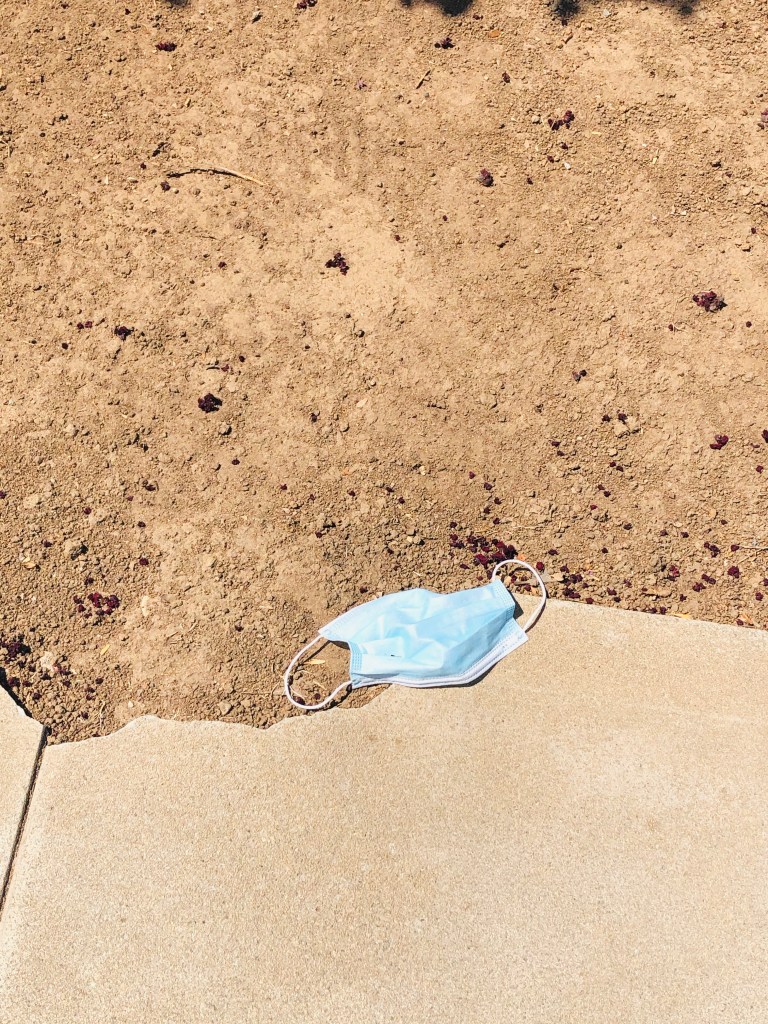
Basket of masks: From the standard n95s to the etsy creations, Anchal Project, Diop, M.Patmos, Citizens of Humanity.

For real, the choices that are swirling personally, range from sartorial, since, I kid you not, the amount of mask choices I have in my special COVID basket is testimony to where my shopping reflex has gone. And yet, even with all those choices, my dad, Dennis, and I (the Three Maskateers) had a bit of a face-covering fail this week. This served to reinvigorate our commitment to safety, which has a ripple effect out into the world at large. And on that front, 2020 has been and continues to be filled noggin to nethers with life-changing choices.

The election, which it’s not an understatement to say, feels to be the most important election in my and all other humans current lifetime. As I watched the clip of Brayden Harrington during the DNC convention, I cried for a few reasons: Because as a 13-year-old young man who stutters, he bravely told his story on camera to a few million people; because I’ve seen people be cruel to those with disabilities whether during my teaching moments when I saw kids tease a boy who was autistic or seeing our current president belittle a reporter with a congenital joint condition during his campaign—really a view in on his need for attention at the expense of any and all. I live in a place where plenty of Trump flags are waving in the wind and I’m on alert for more Biden/Harris signs to spring up alongside the ones we’re about to put out front. I’m also looking forward to wearing this awesome Kamala Harris t-shirt as soon as it arrives. All to say I’m desperate with hope that enough people will choose empathy over fear so we can move into, while certainly not a perfect new era since there’s no such thing as that, at least one that contains a collection of people at the top who can locate their heart and are smart enough to know how to use it. Maureen Dowd’s column this week nails it—because of course it does.

Kamala Harris T from official Biden/Harris site.

Choosing the light over the dark, even with shades of gray, is a muscular act of hope. Gloria Steinem, when asked on the Newshour this week, “So, you have some optimism or some hopefulness right now?” she answered, “Yes. Well, I try to be realistic, but hope is a form of planning. So, that should not be taken away from us.” Hope is a form of planning. It’s not passive. It’s not cross your fingers. It’s active. It’s, I have formed this thought that I hope to happen. Now how do I get there?

I really think if we can choose to listen to our better natures and not let the shrieks of fear take over, if we can stay informed, check sources, support what we know is right and good and decent, that there’s hope. All lined up like that, it may seem exhausting or overwhelming, and for sure that can be true. There are so many people right now without (homes, health, insurance, livelihood, just to name a few) who are choosing to speak out, and also those who are without and working to merely keep it together day to day, so for those like me and others who can help with the heavy lifting, then why wouldn’t we choose to do what we can?

still life with hummingbird, outside our window, choosing stillness for a few moments. Fun fact: They are the smallest migrating bird. They don’t migrate in flocks like other species, and they typically travel alone for up to 500 miles at a time.

On Noticing

As I was on my way to get a COVID test last week (more about that in a minute), there was a woman on the radio talking about how she’d noticed that her website, which supplies recipes based on people’s requests, had been getting an overwhelming number of asks for things that take a substantially longer amount of time to prepare than the dash&go moments she’d been used to posting. She knew the pandemic was the reason and was happy to think more families were gathering round a table together. She noted this moment as a silver lining. There’s no doubt linings of all shiny metals are being found inside of this […] year (space left for your choice of adjective, as I can’t come up with anything I think hits the mark given things like insane and unusual and so on don’t quite do it for me). While for those who aren’t home-style or in-person working, overseeing kids of all ages, and generally attempting Herculean feats of keeping it all together, the reality of spending good time with the people you care about based on the fact that no one has anywhere else to go and you enjoy each other is really quite wonderful.

Take this Covid test business for instance. My attention toward the things that are going on inside myself and also inside those people in my magic corona-bubble has been heightened over the last million months (you say only five, but you know it feels like a gazillion). Where before I may have felt a twinge somewhere inside my general body area and thought, right, a headache or damn, a brain tumor depending on my level of hyperbole that day, then I’d have taken an aspirin and waited it out. But now a twinge happens and my mind goes on high alert. I review every single instance of interaction in the last fourteen days, which honestly is so limited as to make that particular exercise less difficult than usual, and then I start the clock ticking for fourteen days out while watching Dennis and my dad for any signs of not-wellness like an epidemiological spy. Exhausting.

So when I started to feel funky in the stomach and generally ooky (Oxford def: Unpleasant or repellent), I noticed. Waiting a few days, I figured it would pass. It didn’t, then Dennis got a touch of it, and my dad felt briefly funky after visiting our house. At that point, the whole affair shifted into a higher alert for me. Even though stomach ailments were around the bottom of the Covid checklist, who the hell knows with these things. I logged onto our county website in San Bernardino—a place I’ve been visiting on the regular to get my daily sickness and death updates, because knowledge is power?!? or maybe just paranoia—and they couldn’t have made it easier for me to set up and take a test the next day. I felt great love for my new home county in that moment for making it easy to set up the test. Upon reaching the testing site, I noticed again the surge of affection I felt for the youth who were manning the intake stations in lieu of wrangling kids at camp or delivering orders to tables as they may normally be doing during summer break. Along with the volunteers of all ages facilitating the testing, everyone face shielded, masked, gloved, and shrink wrapped in accordance with regulations. They were all lovely and efficient, instructing me how to stick a swab up my nose until my eyes watered and rotate five times, then again on the other side. Standing with me at a very socially conscious distance of many feet with a table dividing us and holding the vial for me to place the swab into, then breaking off the end, screwing on the top and telling me I’d hear within the next three to five days, although, my particular helper whispered (she may have been yelling but for the masks, etc, who could tell) that some people were finding out their results sooner. I am not lying when I say I noticed my eyes welling up with a mixture of gratitude and relief as I walked out the exit. I’m not altogether sure why I felt so strongly. I mean, my stomach was still bothering me, I wouldn’t know if I had the Covid for a couple of days, and the world was still the same messed up place it had been five minutes earlier when I’d walked in, but something about the interaction being sane had moved me.

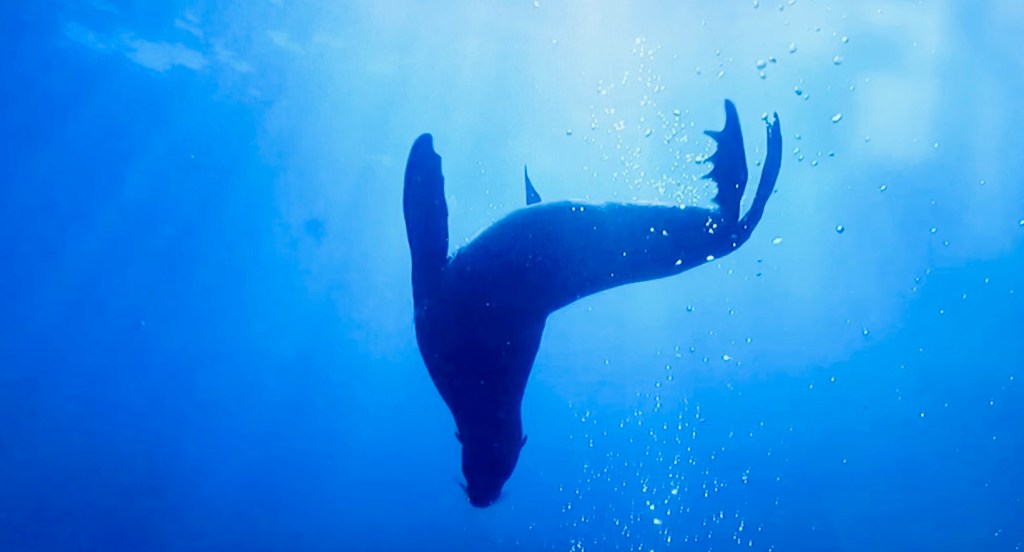
I notice that this seal photo makes me happy.

I wondered if I might be having some kind of reactionary trauma due to so much being crap-ass crazy and wrong right now in the world, so that noticing some simple goodness like making the taking of a COVID test painless—if you don’t consider that swab thingy having to go pretty far up your nose—a moment for simple gratitude. And truthfully, the slowing down of life on a very basic level has allowed for the noticing of moments that I could even call sublime and unusual. Sitting on the porch with my dad and Dennis, for instance. Just staring out at the mountains. Sipping on a drink. Eating some cheese and crackers. Even when Scrubby Jay the Disruptor (yes, s/he’s still very much around) comes along and sits on the rail two feet from our cocktail party and literally screams at us for ten minutes, that’s okay too. I also notice, having been yelled at by SJ to the D weekly, that what s/he probably wants is one of those damn crackers and a piece of effin’ cheese. You can thank my dad and Dennis for starting our winged friend down that culinary road. But no matter, it’s a moment to notice.

I’ve also noticed how I’m hooked into certain quotes that interest me in ways they may not have before. For instance, in the This American Life segment that I linked to in last week’s blog, “Time Bandit,” something that stayed with me was when the main guy mentioned his desire to push in on and explore what was hardest for him to do. (And because he was doing this in front of an audience, bravery was also high on the menu!) To notice what tickles your brain and then stay with that. It’s a thing I’m trying more and more lately. If my emotional heartbeat is raised, taking the time to investigate why has become important. Is it because I have more time to look? Because I have more patience? Because I’m more curious? Because I can’t put it off any longer? I think a variation of maybe and yes to all those things. But also because I notice I don’t despair about how the outcome will be perceived.

This amazing woman Luchita Hurtado, an artist who made her first appearance in a major contemporary art biennial at the age of 97, and who died last week at 99, had this to say in 2019 about being noticed late in her career: “I don’t feel anger, I really don’t. I feel, you know: ‘How stupid of them.’ Maybe the people who were looking at what I was doing had no eye for the future and, therefore, no eye for the present.” I love that quote so much. She’s not saying, oh, shucks, I’m fine because maybe I wasn’t worth the attention. No, it’s more: I know I’m good, it’s those fools who just took forever to get it. And she kept on.

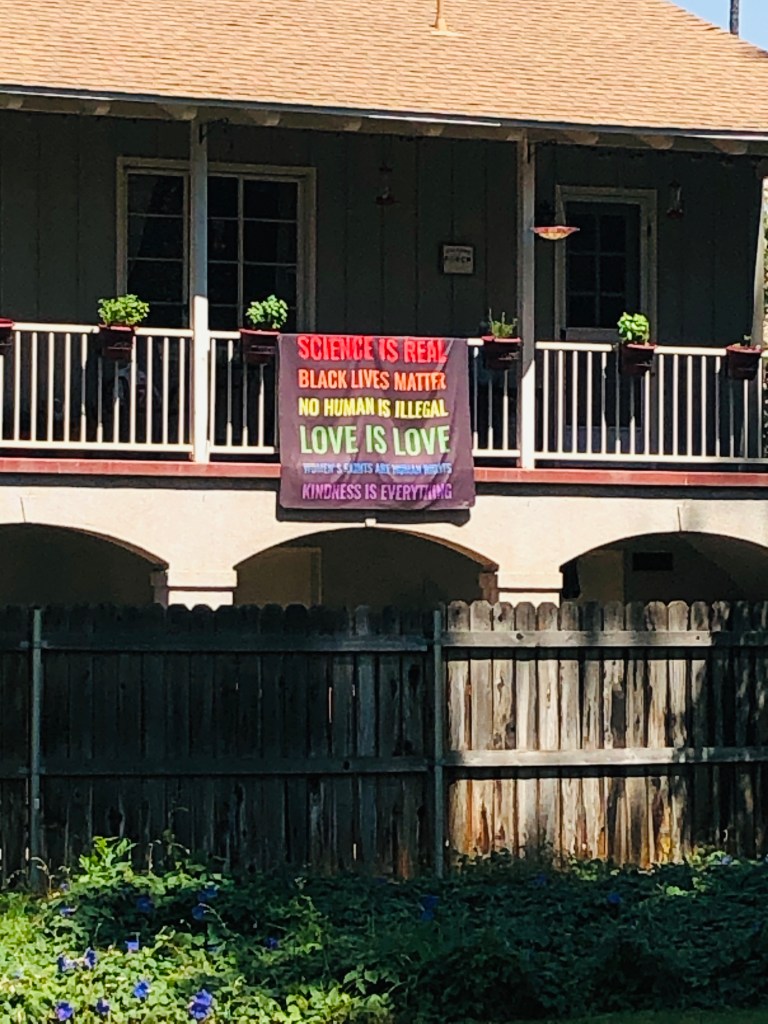
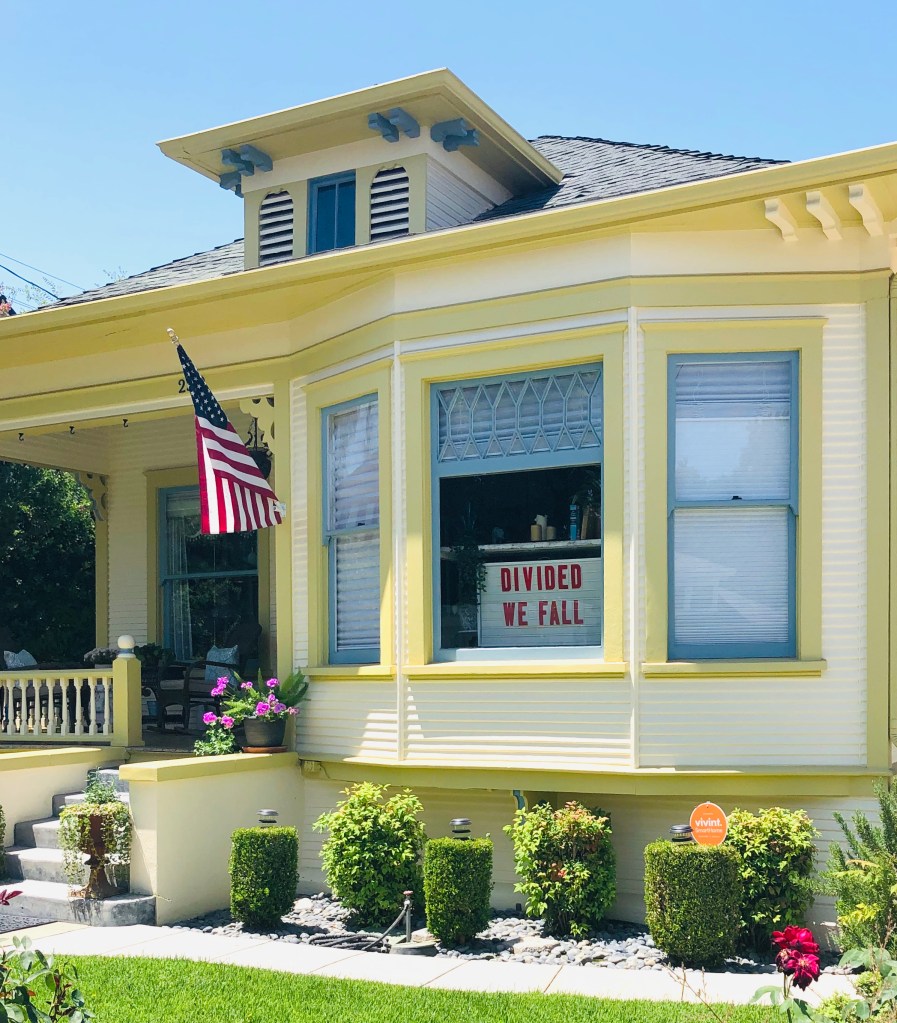
Sign on the neighbors house down the street.

This noticing really plays all ends of the spectrum because as anyone who has been paying attention knows, the COVID 19 pandemic has torn away whatever scrim of denial folx might have viewed social and racial inequality in America through. This now-honest/stark view is a bonus borne on the back of a tragedy. An article in this month’s Atlantic puts it thus: “The dismantling of America’s social safety net left Black people with less income and higher unemployment. They make up a disproportionate share of the low-paid ‘essential workers’ who were expected to staff grocery stores and warehouses, clean buildings, and deliver mail while the pandemic raged around them. Earning hourly wages without paid sick leave, they couldn’t afford to miss shifts even when symptomatic. They faced risky commutes on crowded public transportation while more privileged people teleworked from the safety of isolation. Native Americans were similarly vulnerable. A third of the people in the Navajo Nation can’t easily wash their hands, because they’ve been embroiled in long-running negotiations over the rights to the water on their own lands.” MiLord, we all know/knew this. It didn’t take a well-researched (as always) piece from the Atlantic to tell us so. But, personally, to be pushing in on the reality of how I’ve known this for a while, laid bare by an American leadership, and president in particular, that has fallen down on so many levels as to be criminal is sobering to the point of action. People can hold opinions on defunding police, the removal of Confederate statues and monuments, the merits of universal health care, but this pandemic in America has factually and by the numbers laid the nation’s historical racial and social crimes out for all to see. And the trajectory of my own noticing started at shame for coming to attention now, then merged with conviction that I’m privileged in such an obvious way to continue to do what I can in whatever way to play the long game of getting it right.

Noticing. It’s the best of times and the worst of times: the goodness of what I feel grateful for (BTW, CVD-19 test came back in just over twenty-four hours as negative) leading me into the attention that must be paid so that at the very least, those that are still taking up residence here in the future can have their own menu of noticing balanced between the good and the not-so.

Between the Words and Me*

*With the title of this week’s post, I give a huge nod to Ta-nehisi Coates’ Between the World and Me, which I’m reading currently and am astounded by. Both because of the topic (a letter to his son about the experience of inhabiting a black body in America) and his talent with prose (the man just flows & goes, once I climbed aboard, it’s felt like I’ve been on one of those amazing rides where you’re hyper-alert to what comes next).

Trees in yard reflected in Apple: August 2020

And this is the mad thing I find about words: when they’re put together just so, they can transport to a place I’ve been but never quite seen, or transform a situation I’ve lived in but never felt fully.

Take this morning, for instance, reading the NYTimes Book Review section and I come across an interview with Aminatou Sow and Ann Friedman who have a podcast, “Call Your Girlfriend,” which I’ve just added to my library of listening because it feels spot-on at present, and a new book called Big Friendship. In the piece, Sow, who is Black, said, “There is no way to be intimately close with people if you refuse to engage in the truth of how the world is organized. For a lot of people conversations about race are new. Most of those people I would venture to guess are white.” Friedman, who is white, commented, “White people in particular want to believe that our relationships are somehow insulated from these bigger forces,” and added with a dose of irony, “Yes, we recognize racism exists in the world, but we are really connected, and somehow special, or safe from those dynamics.” And Pow, I got it. There’s work to be done in my own house. It’s not as if I hadn’t been aware of this, most especially recently, but for some reason today the message really landed. As I’ve been reading and listening and looking and activisting (yes, I made up that word), I’m seeing that it’s been situated outside my interior life. And while I plan on continuing to be active on the larger scale, there are personal moments for me to attend to. Why haven’t I had those conversations? Because I haven’t focused on how to start them. Because when that awkward sense rises up in me, I distract it by signing another petition to defund the police. But truthfully, right now, starting to take care of my inner workings is a task I’m beginning as a companion to the petitions.

A really important friendship during my twenties and thirties spanned multiple cities and many hours of intimate conversations, yet I don’t recall asking her once about her experience of being a Black woman in the world. We wove in our personal stories throughout the friendship, but my curiosity around her moments growing up in white America was not a specific ask I remember posing. And there were plenty of racially charged moments to discuss as we watched Rodney King get beaten and OJ get chased. That happened then, and right here, right now, there’s a woman in NY who I’ve known for over a decade and is one of my all-time favorite people in the world. She’s funny in that smart, side-eye kind of way that makes life awesome, while also being singularly stylish and inspirational/aspirational as a movement teacher. I always feel happy when I’m around her. Yet I’ve never introduced a conversation around how she lives as a Black woman in the world. So now I start using my words.

And since we’re on the topic of starting, another a-ha moment within the last little while: A recent discussion about a couple of my blog posts reminded me that I cannot control the place my words land for any individual. I can’t write to make someone happy. I can write to make a point regarding something that lives in my heart. And I’ve been more aware lately about being honest in that as I carve out a topic, write, reread, rewrite, and finally hit publish. But from there, it’s anyone’s guess how my words will hit the limbic. In a huge way, the realization inside of that conversation freed me to understand that I just need to write and not let anyone’s stuff get in my brain. This is a challenge, but it’s the only way I’ll get it done.

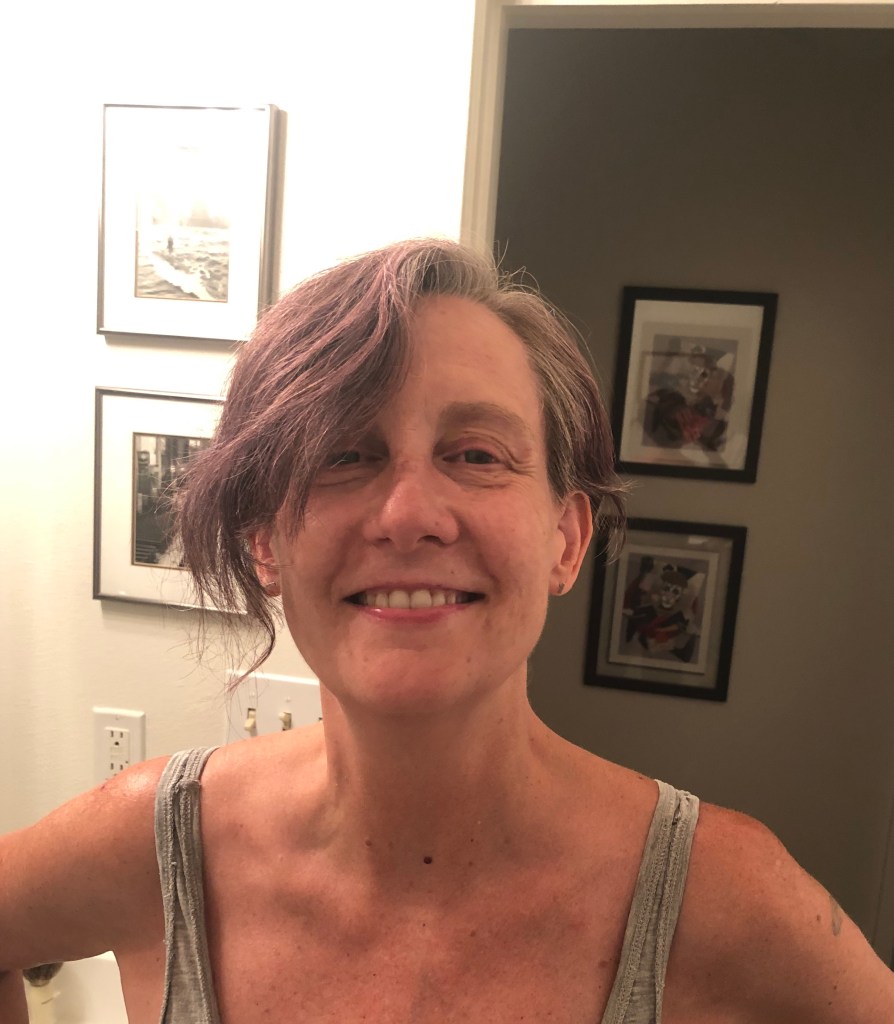
That look has as much to do with me being crap-ass as a selfie taker as my excitement to begin (really there’s excitement in that look too).

So I start. New novel in progress: I’m getting reacquainted with some characters I’d left on the page about a year ago because I had no idea what they were trying to tell me (or what I wanted them to tell the world). I’m remembering the process of just-keep-going: With my first, it was all new and I kept telling myself that I could stop at any time. I think that’s some kind of preservationist line we tell ourselves when a task seems really large. Same with running the marathon. But at some point I couldn’t really stop. I was too far gone. Mile seventeen, page seventy, and no rescue vehicles in sight. And then I found the finishing was in some ways just another beginning. Revisions and submissions and more revisions and frustration and more fun with adding and subtracting words, plus other things I basically don’t even remember but would never go back and change. (And during that, endless love&thanks to my writing partner and all my first readers, who kept me honest in the process.) The funny thing about so many of the arts—or let’s be honest, just living authentically—is that a lot of folks read, see, hear, watch someone or something and think, I could do that, which is a good sign that the person doing the doing is doing it well. (If you have 24 minutes, please listen to this, which is to me an amazing example of something that for most of us seems easy, but in this case is really hard.) For instance, Dennis learns lines one by one, that become a soliloquy or a song, people hear the moment not what led up to it. My dad goes into his studio damn near every day and puts elements together to create a collage, then he rearranges it, puts on the wall and steps away for a look-see, then takes it down for a little more something. I get the pleasure of the finished work and know his dedication and the hours spent on it only because I’ve been lucky enough to know both the pleasure and pain he puts into the creating.

My dad (upper left) circa 1960s: This was a notice announcing the relocation
of he & his mates art studio. Such a good scene in this photo!

There’s so much going on in the world right now that is huge and important, that can take all my time if I give it, can feel overwhelming if I choose to let it, that can trigger the impulse to pull in and drop the shades, but I actually know that I can hold a few things at once. One word becomes a paragraph becomes a page becomes a first draft, and so on. I can make room for what wants to be said. It feels like this particular time in history is introducing an inner reckoning, no matter age, make, or model, and that finding the kernel of our best creative, compassionate selves is more necessary now than ever. That outcome also seems more doable somehow. Humans are coming together to get things done in an astounding way as the people at the top drop the ball, pull back from responsibility, and leave the work undone. I look and see words into actions.

  • The pandemic is still among us, and with the breakdown of our government, since the beginning, it’s on citizens to take care of each other as much as we can. Masks and S.distancing are the obvious personal ways, but beyond that, the United Way has a good website with info on how to help. Also now that extra funds have ended in unemployment benefits—and no, that extra was not a disincentive to going back to work as this study finds—people are suffering possible evictions and choices between food or other essentials for real. If you go to the Instagram page of a trusted friend or #rentrelief there are informative crowdfunding links to explore and then do the extra step of confirming as a trusted site. And of course, this leads to the reality around BIPOC and trans folx suffering on a much larger scale during this time.
  • The movement toward racial justice in America is one that needs to continue. I get worried that as time goes on, interest shifts. But I’m also heartened every time I show up to my weekly WP4BL zoom meeting that more people join each week for activist work. Here’s an incomplete, but important list of those killed at the hands of police in case anyone needs reminding why the work needs to keep on going. And the website for SURJ (Showing Up for Racial Justice) to find a local chapter for all sorts of involvement.
  • And let’s not forget that there’s an election in November that will without doubt be contested by the current administration and is being (and has been) manipulated both under the radar and through words meant to spread fear by the man in the White House and his mouthpieces. The first step has been to undermine the media (which started from day one of his presidency) and is now going into full assault with hits on the post office and fictional tales about the failure of mail-in ballots. We need to keep our eyes open and not step back, to not be scared, to not stop demanding our rights and pleeeze check all sources before believing what you read. Keep supporting that post office!!! And get involved in local campaigns!
  • The tragedy in Beirut is heartrending: the townspeople have picked up brooms and whatever else necessary to begin the process of repair while their government denies responsibility. Here are some ways to help.

The House That We Build

Gravestone, Óbidos, Portugal, 2019.

Every week since the Covid has been taking lives in North America, the PBS Newshour closes their Friday broadcast with a segment chronicling five people lost to the virus. Each tribute is about thirty seconds with photos and life-details supplied by that person’s family. When these memorials first began in late March (remember then? like yesterday a million years ago), you could always find me rowing down a river of tears, with Dennis manning the other oar as each individual came alive on the screen: who they were, how they loved and were loved, the way they’ll be remembered. A few weeks in, I felt myself navigating the tear-duct waterfall on my own and looked over to find Dennis on the shore, smiling. Yes, his eyes were a bit damp, but mostly he looked joyful. Please to explain, I requested. It so happened that in watching these profiles, he began to see these folks as vibrant champions. He focused on the addition rather than the subtraction. How the things they’d accomplished, whether at 22 years old or 95, were full of wonder and simplicity. Certainly we all know that a life lived is more complicated than a thirty-second clip could ever capture, but these tributes were (and continue to be) celebrations in short form, even considering the brutal reason they are made for broadcast. If I had a chance before my exit to roll tape or write a letter, as John Lewis did, that could express even a tenth of the full panoply of a life lived, then that would be pretty cool. But I wonder whether it’s possible for any of us to get out of our way for an unvarnished view. Over time, we construct so many versions of our life.

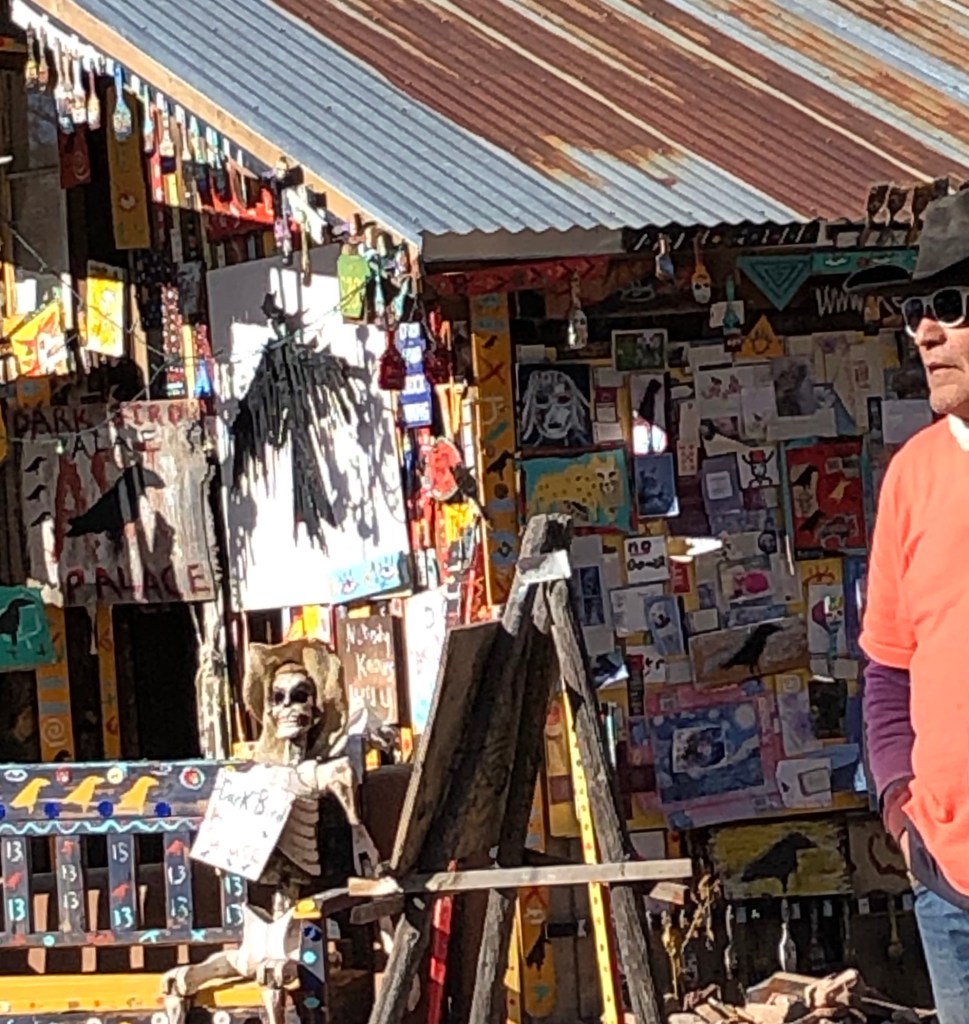
Concho, New Mexico, 2020

Like a house, we shore up the walls, open up some rooms, fortify the basement, build on extensions when needed. Lots of storage for secrets and crawl spaces for some of the murkier moments. In the last week, I came across a couple of formidable walls protecting life-dwellings where the real mortar of the stories existed in the negative spaces, those areas in between the words that actually held the meaning and power. There was no opening for anyone else’s experience to enter because it might upset the carefully crafted narrative being protected. I get that. There are a few corners in my soul’s basement where I’ve constructed a really attractive container to hold personal incidents that I feel might blow my cover. That is if we’re painting the place in the basic colors of good and bad. The outside is white, but the inside is painted black, at least in my mind’s eye. When I choose to unpack one of those boxes, let’s say the one where I took my ex-boyfriend’s beautifully remodeled Cadillac, filled it up with band equipment, and stayed out all night without telling him so that in the morning I came home to phone books opened to hospitals (this was pre-internet, after all), I feel that story might blow my cover as a good person so I edit it to outline just the basics. If I were to write it all out—that not only did I take the car and risk ruining the beautifully restored upholstery with sharp-edged cymbals and the like, but I also slept with someone else, who like me was in another relationship, all because I wanted the boyfriend in question to break up with me since I was too scared to do it myself—well then it becomes a narrative with a damaged protagonist who can’t be trusted, someone whose foundation is cracked. Doesn’t fit at all with the heroine of my story. But dang if it isn’t exhausting and lonely to always smile, touch pearls, and wave like a good hostess while blocking the view. Rumi’s quote, “The wound is the place where the light enters you” especially resonates.

Santa Fe, New Mexico, 2020

I recently read a book, My Dark Vanessa, that centers on the story of a young woman who had an affair with her teacher as a teenager in high school. Throughout her young life she rejects the notion that she was chosen, isolated, and abused by him. When years later, she tells her therapist, You don’t understand, this has to be a love story because if it’s not I have to rethink my entire existence, her pain resonated. Rebuilding is a bitch. Once committed to the foundation, you choose the colors and position a nice comfy chair over the crack. Then you buy a settee for the same reason and eventually end up with an oversize sectional that may cover half the room. But you damn well know that those cracks are there and no amount of fancy track lighting to direct the eye somewhere else is going to change that fact. But to face tearing it down? Maybe instead just air the place out? When I take a look around with fresh eyes, I can get that I’m the most critical decorator of all. Aren’t we all, really? How many times have you said, Ignore the mess, or something to that affect and your visitor’s like, What mess? and is secretly relieved you have one because they do too. Those words we say land like cherry bombs filled with information. Say Ignore the mess and that’s the first place my eye’s going to go.

Prewitt, New Mexico, 2020

As I was reminded this week, words have power. And that makes me so happy since right now the force and clarity of our words are, I think, what will save us or at the very least move us forward and away from the divisiveness of sentences currently used as cudgels. Maybe this moment had to happen in order for people to find their voices and translate their words into rallying cries for racial justice. (I’m feeling particularly hopeful today, although also well aware that there’s no room for flippancy in our right-now times when so many have died unnecessarily.) To be set free by reading the words of people I’ve heretofore not known as much about as I need to. The Black, Indigenous, female, people of color, trans stories that are aching to be set free. The ones we never learned in primary school, but that I’m now soaking in: Angela Davis, Ibram X Kendi, Howard Zinn, and so so many more I have to look forward to. These are stories that to some may feel like a threat to the foundation America’s house was built on. But for me, they signal just the opposite. A fresh view in the already existing house, not tearing it down, but airing it out, giving the surrounding walls a fresh coat of paint in some varied colors, and taking the protective covers off the mental furnishings so we’ll all have a place to sit.

On the Nature of Nakedness

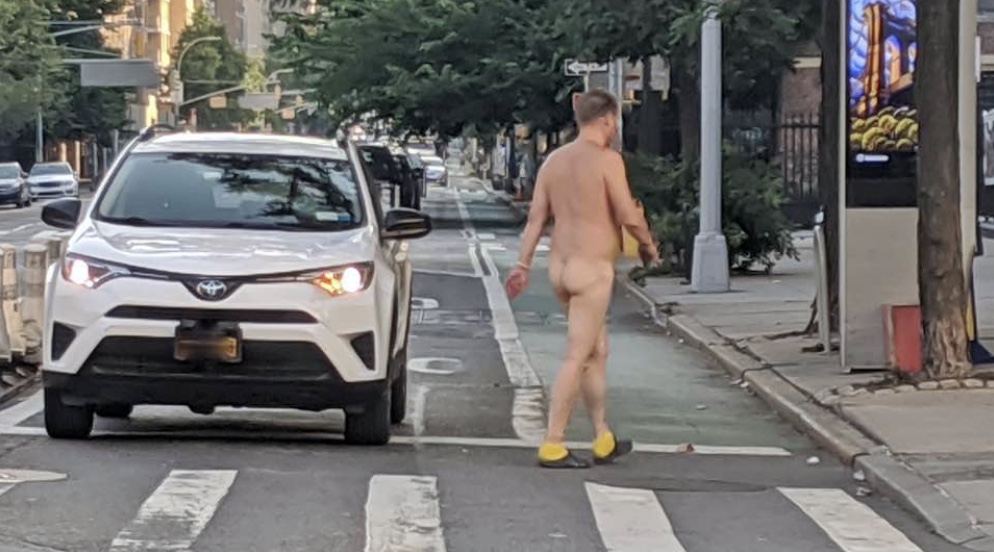
Tan lines. No mask. Socks and shoes. (photo courtesy of Beth Rosner, NYC)

Crossing over the 100-day marker of Covid’s party-crashing US shores, with its only competition in mayhem, death, and destruction being the man clocking his 1,283rd day in the White House, the mood among the people is becoming decidedly squirrely. Held together by a whisper. Maybe a prayer, if that’s your thing. And also, I think, a dose of resignation. The root of that word is resign, and while there can be plenty of passive connotations that come from the sense of giving in, submitting, or acquiescing, I’m starting to read a lot of possibilities into making that word active. I’ve resigned myself to the fact that all of the go-to responses I’d normally pull out when eye-to-eye with even one of the triple-threat crises America is currently facing—pandemic, protests, and politics—need work. Or rather, they need to be stripped down and seen in the naked light of the moment.

And apparently, some people have gotten that memo and taken it literally, whether stripped bare in the service of just another hot night in New York City and why are we even bothering to pretend with the clothes anymore like the guy pictured above, or naked in the process of exposing the utter fragility of being human in the face of armed intimidation, as the woman who has been dubbed “Naked Athena,” did recently in Portland. She, in nothing more than a mask and skull cap, stared down a line of federal infiltrators in full body-armor regalia, and damn if they didn’t seem the more exposed party. In the face of nakedness, apparently the first thing that came to mind was to throw a few smoke bombs in her direction. Because of course they did. They had to do something, I mean, she was naked. Nothing more threatening than that.

Naked Athena: Here, an op-ed on how the Portland protests with their awesome wall of moms, dads with tear-gas redirecting leaf-blowers, and wall of veterans serving as allies in between the armed invaders and protesters are helpful with a side of problematic in the service of the Black Lives Matter protests.

But to sit, whether clothed or not, your call, in the nakedness of emotion, fear, hope, and all else, that is intimidating in a very special and often excruciating-meets-satisfying way. Daunting even. A few years ago I signed up for a ten-day silent meditation. It wasn’t that I was unaware of what it would ask of me, although just what it would ask of me I wouldn’t know until I was there, and that of course scared the crap out of me. But being someone who enjoys a bit of control, I tried to figure out if there was a kind of training I could do to be prepared for this experience. Something like the thirty-day training programs I’d used to train for marathons. But, no, it wasn’t like I could practice not talking to anyone for ten days. I needed my job, I lived in the world, I had to speak words out of my mouth. So I resigned myself to just being surprised. And probably tortured. And hopefully also enlightened. The first three days were intense and new. I marveled at the challenge, followed all the directions, paid attention and tried to strip away my stubborn chatter. I gathered beautiful little pine cones from the snowy yard during our free-time walks. I lined these tiny pine cones up on my window sill as markers, reminders of the days that had passed. On day four, sitting on the ground in my room, I stared at those pine cones with a certain amount of terror. It wasn’t so much that they had completely crumbled in the dry heat of my room, having lost all the moisture of their natural habitat, it was more that they completely represented my current state of mind. (And, no, it’s not lost on me that this near-perfect metaphor is almost too perfect.) I was a mess. I was ready to leave immediately. I seriously considered going to whoever it was that held the velvet bag with the truck keys in it and miming my need for them, then escaping. Or possibly just grabbing the bag and running to the parking lot. I would of course come back at the end of ten days and pick up Dennis, who was over in the men’s area, and the other friend we’d brought who I assumed was blissing out down the hall from me. The voices in my head, the ones I was meant to let float away, or at least stay silent, during meditation were raising holy hell: You cannot do this. You are not cut out for this. Who’s idea was this? Stripping yourself down to just the bare basic you? No distractions. Ten days with just myself? No fucking way. I am going insane. I don’t want to know myself that well. Where the hell is my bag? Where is my coat? I cannot get this emotionally naked. If I do, I’ll never be able to slip into another jumpsuit of emotional armor again.
Then I think I fell asleep, or the lady with the gong called me to the nth meditation of the day and I went. I’m not going to pretend that from there on out it was smooth Banga (the dissolution of the physical body) sailing. No. Not even close. But the focus on something other than my moment-to-moment thoughts, the ability to sit with the discomfort of what was coming up emotionally and to be aware of the sensations that happened when I thought about those things. To not try and clothe those thoughts in layers and layers of mental material in order to stifle their voices. That was an amazing achievement and one that I try hard to remember during the dailies I’ve done ever since. There might have been a hope, but I knew it was probably an unattainable expectation, that I could carry that kind of emotional nakedness into the world once the retreat was over. Although I also knew that complete and utter exposure could be really strange and probably not a great look if I wanted to function in the world at large. But even in the little tiny steps made, I still recognize the power of being more transparent to myself. More naked in my curiosity. To keep the self-serving, knee-jerk armor off so I can start (& continue) the work of myself.

Floating in transparency

Last week I wrote about the music, and it’s an emotional place I’ll keep exploring. But also, in this time of reckoning, looking directly at the nakedness of suffering that is exposed and intertwined: the pandemic, which preys especially on those put in harm’s way, whether because age has put them in a precarious position or the color of their skin and state of their economy has forced them out to do the work that needs to be done. A direct line to the protests, which demand that I strip away the racial biases I’ve grown up and into, that ask me to look beyond my comfort zone so that I can recognize the supremacy of being white and re-clothe myself with some humbleness and necessary action. And finally, to keep the forward movement to call out that politically, the emporer has no clothes. To gather in the people all over the country who will join in this chorus so that in November we can expose his nakedness at the voting booth.

The Stake

For a few weeks now, I’ve been thinking a lot about the answer to, “what is your personal stake?” And while I could apply that question to almost anything in my life—and apparently have, which while making me more thoughtful, has also meant absurd inner dialogue along the lines of “what is my stake in cleaning the apartment. ugh.” In this case the this is connected to what keeps me showing up to work with the White People for Black Lives movement. “Wanting to help” is not a full response. The ask is really “what in my life deeply connects to the struggle to ensure that Black lives matter? Where am I situated in this moment to translate my pain in order to take the movement forward? And how will that keep me coming back to fight for the change, recognition, and justice that needs to happen right now for Black, Indigenous, trans, and all people of color’s lives?” Being a woman in this world was where I started. But I knew that was just a pull of the first thread and that I could go deeper.

So I ruminated. I read. I wandered around the neighborhood talking to myself (this, my people, is another reason that mask wearing is seriously useful). I thought more. I listened to a podcast and cried (1619 Project from the NYTimes. Masks are not useful to hide tears). But it was when I pressed play on the HBO documentary On the Record that my seams began to come apart. Drew Dixon was a former A&R executive at Def Jam records who came forward a few years ago to recount her story of ongoing sexual abuse and rape by the company’s founder, Russell Simmons. And while other women were interviewed who had experiences with him that were similar, the narrative was tightly focused on Drew. Her rise in the music industry, her many successes, and her subsequent disappearance from the business altogether. While Drew’s story was also situated in racial issues that I did not experience, ultimately, it was her act of disappearing that completely undid me, uncovering the elements of self-shame and silencing that had driven me out the door and far away from what had always been the love of my life.

Music: Early days, my mom and I singing along to top-forty on the car radio. Walking into the den and seeing my dad transported by his jazz. As a teenager, my study every month of Creem and Hit Parader magazines until I could almost quote the stories about Alice Cooper, Led Zeppelin, Mott the Hoople. All those boys, with their tight trousers and bedroom eyes. All those lyrics that made me uncomfortable in a way I liked. I knew that Robert Plant wasn’t asking his lady to set up a lemonade stand in The Lemon Song. And while there were the occasional stories about The Runaways or Blondie that made me think I could be in a band, and in high school I did sing in a few rock shows put on by the guitar department, this being Southern California Seventies culture where the Eagles and Rush beat out Oklahoma for stage shows, I wasn’t confident that I could cut it as a musician. After reading Pamela Des Barres‘s I’m With the Band, I understood there was a groupie option, but the thought of falling down private airplane stairs because I couldn’t work the stilettos was one of the reasons that kept me from moving toward that life choice. Then I became aware of the music journalists, Lisa Robinson, Julie Burchill, and Caitlin Moran and that flipped the switch. I could live inside the music and also pay my rent without having to callous up my fingers or wear mostly leopard skin.

Southern California hippie high: rocking live to The Eagles

Moving to New York and interning at Rolling Stone was the first step and once my internship was done, I decided not to leave. They let me stay (free labor and a willingness to work my ass off helped a lot) until an assistant job opened up and they hired me for real. The edit/writing staff was 99% men and the one woman writer there had no interest in helping me become the only other woman writer. So when SPIN magazine offered me the job of replacing the only female music writer on that staff, I jumped. I’d found my dream job. It didn’t even bother me that my office was a hastily cleaned out supply closet they’d shoved a desk inside at the last minute, while all the other (guy) staff writers had spaces with doors that closed properly and air that didn’t smell like bleach. It did unsettle me that my first story meeting was filled with so much suggestive double talk that I’d wished they’d left the disinfectant spray in my office so I could use it to clear the air. But I also chided myself for being so sensitive. I’d known what I was walking into and was well aware that I needed to squelch my hefty case of imposter syndrome along with all traces of being offended by comments, gropings against walls, or assumptions that I was sleeping with every band I interviewed. This was a boy’s club, and while at an early point in my career I’d entertained the idea of bringing my femininity to the job in order to get better interviews, that notion was quickly dispelled after a sustained teasing in one of the weekly meetings that had me shedding hot tears on the inside while my outward facing self laughed and laughed. I was so funny. That moment began the period of shame where instead of speaking up, either on my or any other woman’s behalf, I shut down and carefully crafted the I-can-do-anything-better-than-you persona.

the band. the t-shirt. the words obscured because the advertisers complained.

To “manage around a situation” was a phrase I heard a lot in On the Record, and I knew exactly what they meant: to smile at sexual suggestions, maybe let them play with your hair, take a half-step forward, then one back when they moved toward you. The illusion was to welcome, but the stance was to protect. The problem was, I was often crap at that kind of managing. I’d pull up to the game table and when the guy threw down an innuendo, I’d raise him three shots and a lap dance, thinking I was a badass. By the time I left the table and the guys were all slapping me on the back like I was one of them, I had officially folded the hand that held my self respect. I’d feel sad, but not enough to do anything about it. I could admit that I’d wanted to be with the boys not become one. I wanted to be respected for my words, my thoughts, my self, but I didn’t have the courage to self-correct. By the time I devalued myself one last time during a photo shoot for a short-lived band we had called Charity Fuck, where I wore a t-shirt that said, “fuck me, I’m in a band” I wouldn’t have been able to find my feminist funny bone if you’d given me a map and a shovel.

Concurrently during this time, the nineties were bringing loads of fierce and talented women into the spotlight who were making music and rewriting the rule book. From Liz Phair to the Riot Grrrl movement, and there were also women becoming sound technicians, tour managers, booking agents, all the jobs heretofore held by men. These ladies were making headway in an industry where sexism was piped through the air ducts. I’d be curious to know their stories and someday I’ll ask. And while I applauded and adored them, I continued to ignore the inner siren blasting inside of me. I think I’d actually convinced myself that I was actually being a feminist by proving I could take it like a man. But when I paid attention, the ache inside me told me otherwise.

The thing that made it all okay was the music. It could still move me. And it helped that most of the bands I got close to contained feminist-championing men. Standing side-stage at Nirvana, Pearl Jam, Sonic Youth, Soundgarden, Beastie Boys, I would imagine myself vapor and become the sound. This was what I’d come for. But then the music would stop and I’d climb back inside my cage and let the atmosphere turn me to stone. By the time Kurt had died and I was taking the stand in a trial against Bob Guccione Jr for creating a hostile, sexually-charged work environment, music had stopped moving me. Or rather, I had forgotten how to let music move me, so busy was I shedding the deep feelings I thought were slowing me down. But one day soon after Kurt’s funeral and the end of the trial, I just stopped. I ran away. I took off the clown suit of armor and buried it along with my ability to listen to music because every time I did, it hurt too much. The songs would take me back to a time that reminded me how easily I had given myself away, and that made me feel ashamed. To realize I’d decided to give in rather than speak up.

Prague street art 2017

I still haven’t found my way back to the music even though I now see the impossibility of what I was trying to do. Just because I knew going in that the boy’s ran the game, and even though I thought I might be able to play along without losing my whole self, despite watching what happened when I raised my voice and got looks that told me I was being shrill, a bitch, someone raising a ruckus, even though I realize that many women in many careers and workplaces all over the world are still going through exactly the same thing, I continue to feel shame for persisting in my silence.

So my stake: As a woman who put herself in the corner just so she’d be allowed to stay in the room, I’m choosing now to raise my voice with the chorus of Black lives, indigenous, trans, and people of color, so we can stop being silenced and be heard, seen, and believed. So no one will feel they have to pretend to be less than they are or something else entirely in order to stay in the room. And someday I hope to find my music again. Breathe in the vapor.

Origin Story

Classic California view: San Bernardino mountains avec Palms
When I started this blog a bit over a year ago, it was with the intention of being fashion-focused in an eco-conscious kind of way. Does This Make Me Look… was the phrase I chose as a prompt. Normally what would follow would be “good,” “fat,” “fantastic,” “scary,” and so on like that. But I wanted to flip the phrase to put some emphasis on the verb look. Does this piece of clothing make me look closer at where it came from, how it was made, who is literally behind its creation and how does that company treat its employees. I was aiming to steer the conversation toward more earth-friendly choices. But then, as always happens, the road forked and I veered in a slightly different direction.


I jumpsuited my way across the country and not long after reaching the left coast, joined the world in a Covid-19 retreat indoors, then found my way to racial justice involvement after watching George Floyd’s murder.

So back to the words Does This Make Me Look… and how the phrase represents something different now in 2020 than it did in 2019. It’s become more Does This Make Me Look [closer at what is going on around and within me]. A funny thing keeps happening as I approach from that angle: I’m realizing that if it’s gonna fly, more bravery in my convictions is called for. I’ve been having that thought on the regular as I focus on what writing I’m going to start on outside of these blog entries. How I need to be bold in my prose since readers know the difference: My Dark Vanessa vs The Bookish Life of Nina Hill. they’re both good reads, but the former is stunning in its willingness to take the reader into territory that’s blazingly honest. There’s also the realization that a tale twists and turns depending on what angle the story is told from. There are the things we want to believe. There are the things that are shown to be true, proven to be true, and disproven as well. There are the moments we decide whether we want to look or not, especially if it requires rearranging a whole lot of moments that have previously been settled upon as real.

Look, more palm trees.

I grew up in SoCal (not in the house pictured or really any house that looked like that, but it is a pretty fair example of the style one sees around most often). As is usual with the youngsters, I’d never done much exploring about my ancestry or whatnot as I was still creating my own history. But something about being back out here now, the way the light slants in the afternoon and reminds me of leaving my last class (social studies) in high school and heading home with my best friend to watch The Love Boat and stain my fingers orange with Dorito dust. Or the canopy of oleanders that drapes over me during a morning walk and takes me right to the confusion of my teenage-hood. I have no idea why that flower reminds me of that time, but it does. In the last few weeks, I’ve been reading and listening to fill in the gaps of US history that I wasn’t taught in school. The messy things that some would say make us look bad, and of course do, because in no universe is the slaughter and displacement of Native Peoples from their land and the enslavement, rape, and bigotry of Black folx in the service of our country a good look. (And as I’ve mentioned before, colonialism and the abuse of a people is a world-wide phenomenon all the way through history, but I’m just talking about America right here/right now.) But looking at it honestly, working toward a way that we can come together to stop the killing and oppression from systemically happening and calling it out for what it is: hatred that needs to be looked at honestly and stopped from going further, is, I think, the only way forward to healing. And for me to fully move forward, I also need to understand my history.

Years ago my mom had sent me a folder of some genealogy a cousin had done that traced her family tree to include John Hanson, the first (at least the first who held the office for an entire term, which was a year) President of the Continental Congress in 1781. I pulled the folder out last week to take a look. Knowing about John Hanson meant understanding that he owned slaves who worked his plantation in Maryland. It also meant realizing that, yes, that was what the majority of well-off white gentry did in the south back then. And while I have a very hard time squaring the cruelty of people to visit the kind of physical and emotional abuse from rape to the separation of families that was done to Black people back then, I know from history that the way slave owners explained being fine upstanding humans while debasing in the cruelest of ways other humans was based on the belief that the Black race was inferior and that they were doing them a favor by taking them on. It’s a way of thinking that still lies just below the surface in much of the country—even though most would deny it and claim they were not racist and just shut up about it. But it seems clear from not only the man who is currently squatting in the White House, to the police who shoot first and suffer no consequences, to those who won’t even have the conversation around racism and swear they don’t see color, which in itself is an insult given the color of one’s skin is as much a part of them as their hair and eye color, that the fight for racial equity is alive and kicking today. But because it’s buried under so much magical thinking around how our country has grown, it’s even more insidious. (Digression number two: Martin Luther King Jr.’s dream of living in a society that does not judge people by the color of their skin has been so taken out of context as to mean we don’t acknowledge color at all. So many articles to let us know that is not what he meant.)

So there I was, as I imagine so many are, looking down the canon of personal history and seeing who is back there and being made aware that there is something dark. And what do I do with that? Pulling it out into the light, I can find a place to start. And I’m honestly just beginning. I haven’t found the balance yet. All I can think to do is to keep looking and listening. Stepping forward and not being quiet, but also respecting what needs to be done because I have a stake in it. I’m not in this moment out of a sense of helping others, but more out of a sense of helping us all and helping myself. Because we’re really truly all in this together and I’m only starting to do the work I need to do to strengthen the muscle of bravery and honesty around who I am, where I’ve come from, and what I am capable of doing.

“We can let the circumstances of our lives harden us so that we become increasingly resentful and afraid, or we can let them soften us and make us kinder and more open to what scares us. We always have this choice.”
The Places That Scare You
A Guide to Fearlessness in Difficult Times
by Pema Chödrön

This photo of my grandmother on my mom’s side took me by surprise when I came across it as it looks so much like my mom. As usual, looking at these pictures of the way-back, I wonder what was going through her head. What had happened? What was about to happen?

If You Can, You Must

Street Art: Redlands 2020. Blossom, commander and leader of the Powerpuff Girls.

I used to take a Bikram (also known as hot-as-hell-gonna-sweat-my-bodyweight-out) yoga class where the instructor was great with the inspiring sayings. I’m not sure if it was because my brain pan felt like a puddle of sloshing jello in the 105 degree, 40 percent humidity or just that the mostly Rumi quotes she favored were really inspiring, but I was always happy listening to what she had to say. Again, this may have had a lot to do with the fact that her voice was a distraction from whatever pose I was meant to be holding with lamppost-rigid legs or gumby-bend back. But regardless, one thing she said that has always stuck with me is “If you can, you must.” (A couple of digressions here: 1. the thought of 25 bodies in a room doing hot yoga literally feels like something from the way-back time that will never be again. 2. I must acknowledge my discomfort with using a quote from Bikram Choudhury, who has been the focus of civil suits alleging sexual assault and discrimination against racial and sexual minorities. This brings up the question of whether separating a person from their words is possible. On balance, I would say no. Yet here I am, so I will use his words as a jumping off point to get to the meaning underneath.)

The reason “if you can, you must” stayed with me beyond trying to do a standing tree pose with one leg extended (yeah, I couldn’t, so I mustn’t knowing for certain that I would fall down) was due to the simplicity of the message as I carried it outside the hot room. If I could hold the door for someone, then I must because why wouldn’t I? If I could give up my seat on the subway to someone who clearly needed it more than I, then I had to. Of course there were tons of moments when I could and didn’t because I wasn’t paying any attention. Today those words have ballooned to take in larger meanings for me. If I can wear my mask, then I must. Damn straight I CAN wear the mask. I have a face after all. I know how to cover it with the piece of cloth called the mask and I MUST do that for the health of society during our C-19 times. And I hold the opinion that everyone who enters into the world outside of their safe zone also can wear a mask and must. (For people out there for whom a mask is an impossibility for reasons of physiology or what-not, I respect that and hope you’re finding your own way to protect society and yourself.) This F-bomb laden clip from actor/comedian Michael Rapaport is entertaining in the laugh to keep from crying (or shouting) realm.

The other area that I currently apply the can/must rule is in the area of social justice. Because currently I am not partaking in boots-on-the-ground marches for Black Lives Matter, and frankly really missing the energy that those gatherings bring, I’ve felt rather scattered about how to help. Signing petitions, yes. Sending money, yes. But along with reading—nonfiction, fiction—and listening in order to expand my historical knowledge (the stuff that I don’t remember being taught because it definitely wasn’t in my curriculum) and understanding how I’ve been ignorant about my role in racial injustice in America, I wanted to actually do something that would be long term. I came across Showing Up for Racial Justice (SURJ), which has a handy map where you can type in your zipcode and find an organization close by. Doing that, I came upon White People for Black Lives (WP4BL), which is the activist wing of the LA-based organization AWARE-LA (the Alliance of White Anti-Racists Everywhere, Los Angeles). Their history is strong:  AWARE has been around for over 15 years, and WP4BL was founded in 2014 after Darren Wilson was not indicted for killing Michael Brown, which was also the time Black Lives Matter rose to national prominence. Last week I attended a (zoom) orientation where I was inspired, excited, and also made well-aware of my proclivity to get worked up about something, then to watch it fade away (I’m looking at you, Move On.org and the hundreds of petitions that are mounting in my mailbox. Also, you, online fitness classes…we had a short love affair.) But back to White People for Black Lives and how my commitment is being held: First of all, I can appreciate their tenets for existing, and I quote “It’s a space for white people to figure out what it means to be an anti-racist white person and challenge racism in all areas of our lives. We cannot expect Black, Indigenous, and People of Color (BIPOC) to have all of the answers for us on how to transform ourselves and other white people. As white people we are well equipped to understand what it means to be white.* It’s a place where white people can begin to build a new culture of white anti-racism, and learn the skills needed to transform the larger white community. * WP4BL is a supplement to, not a replacement for, multi-racial organizing. It’s important that white people give space in their lives to learning from and bearing witness to BIPOC’s experiences of racism. * A white space serves as a resource to BIPOC who want to work with white people but don’t want to have to spend all their energy dealing with the racism of white people.”

For so long I had the tickle in my brain that there was work to do to be a better, kinder human while understanding that I can’t just withdraw and pretend the endless endless senseless bloody inhumane killing of Black people (and all other Indigenous, people of color and trans folx) at the hands of police, at the hands of other white people, at the hands of the larger system that kills them slowly through unequal treatment by way of healthcare and incarceration was something that just happened occasionally. No, the pattern became too obvious and, luckily, that phrase If you can, you must, kept me moving forward. While this country has never been as divided as it is now because of the manipulation and hate bombs the man in the White House is throwing down, it’s not just him. It’s been on since the founding of this country. I agree with those who’ve said they became complacent after the election (and re-election) of Barack Obama because it signified, Look, ma, we’ve elected a Black man as president, we’re beyond systemic racism. I was 100% one of those people. But, well, no, that was a lot to ask and the world kept turning and Black, Latinx, trans, and Indigenous people kept dying. In particular, Black boys, girls, men, women were still targets for the systemic racism built into our country that started with slavery and after a too-brief corrective called Reconstruction (1863 to 1877) flowed directly into Jim Crow laws, which kept on suppressing until 1964. And despite laws changing, the game is still rigged and tilted and suppressing with too much ease. Look no further than incarceration rates in the US to find the numbers. The amount of deaths from Covid are disproportionately people of color. It goes on and on.

Having been an unabashed left-leaning-Liberal sort as soon as I started to pay attention to that sort of thing—NYC circa 1980s and my first US Out of Nicaragua march in Washington—I’ve slipped down a few rabbit holes of just accepting the information fed to me before I found that it’s on me to read and talk and figure out what rings true. Right now, there’s no way that I can not make noise if I want to see the world on track to being a kinder, more equitable place. I can. So I must.

Fourth of July felt very complicated this year, although around the neighborhood I found places where flags flew together. The stars and stripes flapped next to Black Lives Matter and I realized that these two can exist side by side only if the work of Black lives mattering in this country is actually achieved in a real and ongoing way. Which brings me to another reason I’m all-in for WP4BL: there is a conversation about what your stake in this movement is. It can’t be, “I just want to help you.” No, that smacks of so much patronization that you should look deeper or move on. It’s more about how aiming toward a world where we can actually be invested and proud of all having an equal slice of whatever this American apple pie thing is (cobbler, crumble, and like that) makes us all whole and proud. I realize there’s a long way to go, but I can, and I must try and move forward toward it. Personally, my stake is that as a white woman, while I’ve experienced flat-out sexism in my workplaces and in the world at large, I never called it out loudly (or quietly). I stayed in step with all the mechanisms that were meant to keep me in my place. I was too scared of what I’d lose if I made noise. Now, for the sake of all the women on the rise, especially BIPOC and trans women, I want to call out the injustices not to make up for lost time, not to think I can correct what I didn’t call out before, not even to assuage my sense of history, but because going forward it can be different. And I will be a happier person for that.

Pema Chödrön, one of my favorite Buddhist monks (honestly, I don’t know that many) says in her book “When Things Fall Apart“: To think that we can finally get it all together is unrealistic. To seek for some lasting security is futile. To undo our very ancient and very stuck habitual patterns of mind requires that we begin to turn around some of our most basic assumptions. Believing in a solid, separate self, continuing to seek pleasure and avoid pain, thinking that someone “out there” is to blame for our pain—one has to get totally fed up with these ways of thinking. One has to give up hope that this way of thinking will bring us satisfaction. Suffering begins to dissolve when we can question the belief or the hope that there’s anywhere to hide.

There is nowhere to hide. Everywhere we go, there we are. I can and I must and inside of that is joy and hope and the realization that it’s not easy, but very very necessary.

Voices From Different Rooms

A haircut inspired by Justine Frischmann, Elastica

I slipped out for a post–self-isolation haircut and in the process learned a couple of things: first, walking into a salon/barbershop is an act of strange subversion in May 2020. It’s a Covid-19 conversation zone had with many friends as we stare into our computer cameras (“did you cut your hair?” long pause wherein I toggle between feeling as if I’ve done a bad, bad thing and reviewing what’s necessary in order to step out into a world that is now all risk assessment, awareness of mask protocol, and vigilance). Secondly, I realized how people are tearing up their playbooks and starting again. The lady with the scissors chopping their way around my scalp told me how folks have been coming in and asking her for all kinds of radical looks she never would have expected from those same people.

But this confounded time of simmering sorrow, flat-out frustration, and a sense of being a stranger in a strange land is flipping everyone’s frequency—or at least the everyone who are paying attention, and lord knows there are plenty who are not (I’m looking at you folks who refuse to do even the simplest kindness to fellow humans by putting on a mask in public and who are working diligently to keep us all in this death dance until the end. Dennis and I have dubbed them the ass-faced tweebles). So anyway, to keep me from merging onto vitriol highway, I turn back the clock to the nineties. You see, I’ve been doing research/writing for a friend putting together a Britpop/grunge documentary proposal and in the process not only found a deeper love for Justine Frischmann’s androgynous look but also an appreciation for what that attraction holds for me and how it leads to now.

Elastica “Waking Up

When I look further, I find when it comes to rock music—the sound of my youth and on up into my career—it’s the way I see women breaking out of traditional roles. A place where they scream, strut, stare into cameras with eff-you-I-dare-you attitudes. A sense of boldness covering for the very human elements of self-doubt and fear. The nineties held for me a grandstand of voices and attitudes that were on one level liberating, but on closer inspection were very very traditional. The gender boundaries were solidly in place while at the same time there was the tease that anyone not of the status quo could cross the line at anytime. Please do celebrate gay pride but don’t think about getting married. And if you’re transgender, well, good luck with that. We had Bill Clinton getting hip with Pearl Jam and Tony Blair entertaining Noel Gallagher at 10 Downing. But what we really had were character assassinations aimed at Monica Lewinsky and her blue dress and a senate hearing where Anita Hill‘s credibility was turned over and upside-down-out as she was questioned relentlessly about her experience being sexually harassed by Clarence Thomas—who now, of course, sits on the Supreme Court for life. Watching the video of her testimony today, I’m reminded of how progress is a spastic lurch. Voices of equality have gotten louder and carried change-narrative further, but for every one step a half back, like a bad nineties dance move.

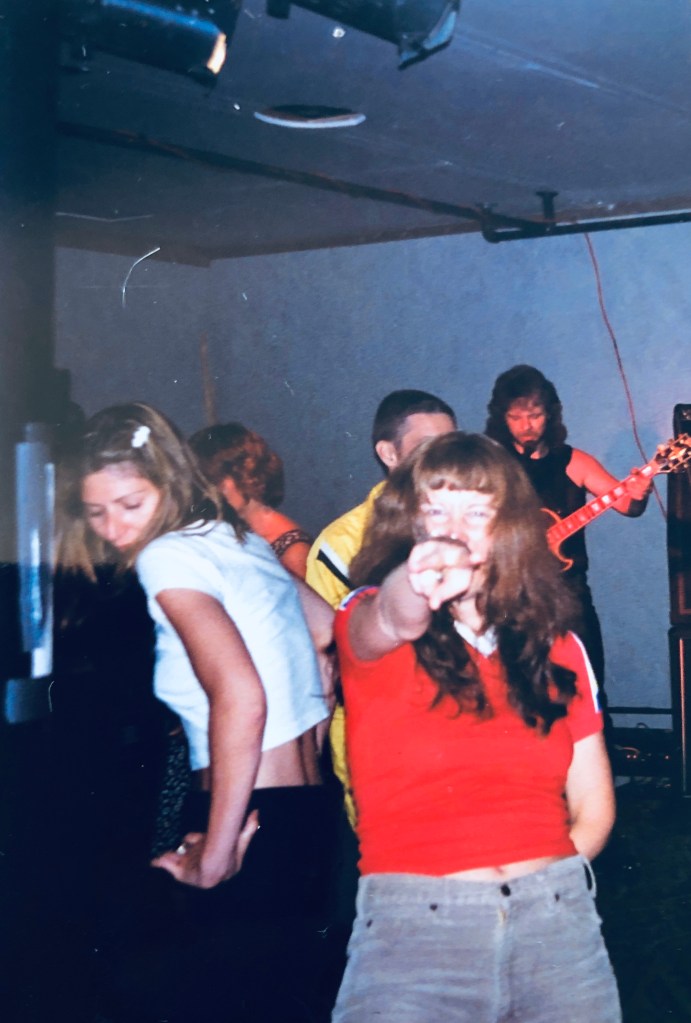
I am making very bad nineties dance moves here and I needed a professional to help me with my bangs. Also, the guy behind me apparently refused to return his hair style to the seventies. Maybe he’s made up for it and is now wearing a mask and marching in a protest. (thank you, Justine, for finding this and sharing!)

My cynicism rises up but I recognize that as nothing more than laziness. The “It wouldn’t make a difference” stance is no stance at all. A cover really just to give me an out so that I don’t have to look at what still needs to be done, then step up and do something about it.

A very real fear for me is that I start strong, then lose steam. You’d think after running five marathons, I’d better understand pacing. But it’s taken a minute to apply that to the rest of my life. And also to distill my focus, then figure out the way forward. What I’m finding that runs through me from the way-back 1990s to the very-now 2020s is that there’s always been simmering inside me an anger at how the other (read: non-white, non-males) are absolutely treated differently. That fact is, for me, dipped in a batter of confusion as my journalistic self thinks I need to stay objective and gather more facts. I also go down the road of self-sufficiency and Oh, this is just the way it is. Again, that comes from a lazy place, because while I can see that this is the way it is now, it’s not the way it has to be always. And unless I choose how to apply myself to make it different by joining my voice to others, then I can’t be complaining.

I’ve been asking questions of people around me to see where they’re situated during these dark days post–George Floyd’s murder and in the middle of this movement for racial justice that’s continuing to march loudly. If you’ve read recent posts of mine, you’ve seen the words of two incredibly smart and well-spoken young women and their take on now. Sliding up the age scale, I sent a message to an older Black woman who is a good friend of my mom and her husband’s to check in. She said, “You can connect with “Black Lives Matter” to support the Movement and share with others in your circle as welI. I truly appreciate you and others like you with an openness to fairness, justice and respect for Africian Americans and our dignity as a people. Everyone can simply practice the Golden Rule regardless of color, race, religion etc. Treat others as you want to be treated.” Simple, straightforward, and also incredibly poignant as she is thanking me/us for being open to treating African Americans with fairness, justice, and respect, something that should not have to be asked for. But the message is clear: Black people haven’t received that dignity and therefore they must continue to ask.

I know our nation is currently listening to a whole bunch of divide-and-conquer voices that spring from confusion and fear. I’d reached out to a family member about his thoughts on the state of our world and he sent me a link highlighting the destruction that took place in the early days of the protests. I know this was a vivid example of his terror about our country, but how to have a conversation around the thing he may really be afraid of—not the destruction, but why the destruction happened—is a riddle. So what fear am I facing in order to bring about change? It’s the one where I stop paying atttention. Stories are my passion. Stories of how we come to be where and who we are. And the placeholder in my heart is the rising up of young women into a world where they are not living in the fear of not being believed or feeling the frustration of knowing they’re being sidelined and marginalized, which is what showed through loud and clear on Anita Hill’s face during that 1991 Senate hearing. The bravery of her has to start somewhere.

These are the moments I’m committing to around BIPOC women through monthly donations: a foundation called Loveland, an organization to bring opportunity and healing to communities of color, and especially to Black women and girls. The founder, Rachel Cargle, is fantastic and you can read an article on her and her fabulousness here. Girls Write Now, a group I worked with in New York City, mentor underserved and gender non-conforming youth to find their voices through writing and community. I’ve also stepped in to join those voices calling for police departments to be completely reimagined. Reform has not worked. Already too much empty talk and Black people are still shot, kneeled on, and choke-holded to death at an astoundingly stupid rate. I shouldn’t even be writing that damn sentence. Police unions strangle progress, so while it once seemed radical to me, I know the time has come to dismantle and rebuild those departments that were meant to keep us safe, but have all too often done just the opposite for Black citizens. A very long process for sure. This opinion piece brings it. And another step by step. I’m taking part in zoom moments for activism and engagement with Aware-LA. I’m reading about reparations. I’m finding inspiration in these young women. All this to say that it’s the first training run (5 mental miles or so) and while we’ve been on this course before, there are many more miles to cover and a lot of incremental finish lines to cross. Until then, I wish you all haircuts, hell-raising, and historic staying power!