Inside Out/Outside In: and a Wise Guest

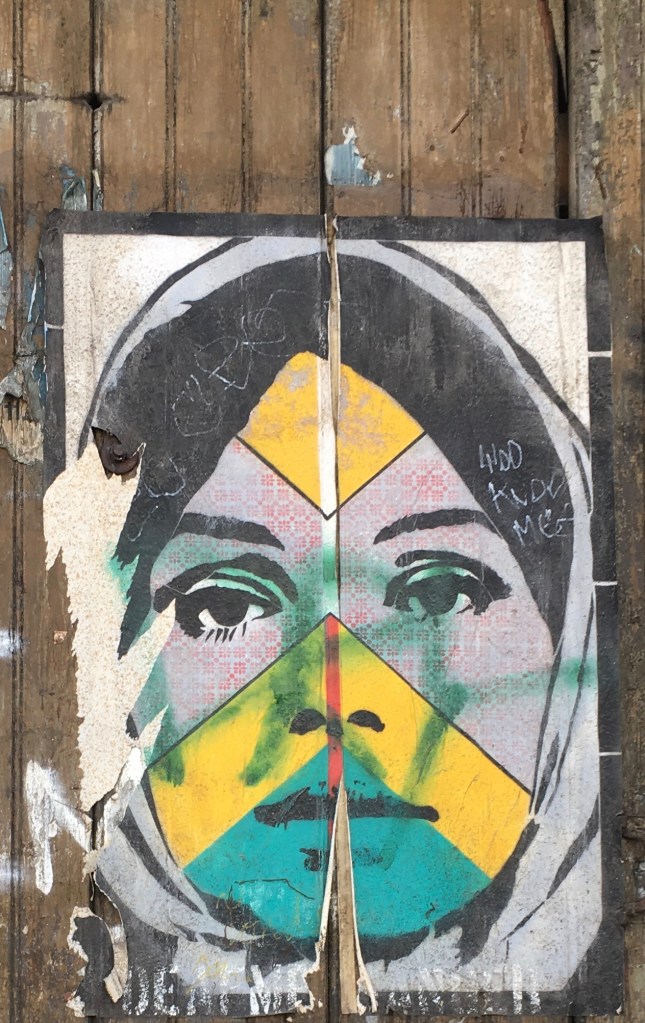
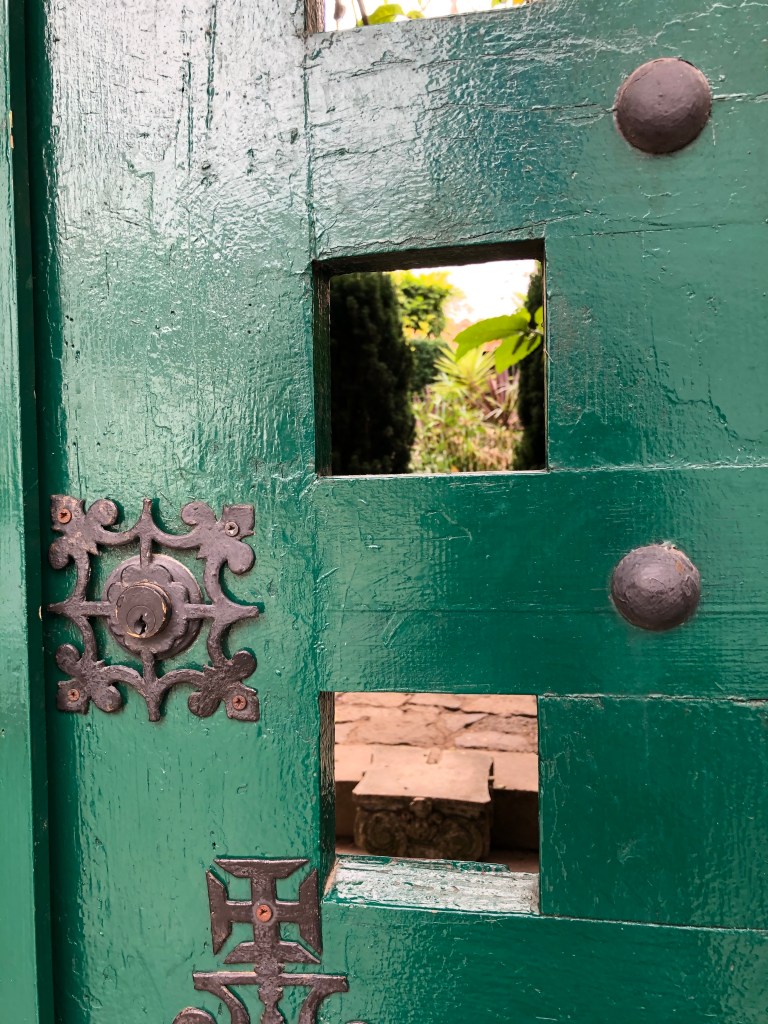
Portugal 2019: Door

I’ve been thinking a lot about how in the past—literally like a month ago, which by-the-by feels like a gazillion lifetimes—I’ve only paid a cursory amount of attention to what it means to be an anti-racist. I’d read very little about my role in race relations. I’d put on my docMartins and stepped out onto the streets for the many injustices visited upon us since this election (pussy hats, kids in cages, students being shot, the climate being destroyed—which to be fair, has been in play for well before this dismal human took office, but this administration certainly has hurt the earth further by rolling back policies put in place during Obama’s time) but I didn’t do a hell of a lot in the way of Black lives mattering or understanding my role in how to understand them besides reel from the injustice I saw in the press.

And why now, as many Black people are rightfully asking, are so many White folks taking to the streets and hopefully (please, people) the ballot boxes for national and local races?

Mark Anthony Neal, professor of African and African American Studies at Duke University, was interviewed on the Newshour and gave voice to something I’d been thinking about, “There’s almost like like this alignment of stars, … that we could have never imagined. So many Americans were feeling in traumatic states because of the COVID dynamic, in which they were raising general questions in their own lives, regardless of race, about whether or not they had full citizenship in this country. Because so many folks were at home dealing with COVID and the pandemic, it meant that they spent much more time watching television. So, literally, everyone got to see George Floyd’s killing in ways that they might not have been able to check in on before. And because of COVID, when we think about all of those young folks who are out there in the streets, who normally would be in school or pursuing internships or working, suddenly now had available time in which they could act upon their passions and political passions, it’s just a unique moment where all these things come together, ….”
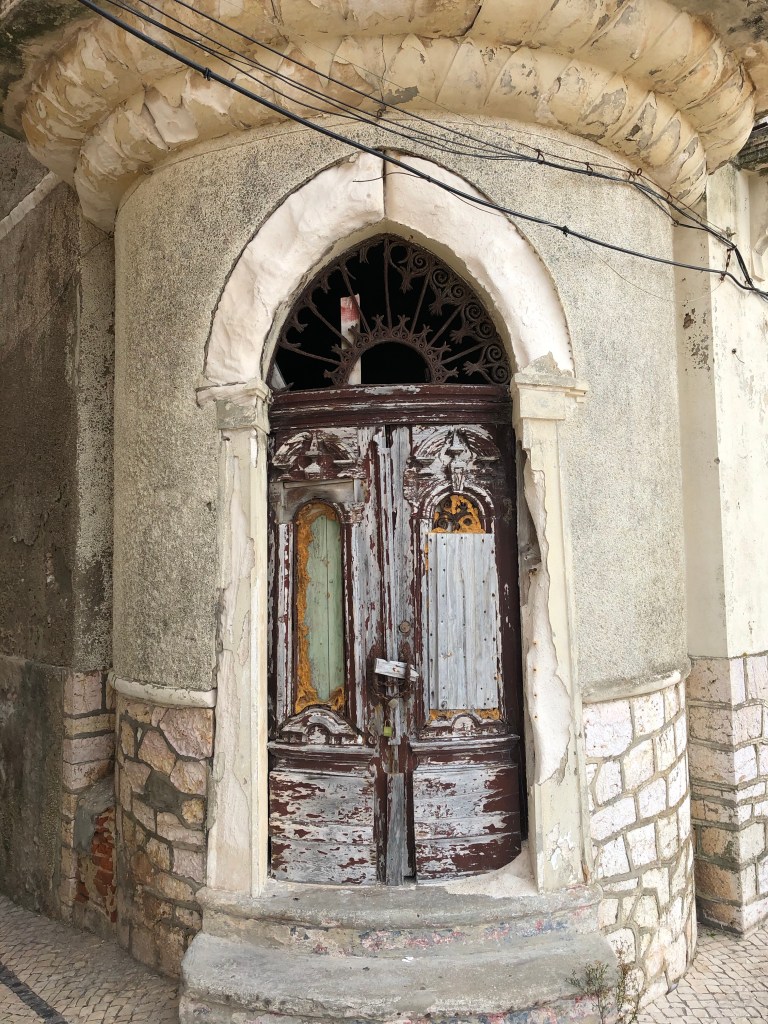
Portugal 2019: door

Yes, We were all inside, in our living spaces, in our heads, in our hearts. Since 2020 clicked over, we’ve all seen so much death at the hands of Covid—this virus made visible only by images of makeshift tents containing bodybags, ambulances, or funerals that no one can attend. And whether you’ve seen those images in person, in print, onscreen, we know death lives there, but we are shielded from seeing the bodies. And then to see a man living, not being wheeled into a hospital to die out of our line of vision, but to watch his life be taken very visibly under the knee of a person quite aware of his murderous powers. To watch that man follow through on the execution in front of our eyes, with a hand in his pocket, no less, became for me and many I know, a jolt to action unlike any other. Yes, we’ve been here before. We’ve seen this. Black lives have been asking us to see it and take it seriously for … ever. (Hyperbolic, maybe. But hundreds and hundreds and hundreds and then some, years.)
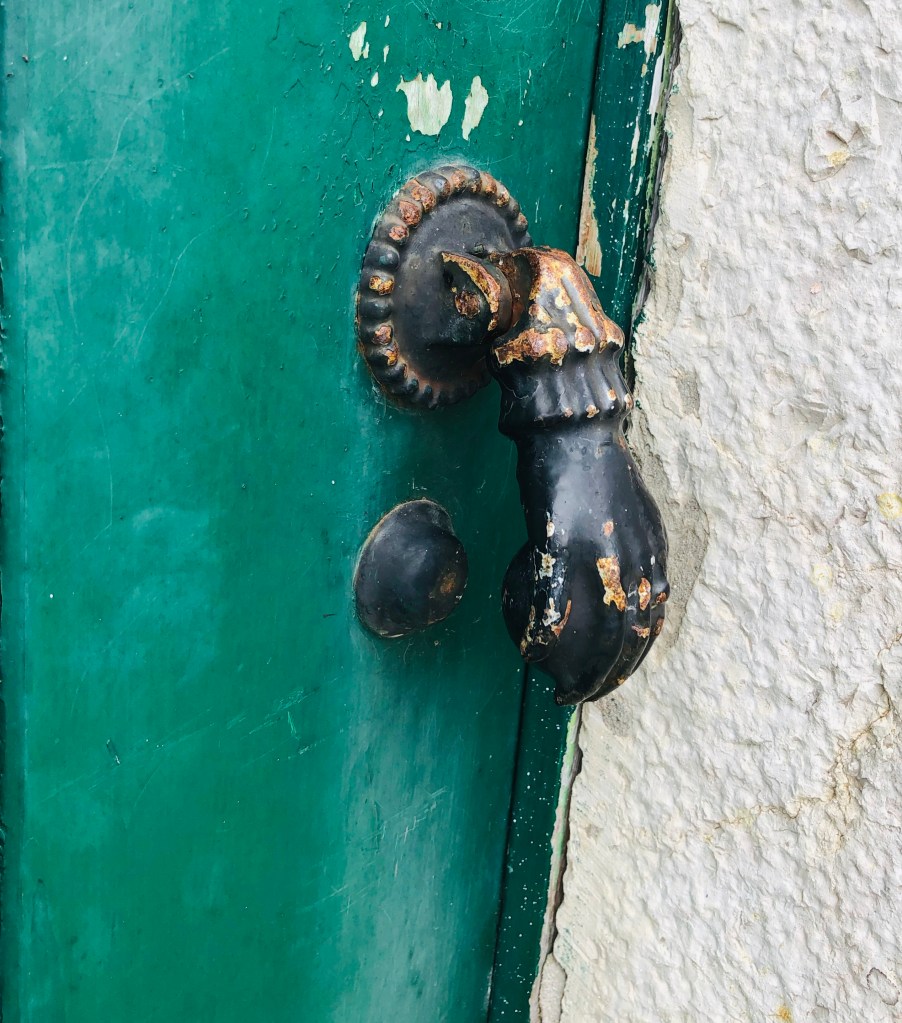
Portugal 2019: door

So why now? If not now, when? I can relate to what James Hollis, a Jungian scholar, teacher, and author said on This Jungian Life Finding Resilience. “If I stop and ask myself, Why am I here? What am I meant to embody? Particularly in the second half of life—what wants to enter the world through me? That’s a different question than what does the ego want or what does the world want and how do I meet those expectations? But what wants to enter the world through me? And that is where each person in each way has a contribution of their own personhood to bring into this world. No thing that I do out there can be more important than the relationship to my own soul. My relations with another person can’t be any more evolved than my relationship to myself. because wherever I’m stuck or wherever I’m caught in archaic agendas, that’s going to be dumped onto this relationship. Maybe it will be dumped onto the other person to carry.”

So as I take that thought to heart as a middle-aged white woman, I also continue to want to know what the generation(s) coming along think.

So I’ve been asking around, and this week, I’m so lucky to be sharing the thoughts of Charlotte, the daughter of a dear friend of mine. As a young adult who is continuing to explore what it means to be human, and is dedicating her life to that study in a way the rest of the world can only thank her for, below are her reflections and bold movements on what it means to be alive in this time. And I thank her profoundly for sharing!
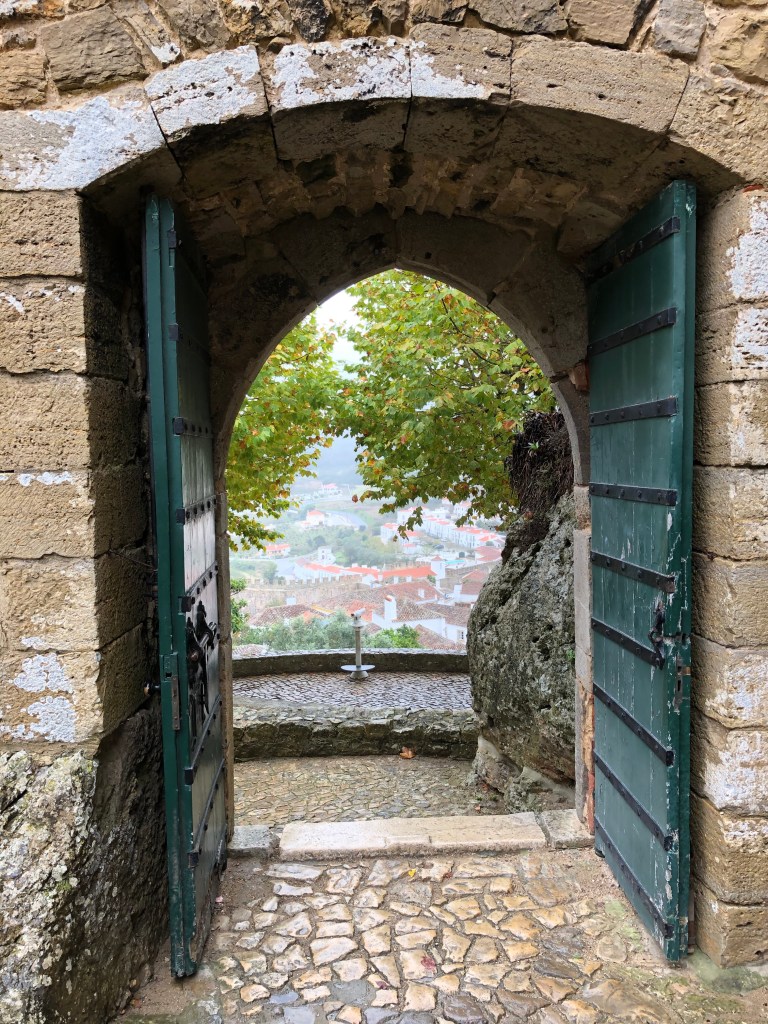
Portugal 2019: opening

“I’m the kind of person who strongly believes in the power of the individual. I’ve spent most of my life studying spiritual and religious perspectives, and I have found these to be profound and life changing. I respect and honor the power of the government, science, and activism, but my personal interest lies in the human spirit and its ability to change. How do we change, and what exactly is it?

“I think most people my generation will agree that something has to change right now. I suspect that’s the universal message of the youth: “Please, just change.” Unfortunately human beings are so often stuck in our ways: we have a knack towards comfort and ease, and we are easily pulled into seductive proposals involving money and power. This is what seems to infuriate my generation the most—we feel as if there is a basic lack of human kindness right now, especially within our government and the money-holders of society. 


“So, for me, the answer is this: change will come from the reemergence of radical human kindness and understanding. In order to get to this place, each individual must work as hard as possible to live more consciously of how they treat others, and even more importantly, themselves. I understand that life is uncomfortable and scary. It is difficult for us to open ourselves to each other, to be vulnerable, to trust, when we have been broken so many times. It is even harder to admit to our flaws and shortcomings, the very things that cause relentless shame and fear to abide deep within. Because of the modern-world’s universal refusal of the very thing that makes us human, vulnerability, we push down our feelings, we don’t talk to one another, and we allow hatred to bubble deep within us. This hatred is not just directed toward others, but ourselves as well. Because of our fear of facing ourselves, of allowing ourselves to be seen, we become compliant, quiet, passive. We pass our days in a fog, under a charm, using a variety of different tools to shut ourselves down and turn our brains off. I believe that this universal human quality is the very thing that has caused so much pain and suffering, on every level imaginable, in our country and in the world today. And I believe that if each individual chose to live to the very extent of their humanness, our world would be a radically different place. 

“I wish the world would know that policy change and protests are not the only answer, and if we continue to walk the path of external change, our world will look very similar when my generation is old. To truly look within, to change your own, personal, beautiful life, will cause the very change we seek. How does one do that? To me, it’s simple, but most definitely not easy: First, it’s having open and honest conversations with yourself, your family and friends, and your community. About racism, sexism, bigotry, economic disparity, personal responsibility, environmental destruction, social and cultural upheaval. But, not as a social-political subject bantered in an intellectual, keep-your-distance way. Rather, to speak about these subjects in a personal, empathetic, honest manner. How does racism or sexism appear in my thoughts, emotions, and actions? How am I responsible for what is happening to the environment? To people in poverty? How am I going to change these things, taking responsibility and action in both an internal and external way? These conversations should be happening daily, even amongst strangers. They should be a norm. 

“Second, it’s you pushing yourself to be kind to others, even in uncomfortable situations. Kindness can be scary. It’s an act of vulnerability, and you are always at risk of being embarrassed, refused or put down. Or, at least, that’s what our minds say. When we ignore the annoying voice of caution and fear in our heads, we overcome a limiting belief that tells us that we are not worthy of giving or receiving. When we decide to put ourselves on the line and help someone, or volunteer with a non-profit,  or say something kind, or stand up for a stranger, we are changing the very course of our world in that single instant. We are changing our hearts, making them bigger and more empathetic. And most importantly, when we act with kindness, we are showing others that it is not that frightening, and, in fact, it feels wonderful, freeing, and beautiful. Your act of kindness encourages others to be their best selves. 

“Third, and last, but not least-—it’s learning to love yourself. I don’t care if that feels cheesy and irrelevant to what’s happening in the world right now, because it is probably the most relevant thing you will ever come across. Ask any social worker, therapist, psychologist, religious leader or chaplain—hatred, compliance, silence, fear, violence, bullying, all of these things stem from a very deep wound inside of us. The wound that says we are not worthy of love or attention, that we are failures, ugly, worthless, unimportant, stupid, boring, annoying—I could go on and on. All of us have this—there’s not a person on earth who hasn’t dealt with self-hatred and shame at some point in their life. If we chose to live our lives in love with ourselves, and taught our children about loving themselves, and had conversations at dinner parties about our struggles with loving ourselves, this world would be filled with people who loved themselves and in turn loved others. Unfortunately the very things that we hate about ourselves, the very things that we say to ourselves are exactly what we project onto others. It becomes the energy we bring into the world. The more people who decided to go their lives without addressing their sorrows, insecurities and pain are more likely to act out in aggression, to stay silent at critical moments, and to be the very people who cause pain and suffering on others. We live in a vicious cycle, but a cycle that can easily be broken if each person decided to begin the long and difficult process of loving themselves. 

“As a member of the younger generation, it is my mission, my purpose, to encourage people to start living differently. I wish the national conversation included the power of the individual as one of the most important facets of change. If we combine this internal work with policy change, protesting, donating, and advocacy, I believe that the concerted efforts of many different people, advocating for many different things, we will be able to change this world. When we work together and respect each other’s gifts just as we respect our own, change will happen.” 

Redlands 2020

I would like to honor Charlotte’s words by continuing to look inside to discover how to carry these thoughts while being open to the learning still left to do. Books: author Ibram X Kendi (“Stamped” but also “Anti-Racist Baby”), Pema Chodron (“When Things Fall Apart” an all-time wonder). Podcast: Scene on Radio, Season 2, Seeing White

And I will follow up with Charlotte on some suggestions for reading, watching, listening and include in a future blog.

What is moving you right now?

Underneath the Words (and Digressions)

Words and their underbelly.

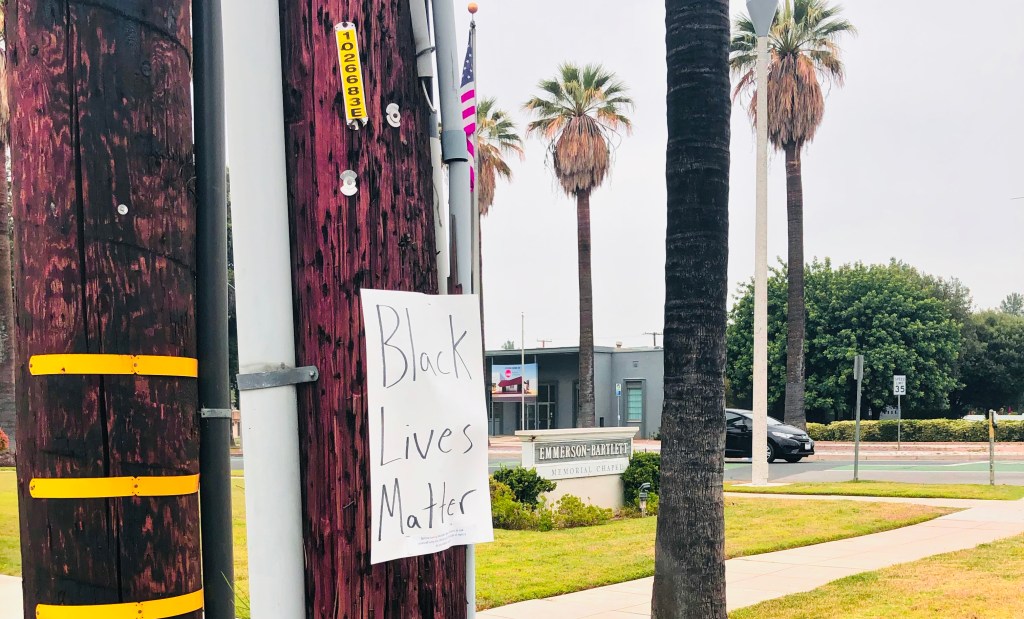
It seems exasperatingly hard for a great majority of white people to be able to fully grasp the statement, Black Lives Matter. At first, I was confused about the resistance. Dennis’s teenage niece had posted on social media a really straightforward explanation/scenario (much like the one on the sign above):

“When the Twin Towers fell, everyone said We stand with New York City. Los Angeles didn’t chime in with, Hey, we’ve got problems, too. When the Boston Marathon bombing happened, everyone said, We’re all Boston strong. Cleveland didn’t pipe up with, Well, we’ve got a few things going on over here you should pay attention to also. After Sandy Hook, every single person stood strong with that community. Sandy Point, Maryland, didn’t feel left out. You put your heart where it’s needed most. Right now, Black people need us to stand with them.”

Yes. Yes. Her words were so simple and clear! Doesn’t that make sense? Go where you’re needed. On the face of it, of course it makes sense. But over the last week, I’m now feeling my way to the heart of why embracing and standing firmly with the words Black Lives Matter make so many white people get squirrely and why I felt a flutter in my stomach that clearly signaled my own inability to immediately say yes.

Mural : Portugal 2019

I had to really stay in that uncomfortable flutter and not explain it away as indigestion, something I ate. It was something I ingested, yes. A long time ago, without even being aware I was swallowing it. A way of being and thinking so deeply ingrained in me that to go there requires a weird kind of inside-out flashlight I’m just now getting batteries for. As I went in deeper, trying to figure out why that young girl’s sign above was saying it so clearly, and why still the flutter in my stomach and the refusal for so many to gather around and say the words, I found I was looking hard for an enemy to unload all my righteous anger on. The police union, right…gotcha. Sure, yes, but not altogether. Flutter check still in play. More enemy out there.

Every crisis needs one. A baddie we can all pull together and defeat. As Dennis’s niece’s very logical example above suggests, America has focused its fury before. September 11th featured men in the desert, in caves, in a land far away who believed in a radical ideology that very clearly wasn’t the American way of thinking. They needed to be stopped. There seemed common agreement on that. Ah, we’ll do something. Send troops over there. Now. (Troops, that, according to an analysis by the US Army in 2013, found African Americans continuing to serve in disproportionately high numbers. But I digress.) Then, a good majority of us queasily realized, well, oops, maybe those aren’t the right people in that country that we’re killing in retaliation. But, hey, we’re here now. they must have done something. When the Boston Marathon bombing happened, again the search for an enemy, and oh boy, that kid was radicalized. That damn ideological difference that comes from those people we’ve been trying to stop (or stir up, as has been extensively written about). When the tragedy happened at Sandy Hook, we all mourned and many took up the cause for gun control and mental health reforms. Tragically, movement on those fronts have not budged much since then either. (I’m looking at you Mitch. And stop me before I digress into that rabbit hole.) So there you have it, crises that brought America (mostly) together to utter words suggesting change. “Never Again” is a phrase that has been used for all of the above and carries rich history.

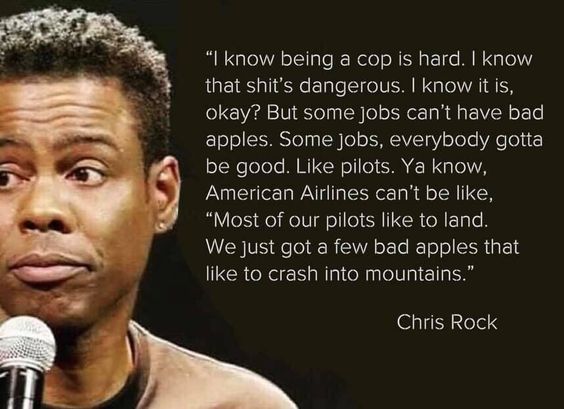
So what about Black boys, men, girls, women being killed weekly by police? (I know that Black people are also killed by non-cops and citizens of all colors, but for this particular argument, I’m keeping it tight on law enforcement because police, we’ve been told, are meant to protect us and that whole “bad apple” theory is just not holding anymore. See Chris Rock for a good perspective on that. But I digress.)

While turning toward the police and their union does present an immediate villain. Sure, many are uncomfortable or just plain unsure of where to start in rehauling policing in America. I know I’m still learning and reading and coming to the abolish side, which on its face sounds so so radical, but really really isn’t. (good points. Great reading.) But when faced with the phrase Black Lives Matter and the resistance to it, clearly there’s something deeper and more personal going on than blaming systemic police misconduct. When I continued on into myself with that damn flashlight, I came up squarely face to face with myself. What? (Bangs flashlight on head. clearly flashlight is broken. No, not broken.) There was an awkward pause. Would rather not. Look, shiny object. Runs away chanting All. Black. Lives Matter. Sticks head in sand. Makes excuses. Rinse. Repeat. Yes, that’s been me for years now.

More dead Black boys and girls and men and women.

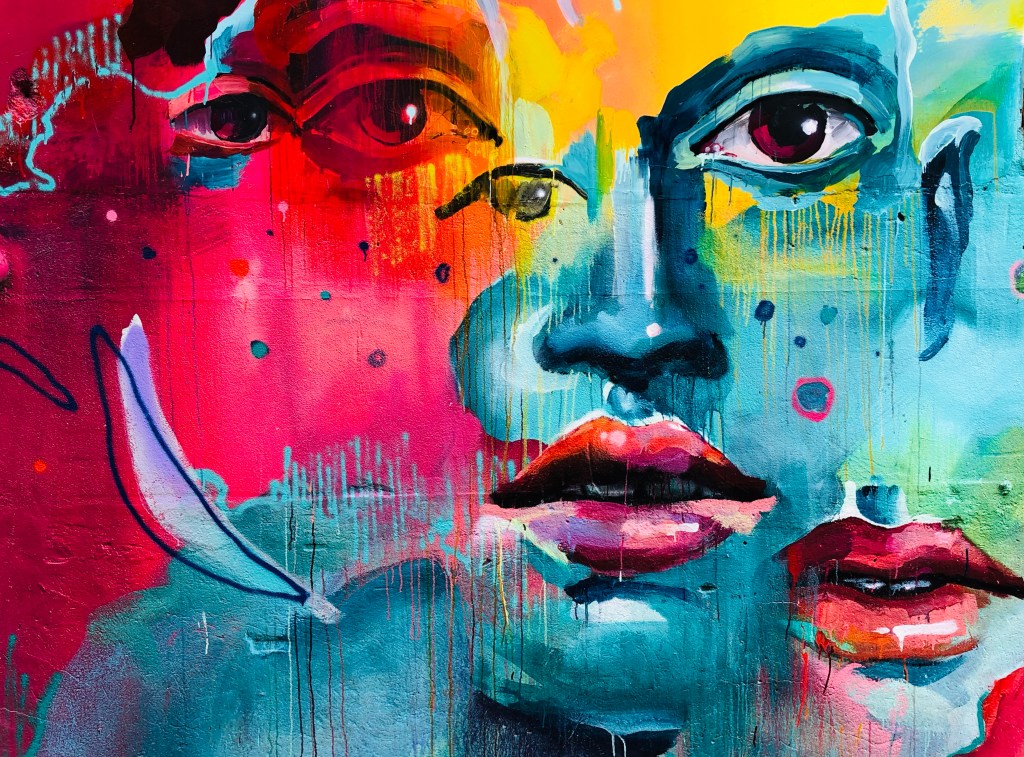
Mural: Prague 2018

Where to begin? “One thing … is that part of being an ally is taking a deep breath and getting past the shame and the guilt that you’re carrying, because white people who are alive today did not create racism. They didn’t choose to live in a white supremacist country, and they didn’t choose to exist in the world that we do today. But what they can do is choose to admit that they benefit from racism and acknowledge that they have the power to change the conditions, and that’s crucial, because this isn’t a blame game.” Ben O’Keefe, former senior aide to Senator Elizabeth Warren (to read the whole article, please click here. so effin’ good),

Okay, so while now it may be slightly easier to look in the mirror and not feel constant hot shame, I have to keep looking and learning. Those words are a call to action to finally understand American history and how Black lives have never mattered in this country. (I realize that pretty much every piece of land on this planet has a racist origin story soaked in blood, but, again, just focusing on where I live. Maybe a ripple effect.) History from grade school on up has of course been spun meticulously from our white founders and ancestors and on to other white (mainly male) people in power from there. Given their authorship, why would they want to shine any light on the stories of indigenous people’s displacement, the bringing of black bodies to this country against their will, selling them as property, using their bodies for labor and sex, telling them they’re free, continuing to abuse their bodies with labor and sex, enslaving them economically, refusing them the right to take part in the shaping of the country politically, ethically, or humanely, then hanging, beating, and murdering them on the regular, and very rarely having anyone held accountable for any of it. Which brings us right up to June 2020. When do history books get sent back for revisions? Of course, the stories are shameful and made more so by their being hidden in plain sight. Like that damn cherry tree Washington didn’t cut down. It feels like America needs to be engaged in a giant racist anonymous group. “Hi, my name is America, the United States of, and I have a problem with racism.” Because as they say, the first step is to admit it. We could all find fellow White buddies willing to do the work to keep us on track. But, again, I digress.

I’ve started to dig up the bodies buried deep inside myself. All the times I know I’ve stood by and ignored a comment because I just didn’t want to make anyone uncomfortable. When I haven’t stepped in when a Black person, whether friend or stranger, was slighted in just that subtle way that’s confusing. That, did that just happen? Oh, I’m sure I misread the situation or I know my friend can take care of themself. But that’s not the point. Of course, the very fine human next to me can take care of themself, but I’m the one who needs to act on my outrage. Claudia Rankine’s “Citizen: An American Lyric”—a book-length poem so worthy. An hour to listen to audio-wise, available from the library—has a very excellent moment about that. The times I’ve said something offensive, mindlessly carrying on. I need to listen to my own self and pay attention to the outrage.

Currently, America is pandemically challenged on a lot of levels: health, race, politics. If I can begin to be honest about how to be a racially smarter, more honest human through listening, reading, understanding, then maybe by the time Dennis’s niece has a few more decades under her belt she won’t need to be explaining to her really dense elders the logic of go where you’re needed. And hopefully, Black Lives will actually matter. Those three words won’t have become sloganized like World’s Best Coffee or Never Again having lost power and become selling points. (Which, considering the almost-one-hundred emails in the last weeks from retailers to banks whose subject lines have used Black Lives Matter to indicate they get it only really resonates if they’re donating masks, money, offering loans to black-owned businesses or otherwise using their platform to help. But I digress.)

Right now, what I’m reading and listening to in order to understand what I want to understand, along with my noticing of previous choices that have been my go-to, Eurocentric pattern. I still enjoy the then column below, but recognize the narrow focus I’ve operated under since, um, forever?:

Podcasts:

NOW: The Stoop (poignant, pointed storytelling. Black perspective. Episode 39: For Irma. incredible. click on link) ALSO: Scene on Radio (stories exploring human experience and American society from the Center for Documentary Studies (CDS) at Duke University. Especially amazing episode: More Democracy

THEN: This American Life (poignant, pointed storytelling. 98% White perspective). Radio Lab (stories exploring human experiences. 98% White perspective).

Books (nonfiction):

NOW: White Fragility: Why It’s So Hard for White People to Talk About Racism by Robin D’Angelo (Up front discussion of an American problem.)

THEN: Educated by Tara Westover (The journey of a white woman finding her way out of a cult and into an education.)

Books (fiction):

NOW: The City We Became: A Novel by N.K. Jemisin (urban fantasy novel set in NYC that deals with how we are all the other.)

THEN: The Grammarians by Cathleen Schine (funny novel set in NYC that deals with wordsmith types who feel they are the other)

To Watch:

NOW:

When They See Us by Ava Duvernay (episodic series based on the true story of the Central Park Five, NYC)

THEN:

The Morning Show (episodic dealing with the #metoo moment loosely draped around the Matt Lauer GMA moments, NYC.)

Daily Work:

NOW:

21-Day Racial Equity Habit Building Challenge (fantastic helpful day-by-day interactive for opening of eyes)

THEN:

The Artist’s Way, which I’m just beginning again, so don’t have a real racial perspective on.

Please share what tools, books, listening you’ve been doing to open your heart and eyes. I can use all the help I can get! And thanks!

Start Again

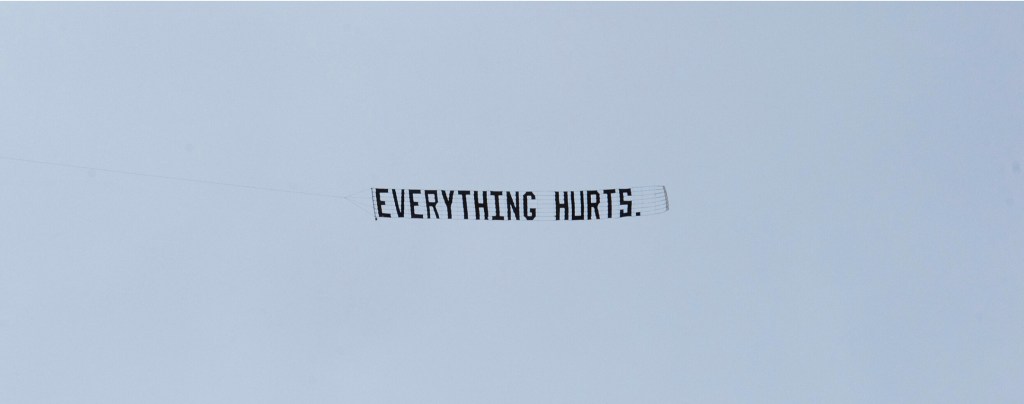
Protest/art in the sky by Jammie Holmes
Please click on this artist’s first name to go to his website and last name for a profile on him.

Start again. Those words have been on a loop in my head this past week. Realizing that being in a rush to do something, to be seen as active, basically nullified every intention I had set out with to bring about change. I wasn’t actually making much of a difference because my ego was too busy feeling agitated with “look what I can do.” As it turns out, something I’d known and promptly forgotten was that helping means paying attention, listening, then stepping forward with shared intention and doing.

Start again. Stay with the wound. Not inside of it, where all that happens is reaction to staunch the pain. Not walk away from it to go find someone to help because it’s too painful and it would be so much easier if someone else handled it. To be near it and open to it so the healing can happen. My goal is to not look away from this moment. See every part: my complicity in how it’s come to be that Black lives haven’t mattered, how I gave up on my ears to listen, my eyes to see, my nose to sniff out the bullshit, my voice to make a difference, and my hands to hold the placard, dial the numbers, sign the petitions. I need to stay in it and not walk away as I’ve done before. For the good of me and all others on this planet. I can help that wound start to heal. Make sure it’s open so the light can enter. No bandage.

And to that end, I have questions on how others are situated in this time. An extraordinary young human, recent college graduate and the daughter of a dear friend, graciously agreed to answer mine below. I’m so grateful to hear her viewpoint and have a chance to explore the links she included. Without further … I introduce the wisdom of Anya: June 2020.

What, from your generational view, would you like us all to know right now?

Anya: Sometimes it feels like I was born to witness the end of the world. I’ve been told that everyone feels like that as a young adult, but all signs point to the end right now: climate change, a pandemic, the crumbling of the liberal order, political uprisings across the globe. This has scared me, it still does, but it also presents an opportunity to imagine what the new world could be. I am still very much a student of revolutionary thinkers and of abolition, and as I read more and more, I see that one of the core tenants of freedom movements is imagination. So many aspects of Black and Indigenous revolutionary thought hold the concepts of imagination and futurism. The most active members of my generation use their imaginations to keep them pushing towards the future. We, the ones inheriting such a mess, actually seem the most hopeful because we have to imagine something better—and that we can take part in making it better. I struggle when speaking with my family who seem so entrenched in the way things are, but have so much power not only to imagine but to take an active role in change. I hope we can move forward together, with imagination, towards a more just world.

What are things that all of us can do right now, this day, this week, to make a difference?
Donate to Black crowdfunds, community organizations, mutual aid groups, and bail funds! A few that I have seen boosted are:

Black Visions Collective

NYC COMMITTEE FOR TRANS ACTION

Black Womens Blueprint

The Okra Project

The Gworls Party

Emergency Release Fund

Bold Organizing

Community Justice Exchange

Look at this amazing compilation of anti-racist resources by Patia

Read up on abolition! The Black Radical Tradition is ongoing and has always been at the front of the Black freedom struggle, which is a struggle for all people’s freedom. In a recent Instagram post specifically addressed to white people, the movement Decolonize This Place in NYC named some Black revolutionaries to read or read up on: Harriet Tubman, Frederick Douglas, W.E.B. Dubois, Frantz Fanon, Claudette Colvin, Fannie Lou Hamer, Amilcar Cabral, Ella Baker, Malcolm X, The Black Panther Party, Assata Shakur, H. Rap Brown, Angela Davis, Mumia Abu Jamal (source: https://www.instagram.com/p/CA_9_jZpYd4/).

And, is this even the question to be asking right now? Is there another one to ask?

I think asking the question “what can I do” is really important! And seeking out the work as well. I am just graduating college with the awareness that I know so little and the more I learn the more there will be I don’t know. As I type this, I have such a deep insecurity about even presenting what I think as important because I feel so unqualified. So many people are sharing resources online, for free, putting in hours of work to compile them. I guess that is what we should “know.” We are all learning together, supporting each other in different ways, in order to imagine together and make a new world possible.

Thank you for reading this. I’m going to keep asking. I’m going to keep reading and reading and reading more. I’m going to keep supporting (right now, among others, Darnella Frazier, the young woman who filmed the murder of George Floyd and is in need of our support). I’m going to keep looking & watching [Windy, thanks for this last link]. I’m going to pay attention and listen and keep recognizing myself in certain truths. Commit to do better. Seek out education [this Justice in America podcast to do with The Bard Prison Initiative—a college program offered through Bard College in six New York State prisons— is an astoundingly good listen. Thank you, Elizabeth for sharing with me.]

Grateful to all the voices out there, most especially today in this space, to Anya for being a fierce badass who just by living, has helped me want to be a better human, flaws and all!

Breath &Words

Rome grafitti, 2016

Breathing, It’s not negotiable. It simply is a thing we (sentient beings and the like) must do to live. In this early part of 2020—pandemic times—taking a breath is very much on the minds of most humans roaming the earth. During our current health crisis, black and brown people have been ceasing to breathe at a criminally higher rate than any other color in this country. And now today, yesterday, and every day before that since Monday evening, we’ve been reminded how the monster deciding whether you are allowed to pass air through your lungs is not only an invisible one named Covid-19 and substandard health care, but also a visible murderer wearing a uniform and under a shield of law. None of this is new. Taken one at a time, that is a devastatingly depressing fact. But when these two facts come together at the same time, my own breath goes ragged with a mix of bone-weary sadness, confused impotence, and vendetta rage.

Words. Under (and I do mean under, since it often feels crushing) our current administration, words have become triggers, dog whistles, empty, dangerous. The man who has defiled the term president of the united states fashions them into sharp objects and bullying machines on the regular. Filling socks with sentence upon poisonous sentence and beating us with them, so that even if they don’t always leave visible marks, they do bring about deep purple and blue bruises that he makes sure to press and knead so that we won’t ever relax. A constant intake of short, sharp breaths guaranteed to deplete oxygen. I’m sure he hopes we’ll just become light-headed and confused, then nod our heads and forget to go to the polls to vote him out of office. And so we have to continue to breathe. Dodge his blows when possible. De-inflate his hateful words.

Words. One of the last George Floyd was able to say before his trachea was crushed by the policeman kneeling on his neck and he died was “Momma.”

I’m just going to step away here for a minute until my eyes aren’t blurry.

“Momma.”

Our comfort. The person, place, or thing where we can lay our heads, be held, be heard. At a time when the kind of human touch that reminds us of our humanity, our needs, our comfort is considered dangerous and to be distanced by six feet, finding the connection … how does it happen? And to express the anger that has to come. How does that happen? Having been sure all my life that once my anger was released, that it would blow like Vesuvias and never stop, it’s been an ongoing project for me to understand how to use it without getting buried by it. When I aim it toward something large and banner-march worthy, I join my voice with others and yell and it feels good and right. Power in numbers. Strength in movement. Of course now, the irony is that shoulder-to-shoulder, aerosol-droplet shouting is a danger zone, yet I see people going there. And even as my emotions react to their bare faces and I hope for them health, I am in sad awe and frustrated respect.

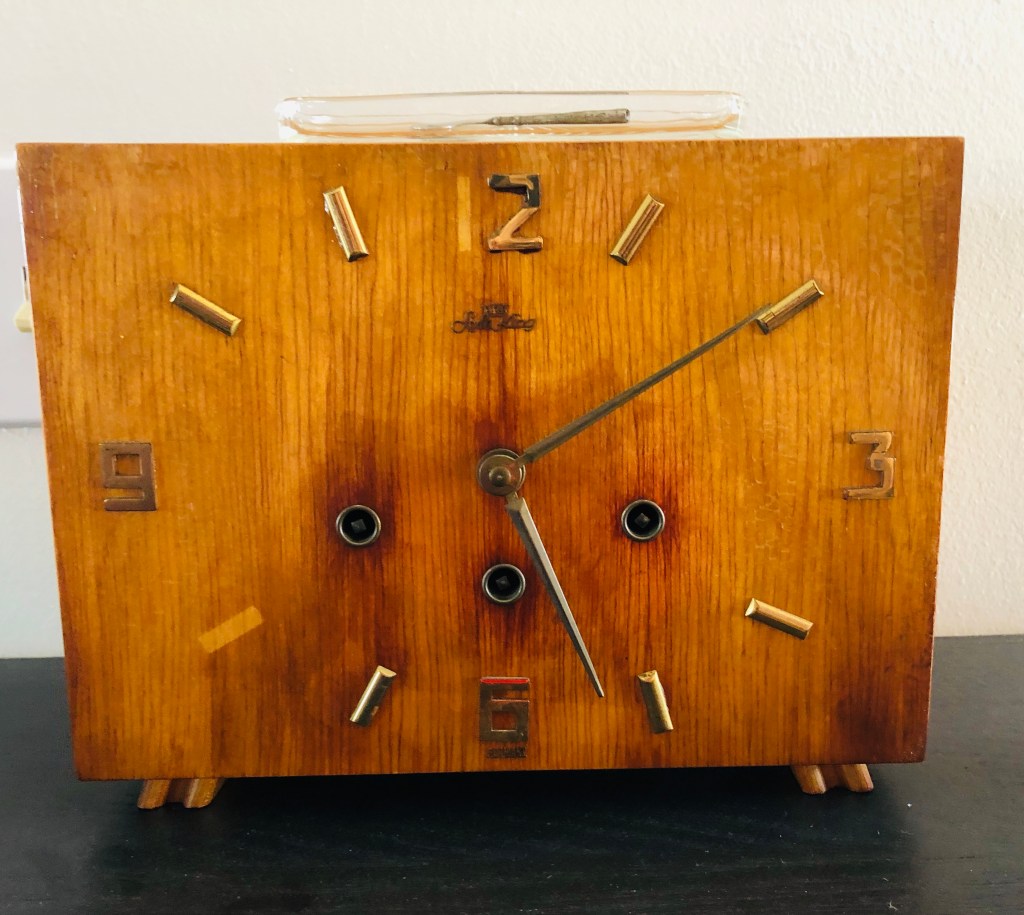
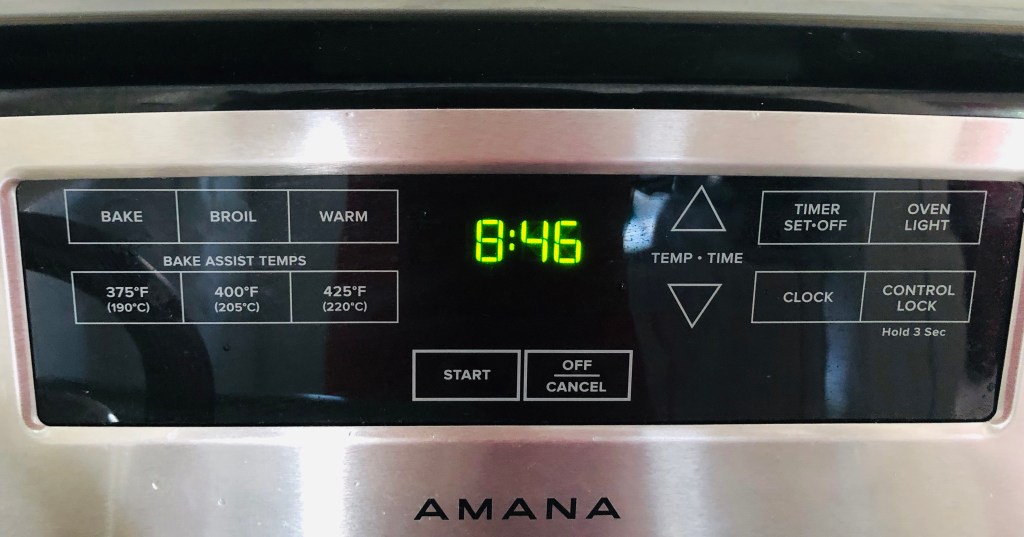
But what else? What else can we do as a collective to breathe life into some goodness right now? This was a powerful thing to see: a man expressing and a newscaster inviting him to go there. On Monday night, June 1, at 8:24 PM, central daylight time, I’m planning on taking a deep breath, and being silent 8 minutes 46 seconds in honor of George Floyd and all the people who have fought for breath.

Solly-tude

NYC 2019

I used to actively wide-awake dream about having full days in front of me to just write: I’d have nowhere to be, nothing planned, no one I had to talk to, just me and time hanging out together filling the space with all the things rattling around in my head that wanted to be spilled onto a page. Sometimes I’d blame my job for not allowing me that freedom. Of course I did. But honestly, I also made plans like crazy: dinners with friends, party invitations accepted, shindigs planned. But often on the designated days I’d secretly hope the date would get cancelled. It wasn’t a reflection on my friends, it was more a realization once again that I’m not the social creature I think I am. A high percentage of the time once I was in the moment, I’d be happy. (Although that was rarely true for parties. I’ve completely fallen out of love with any situation that holds more than 6 people and requires mingling. I’m crap at mingling.)

So when one of my top favorite writers, Taffy Brodesser-Akner, wrote this piece on the joy of having plans cancel themselves due to our current awfulness, I nodded my head hard enough so that the paper in my hand rattled. One thing I love about Taffy is her honesty to just write things that other people might read and think is she writing about me?—which I generally think is a reaction everyone who knows a writer thinks at one point or another. (I refer you to the brilliant Alan Cummings & Jennifer Jason Leigh movie, The Anniversary Party, for some funny scenes around that type of misunderstanding.) As I get older, I keep reading about how you come to a point where you move on from caring about how you land with people. You get salty. You speak your mind and even if something strange comes out, you don’t even cringe because who cares? You’ve been on the planet long enough to say what you want. You’re not bothered.

I’m not certain when that magic age is numerically. I know people in their twenties who are able to discern what they do and don’t want to do socially. For me, I still hear should whispered inside my cranium. When I was young that word was wrapped around career moves. I should go to that club/party/lunch/dinner/clown show because I might see someone there who will further my job prospects. Or, I should be seen there because it will look good. A bit later on the word was a cling-on around romance. Maybe I’ll meet the person of my dreams. 9.5 out of 9.8 times I’d end up in the corner talking to someone I had stopped wanting to talk to five minutes in and now an hour had gone by and I didn’t even use the “I’m going to get another drink” or “to the bathroom” excuse to extricate myself because I thought it would be rude. My. Lord. what a lot of wasted time because I was actually worried about hurting someone’s feelings. GAAAAH. I hung around inappropriately rude people just because I wanted to see how they managed to avoid situations they didn’t want to be in. I wanted to notate how they walked away and didn’t care. But after a bit I realized many of these people were bananas so I really didn’t spend enough time around them to gain any knowledge.

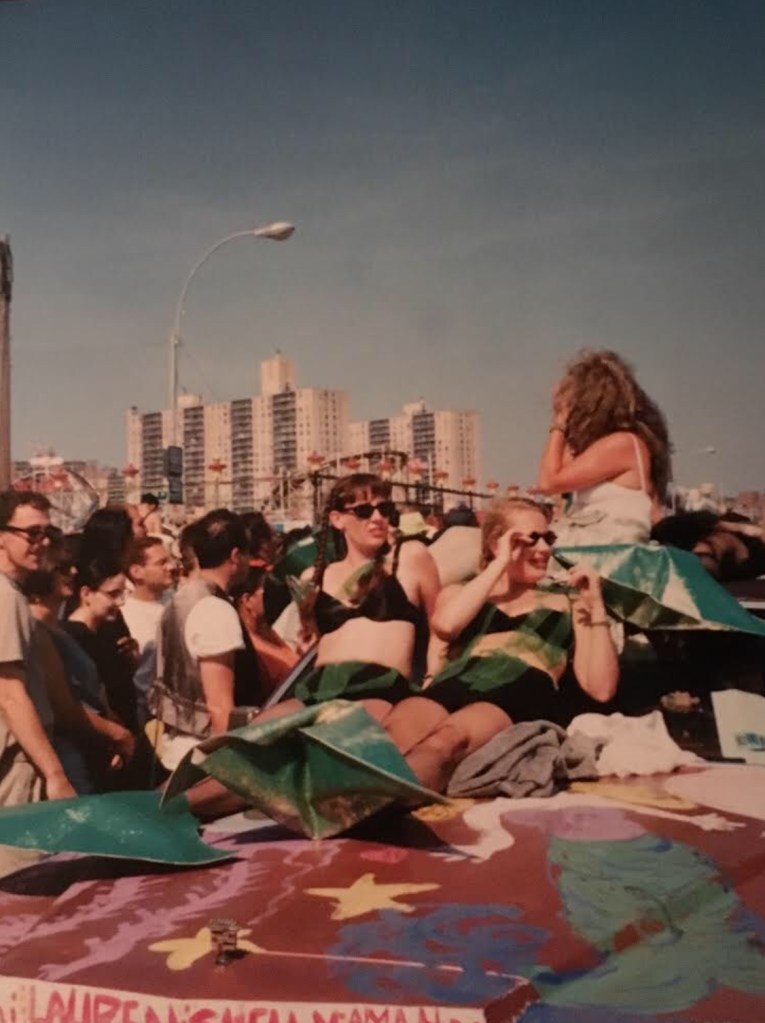
I had fun for about an hour-ish throughout this day, but at this point–a few hours in and right before a crowd of ruffians spilled beer on us–I might have been wishing I was alone doing anything else but this. At the time I’d said Yes, riding on the top of a car wearing a tail and driving through Coney Island in the mermaid parade had seemed like a good idea.

I in no way see our current pandemic time in the light of “Oh, I’m so glad this happened.” But I do feel that now is a really good time to look at all sides of where I am in my life. Bravery in expressing myself is a thing. Being able to do that kindly, to both myself and those around me, is a goal. Not an impossible one either. I realize in my writing (novelistically and otherwise), I can stretch beyond and take a chance to not care what someone might think.

So that’s all I got here today. But I do highly recommend the Taffy canon of writing for not only great essays and profiles but also for her honest renditions of self (like this one that I had the opportunity to disagree with her on, but still love). Have you discovered your magic age to get salty and do what you want?

Seen and Unseen

“Perhaps we’re just now starting to notice that the world is a little bit weirder than we gave it credit for.” You think?

I start with this quote by John E.L. Tenney from a New York Times article published this weekend to do with ghosts. While the title, “Quarantining With a Ghost? It’s Scary” is obviously bait for readers, the piece itself actually portrays the humans sheltering with paranormal presences as (mostly) cool with it, and in some ways even comforted. I mean, for real, “a white man in his 50s, wearing a well-worn, World War II-era military uniform and cap sitting at the table” in your kitchen as seen by one guy in the piece is A) not going to eat any of your groceries—or use any toilet paper unless said spirit is capricious and hides it or uses it to teepee the neighbor’s house, B) is unlikely to be carrying the Covid 19, and C) as the guy who walked in on this spectral presence says, “It didn’t feel menacing at all. It almost didn’t even occur to me to tell my husband the next morning.” I hook into that word “menacing.” In a world, specifically the current one we’re living in, where what we can’t see until it’s already wreaking havoc strikes us with Alien-level terror, a few Casper’s—whether seen or no—may actually be both manageable and a relief. There’s history there. We’ve grown up with ghost stories whether told around a campfire, at a sleepover, in a book, or TV/movie. Stories are the thing that fuel a moment, yet the stories around the unseen-enemy Covid are not in any way built for entertainment in its current form. So we turn to the storytellers that can take us outside of ourselves. Of course Stephen King’s new collection is top 5 on the NYTimes bestseller list. My current favorite podcast, This Jungian Life‘s most recent installment is on UFO sightings, which are lately increasing. Is the sky less cluttered and therefore available for alien traffic? Is our psyche so tightly wound that it is attuned to a higher frequency? Because we’re home more are we just noticing things that we’d normally explain away? And/or are these original tenants just annoyed we’re around all the time (like maybe our pets are)?

In 1960, Carl Jung wrote: “Paranormal psychic phenomena … usually … occurs in acute psychological states (emotionality, depression, shock, etc.), … where the threshold to the collective unconscious is habitually lowered. People with a creative genius also belong to this type.” I’m pretty sure that this pandemic qualifies as an acute psychological state for the globe and the people on it. But it’s that last sentence about creative genius that most interests me. See, I’ve always wanted to have some sort of sighting, even though, truth be, I’m almost 100% certain I’d cry if it ever happened. But back in the day, when I had it in my head that I wanted to have a paranormal moment of my own, it was because all the people I thought were cool had some sort of spectral story to tell. Sure, most of them were probably lying or just really high. Some of them were dead poets. But still. I wanted one to. When I was in college, I lived with roommates in what had possibly (so the story went) been an intake office for foster kids. One of the small rooms was where I decided I would become a writer, and I did peck away on a typewriter in there on occasion. But soon another roommate moved in and took the room. Almost immediately he began talking about the weird dreams he was having. Then, one morning he described all manner of crazy stuff that had kept him awake the night before: A window flying open, children’s voices, floating above his bed and looking down on himself. I pretended sympathy but was mostly jealous. Soon after he moved out, maybe because he couldn’t get any sleep, but I think mostly because he and his girlfriend stopped fighting. I moved my typewriter back in hoping for my own story to tell. Nothing. I interviewed Lee Ving from Fear in that room, but even his crazy wasn’t enough to summon any ghosts.

Dennis. spooky/not spooky. Paris 2012.

Then I moved to New York City and found different ways to scare myself. And now I have a completely different view on the here&now, the in-between, and the hereafter. I know very little about any of it. And that’s becoming finer every day. To not be able to explain why something happens is pretty much the definition of life. I do think it’s interesting that we’re paying more attention to our senses though. Given that loss of taste and smell is a marker for Covid infection, could it be that our sensory hyper-awareness is tuning us up to notice things beyond our usual threshold?

Right now, existence seems otherworldly and although I’m not entertaining any spectral visitations, the world feels porous and individual items seem to hold lots of stories.

“All of our ghosts, …, they’re coming to us, we’re not going to them. … there’s some kind of meeting … between the internal and external world that is requiring something of us,” Joseph Lee. I would like to think what’s required is listening. Watching. Kindness. Hope. Honesty. Community. Let’s see.

Phases

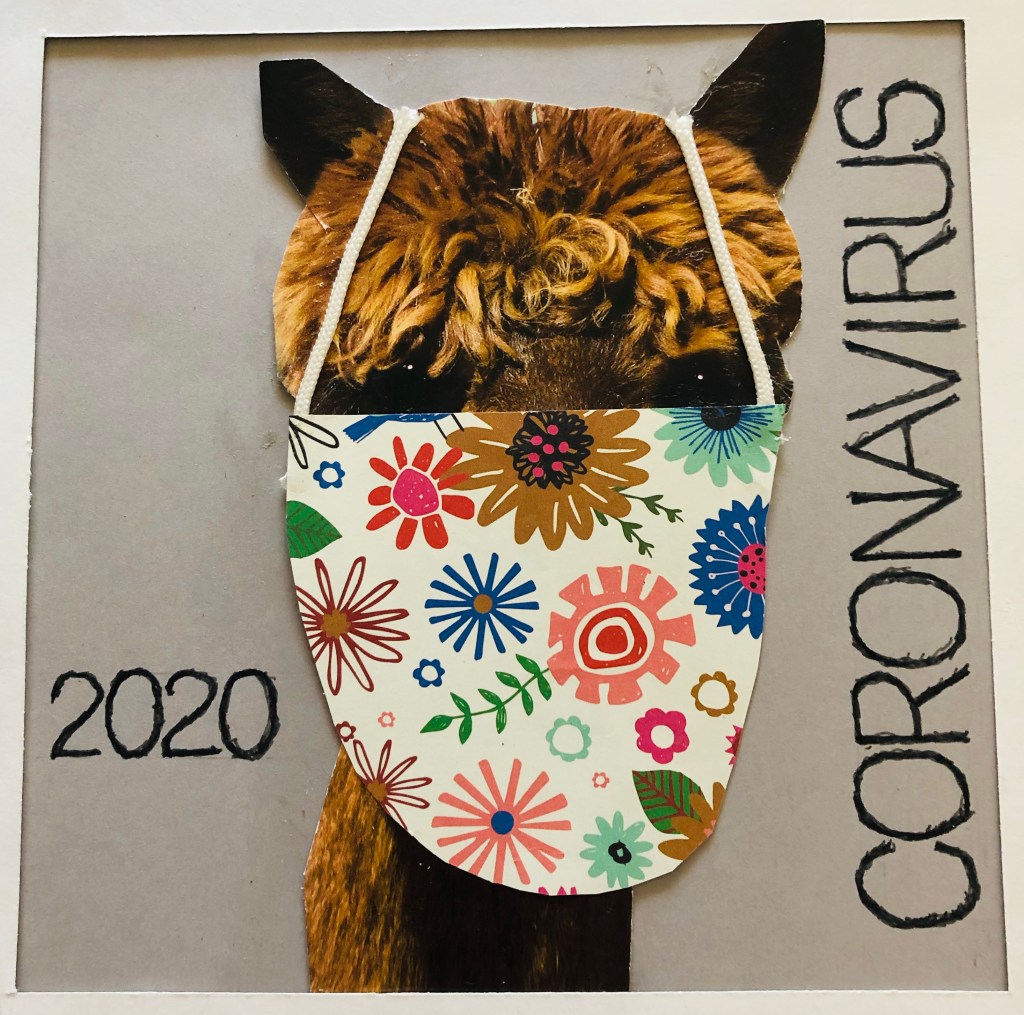
Dean Spencer collage, April 28 (or thereabouts), 2020

My dad created a collage in homage (? honor?, to mark? what is the proper way to address a pandemic?) to this era of 2020 coronavirus. He made it and then about a day or so later, this article appeared in the NYTimes about Winter, a young llama whose antibodies are helping scientists research ways to neutralize the new virus that causes Covid-19. The timing seemed crazy and I wondered if my dad was living some sort of double life: communicating with researchers in Belgium while collaging in a studio in Yucaipa, California. He could neither confirm nor deny this, so I stopped asking. (I’ve seen enough James Bond movies to know that I didn’t want to push my luck and become neutralized for knowing too much.)

But timing, coincidence, overlapping thoughts and moments, these are seeming to seep into life more and more lately. And it’s not because I’m experimenting with mind-altering drugs with all my copious amounts of time. The psilocybin ship sailed for me decades ago and time has not been that copious, frankly. Instead I think it’s a matter of a lot of the little things popping up and connecting that heretofore I may have ignored, but are now revealing themselves like a jack-in-the-box cranking into action on the regular. Beyond just the freaky fact that the entire effin world is experiencing the same virus in real time, and although governments are dealing with it in varied ways, humans who are living it are crossing paths (virtually, safely) in ways heroic. Given the absolute ineptitude of our own embarrassment of a leader, it’s not been lost on anyone that citizens are doing it for themselves. Springing into action to create and make and send and help how and where they can. Whatever that looks like: leaving a thank-you note for a delivery person, picking up groceries for someone, or, as evidenced below, making acrylic boxes to help doctors intubate patients. It’s all amazing in the doing.

Because life does trip all over itself, while the conversation continues around still-rising infection rates and focused work to develop a vaccine, there is also discussion about the phased reopening of the country as governors state by state assess their population’s safety.

While they lay out what the physicality looks like, I wonder what the phased reopening of our emotional selves looks like.

Here in Cali, stage one—already in play—from Gov. Newsom is all about supplying essential workers with what they need to be protected while doing their job. This seems pretty straightforward. Make sure the masks, gowns, gloves, sanitizers, all the PPE are available and ready for use by those essential folks who need them. Cue the emotional component: These things are still hard to come by (and we’re not even talking about testing kits) so the thrum of anxiety of essential workers, which is dominoed onto the rest of us who want them to be okay as they do the jobs we applaud them for, is still kicking as hard as the low-bass of a DJ D-Nice track during an Instagram dance party.

This is where an industry not always known for its warm and fuzzies has been stepping up: the global fashion business. By creating scrubs, masks, hand sanitizers, and more, then using all the connections usually associated with getting the latest Hermés Birkin bag out onto the market, the fashion sector has stepped up to fill a need and in so doing has turned down the panic sensation slightly to maybe an eight. A blog I follow, Accidental Icon introduced me to a great podcast called The Wardrobe Crisis, which looks at how to be sustainable in fashion and is hosted by Vogue Australia’s sustainability editor, Clare Press (because that is actually a job title that exists in Australia). The most recent, “Fashion Takes on PPE,” is amazing on a lot of levels and really brings home the absolute it-takes-a-village mentality of sisters (and brothers) doin’ it for themselves, and then doing what they can to spread the wealth.

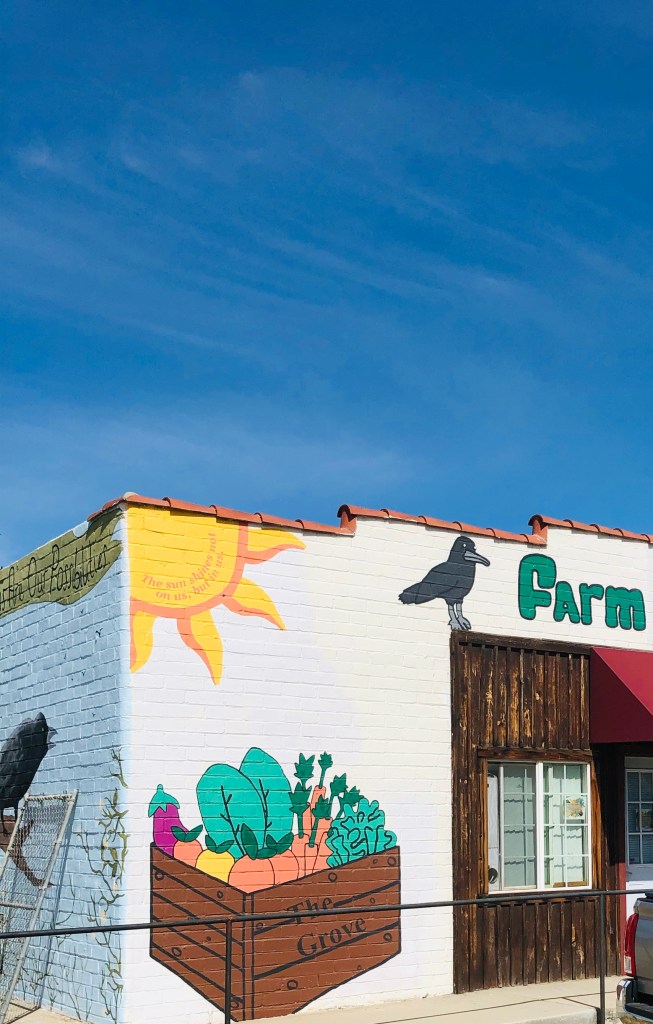
Stage 2: Redlands farm store connected to a working farm. Waiting for some curbside pickup.

Stage two is “reopening retail for curbside pickup, plus consider how to adapt and reopen schools, child care, offices and limited hospitality, personal services.” Emotional component: My mind has completely scrambled around what I’m even interested in picking up anymore. And I don’t mean that in a clothing or haircut kind of way, because currently I’m at peace with my wardrobe and my hair (weird, I know, but Overtone is my friend and I’ve been a girl with braids, I can always be a girl of a certain age with them again). I more mean my mind and soul have been a bit scrambled around what is important to pick up at the metaphorical curb. My two closest and most immediate loves—dad and Dennis—are here. My mom and friends are on the other side of the wire whether voices or zooms. If ever I was going to reassess what is important, now is it. My friend Amy sent this brilliant, spot-on article, “Fuck the Bread. The Bread is Over.” It is funny and poignant. It so well sums up how perspective can and does change in an instant. Phase two of my emotional reentry right now is intentional rather than reactive mind.

Street art: Prague 2018

Stage three appears to have an eye on inviting people back into social spaces (movie theaters, restaurants and the like). If I’m going to enter back into those places that are meant for pleasure, then I want to figure out how to feel happy about it. To me, the emotional component is the challenge of showing emotion minus the lower half of my face. I’m not sure why, but while wearing a mask, I feel like we’re all averting our eyes. Like there’s guilt or shame or, probably more to the point, deep discomfort with what our body language is suggesting. It’s furtive. It’s asking “is this alright? am I supposed to be here?” The other day at Trader Joe’s a guy stopped in front of me as I waited at the checkout. He flicked his head up at the sign that said “15-or-under items,” then glanced down at my cart, which held quite obviously triple that. My first instinct was WTF until I realized what he was getting at and nodded. Right, lightbulb moment. Get in the right line. Then he said, muffled from mask, “I’m smiling under here” and that broke the moment wide open. Note to self, when possible, smile under the mask.

Street art: Redlands 2020. This Remus and Romulus pair will have to wait until Cali stage 4 to bring their coolness
to the bar.

And finally, stage 4, “Reopen areas of highest risk: e.g. Concerts, conventions, sports arenas, bars.” Well that seems a pretty far piece away, although I’m already looking forward to the emotional bits of this. I root around inside and feel it as a sensation of flight. It feels like a metaphorical baseball, a game I’ve been a fair-weather fan of at best. When I moved to NYC in 1984, the Mets won the World Series right as I was really embracing my city citizenship, so naturally I hooked right into the Mookie’s and Hernandez’s and screamed and cheered. Then I became a Yankee fan because I liked the stadium better (and they were winning, too). But I digress: If I think of what I look forward to during this phase, it is hope for the future soaring just a bit. The ball cracked off the bat and flying for the fence. Lifting off. It’s not quite a home run and the outfielder will stop it before it gets out of the stadium, before total freedom, but for that moment it’s good to soar. And in future, when a vaccine or a life workaround exists that lets the hope escape out of the confines and around the world, well… I’ll look forward to that.

Time is a thief

Time? what is that? I know for most of us it’s come to represent something altogether different than it did a mere three months ago , but this week I’ve let time steal my moments of writing. Hence, no post this week. Stay tuned next: how I’ve gotten into people’s houses safely. And, hoop skirts: old idea/new future.

Hope you are all safe and finding some smiles!

For the Birds

This guy/gal.

Sitting on my dad’s porch the other day, the three of us (dad, Dennis, me) were interrupted by a particularly feisty bird that was blue. (I don’t know from birds and even my trusty google search isn’t really helping here.) This winged creature had attitude, as you can see from the cock of the head in the picture above. Imagine Dustin Hoffman in Midnight Cowboy with a dose of Beyoncé in “Hold Up” and you’ve got the picture. As we sat there having an early-evening cheese-cracker-libation chat, this little dude strutted around knocking his beak on the railing and trying to steal if not the cheese, then at least all the attention. Twas entertaining, but also slightly unnerving. The thought crossed my mind that there might be some random conversations going on among those animal kingdom dwellers who are repopulating road-, air-, and water-ways, that, ya know, we aren’t really all that formidable currently.

It’s true, a great mass humbling is upon us. It’s not like we haven’t been brought to our knees before (see pandemics), but as worldwide, twenty-first-century moments go, this is a doozy. And in the time that I stared at that bird and that bird stared back at me, it became clear that to understand the phrase “you really never know … (when you’ll step into an eatery again, how a virus works the way it does, why a bird can win a staring contest)” is to give up all preconceived notions of solid footing. I’ve given lip service to the idea of realizing that everything changes, but right now I’m living in a sustained version of everything changes, yet when I wake up in the morning, everything seems to stay the same. Groundhog’s Day on steroids and acid.

My friend Elizabeth sent this great article on grief from the NYTimes. It’s so damned good. Yes, of course, grief. If hope is the thing with feathers, then maybe grief is the thing made of stone. Rather than fly, it sinks. Sometimes so deeply that we can’t even find it. The pebble in our shoe or the ship at the bottom of the ocean. But it needs witness, I think. And understanding, gentleness, gravity. And expression. In whatever form that might be. People on balconies, on roofs, in yards, songs for cities. There are folks recreating famous works of art. And there are all sorts of amazing essays. But there is also just the silence of acknowledgment.

And there are the little things. When the local Redlands librarian from the A.K. Smiley branch called to tell me a book I’d put on hold pre-Covid was ready for pick up and that they were making appointments for curbside pickup, I felt confused with emotion. I was touched, overjoyed, sad, grateful. I actually gushed “that’s so amazing” at her and could tell from her laugh that she’d gotten this reaction in one form or another on every call. Librarian turned therapist, which in essence they’ve always been, but probably not to this degree of intensity. If I ever meet her, I’ll want to hug her. And I wonder, when will that be allowed again?

I love this place.

A line that really stood out in the New York Times piece was, “Grief can’t be fixed, but it can be acknowledged … [a suggestion to] take time to check in with ourselves, to slow down to name our pain. Not to fix it, since it likely can’t be fixed, but to notice it.” She ends the piece, “I’ll start at the beginning: This is hard. I hurt. If you’re hurting, too, you’re not alone.”

I’ll end mine there too, along with one flurry of feathers to go with the stone: I miss riding my bike to a thrift store.”

What do you miss?

musings

Hello. Only because I feel close to you all in this time of awfulness&crazy am I including the above snapshot, which is quite possibly—I feel—the least-flattering photo of me ever, second only to the one below from my youth where, to be fair, that yellow-cast to my skin either has to do with the aging of the photo or the fact that I’d been a vegetarian for a minute and might have been slightly anemic (or I was channeling Jimmy Page). But whatever the case…

…the one taken just last week has reminded me how funny personal presentation during these pandemic times has gotten. Yes, I’ve still got my specs on because my eye is still being pesky. My hair is pulled back because it’s easier that way. Makeup? What’s that? And yet, seeing friends on my screen of life makes me so happy. Sure, if we were cocktail-houring in person, I’d actually do something with my presentation. But here we are, lovin’ each other from a’far and this is what it looks like (at least on my end. I naturally think everyone else looks gorgeous). I’m also going to start insisting that I practice self-distancing from the lens. Six feet might be too extreme, but in no universe do I need to be six inches from the camera, as I apparently have been. It’s been entertaining to hear all the stories of folks leaning in or backing up (or actually just leaving the space) during Face and Zoom time. Talking to someone’s forehead or left eye or shouting because they appear to be in the next room rather that in front of the camera just makes it all much more fun. And there’s no doubt that I’m so happy to see and hear all the people I care about whether vox to vox or face to face. (And quick caveat on that: I still toggle between looking forward to phone dates and feeling really happy not speaking to anyone for days while disappearing down the rabbit hole of writing, a thing I actually crave to do more of and haven’t, but that’s a topic for another time.)

Another funny thing is wardrobe. I think I mentioned last week how I usually fold laundry and muse on what I was doing while wearing whatever piece I’m holding. This morning as I looked at my collection of jumpsuits, I thought yeah, right, i’ll just pop into one of these. This train was quickly followed by hold on, tomorrow dad’s coming over and we’re doing a little at-home aerobics, so I’ll want to just slip on a jumpsuit over my workout gear when we’re done. Then I realized, it makes not one shred of actual difference if I wear a jumpsuit two days in a row. (Good lord, I wore a battalion of them crossing the country. See Jumpsuits Across America.) But regardless, this thought passing through my brain reminded me that I haven’t at all stopped thinking about the look-style thing.

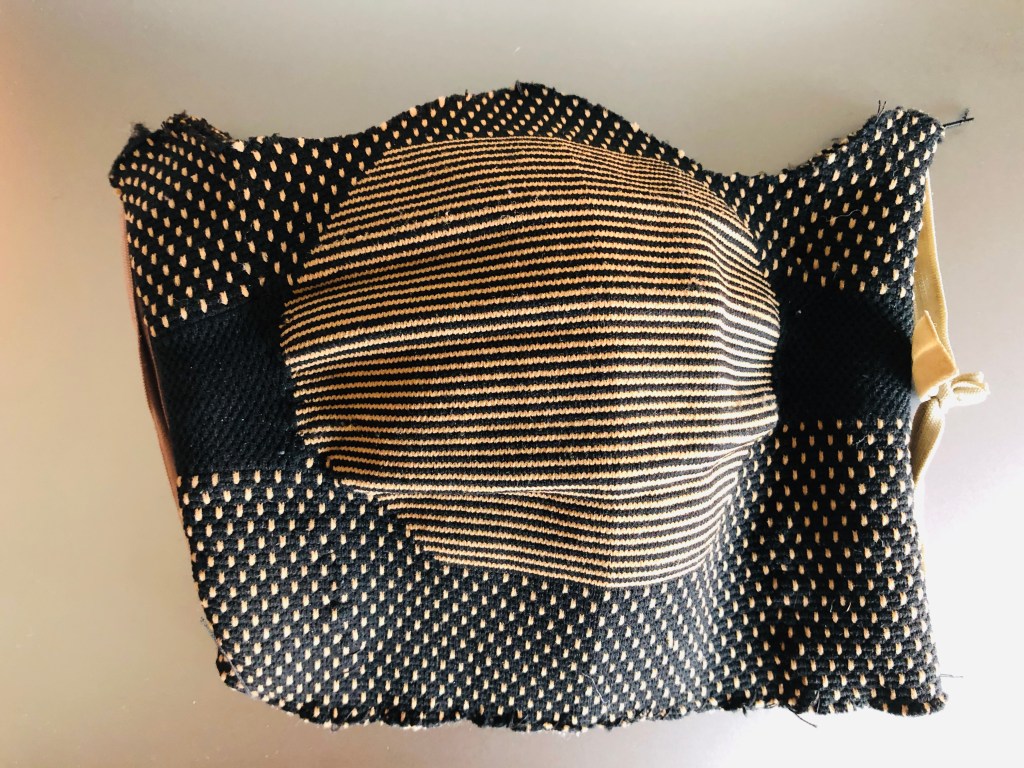
And right now, any leaving-the-house look involves a mask, and while my bra creation has been a stalwart companion, I got to thinking about what else might be out there. Short of roaming the apartment with a pair of scissors, which, by-the-by, I am currently doing (I made the hannibal-lecter-like creation below for Dennis out of a Tommie Copper knee sleeve, so, you know, respectively we’re wearing a brassiere and a running-compression knee sleeve on our faces in public. This is what it’s come to.)

do not be scared. it’s homemade.

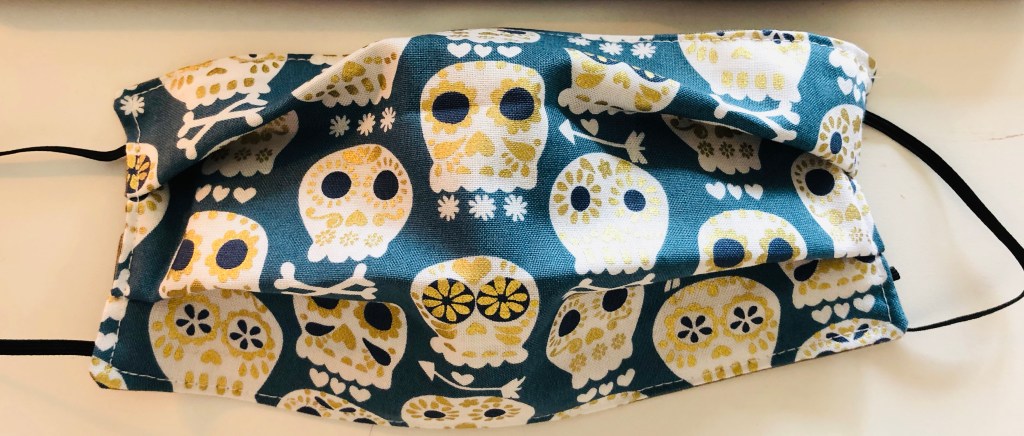
Of course in looking for other styles I found a whole community of Etsy artisans hard at work. The artist who most appealed was Cheri, who not only has very cool designs, but also says this: “I’ve been making these masks and donating them to local hospitals, medical workers, service industry workers and retirement homes since they reached out to the public asking for them. For each one sold I will continue to be able to make many more for these places/people.” She had me at hello. They came today and I’m looking forward to giving the one below to my dad for any of his outings now and in future to swap in with the heavy-duty one he already has.

and the ones below for when Dennis and I need a change of pace in the few forays we take into the world.

Mine
his

So it’s the small things right now that are moving me forward. What is it that is bringing you the smiles or nods?